Voters in poll-bound Uttar Pradesh, Punjab and Uttarakhand are more dissatisfied with their sitting MLAs than with their respective state governments led by their respective chief ministers ahead of the Assembly elections in 2027, according to a survey by Vote Vibe. However, the latest India Today-CVoter Mood of the Nation survey indicates that this constituency-level anger has not translated uniformly into losses for the parties governing the three states.
Nearly half the respondents in Uttar Pradesh and Uttarakhand, and over 45% in Punjab, expressed dissatisfaction with their legislators. In contrast, the three state governments recorded either net-positive or almost evenly divided satisfaction ratings, according to the Vote Vibe survey. The findings of the August 2026 Mood of the Nation survey similarly presented a mixed picture. The BJP remained ahead in Uttarakhand, the Congress-Samajwadi Party alliance had a narrow seat advantage in Uttar Pradesh, while Punjab continued to show a fragmented contest.
Punjab and Uttarakhand are expected to vote first, as the terms of their current Assemblies expire on March 16 and March 28, 2027, respectively. The term of the Uttar Pradesh Assembly ends on May 22, 2027, according to the Election Commission of India.
The August 2026 India Today-CVoter Mood of the Nation survey polled 25,184 people between July 1 and August 25 and incorporated another 91,795 interviews from CVoter’s regular tracking over the preceding six months.
The first State Vibe tracker, released by public opinion platform Vote Vibe on August 25, surveyed more than 6,000 voters across the three states.
Speaking to India Today Digital, political analyst and Vote Vibe founder Amitabh Tiwari attributed the dissatisfaction with MLAs largely to the inaccessibility of the elected representatives.
“People complain that many MLAs leave constituency work to their relatives, friends and family members and then decamp to the state capital,” Tiwari told India Today Digital. “This inaccessibility and people’s inability to get their work done create discontent.”
This could have a significant bearing on candidate selection and distribution of tickets. Will parties try to replace a big number of their sitting MLAs to boost the party’s winnability? We will know soon.
UP MLAs BEAR THE BRUNT, 49% ANGRY WITH THEM
Uttar Pradesh recorded the highest dissatisfaction with sitting MLAs among the three states surveyed by Vote Vibe. As many as 49% of respondents said they were dissatisfied or completely dissatisfied with their current MLA, while only 27.9% said they were satisfied.
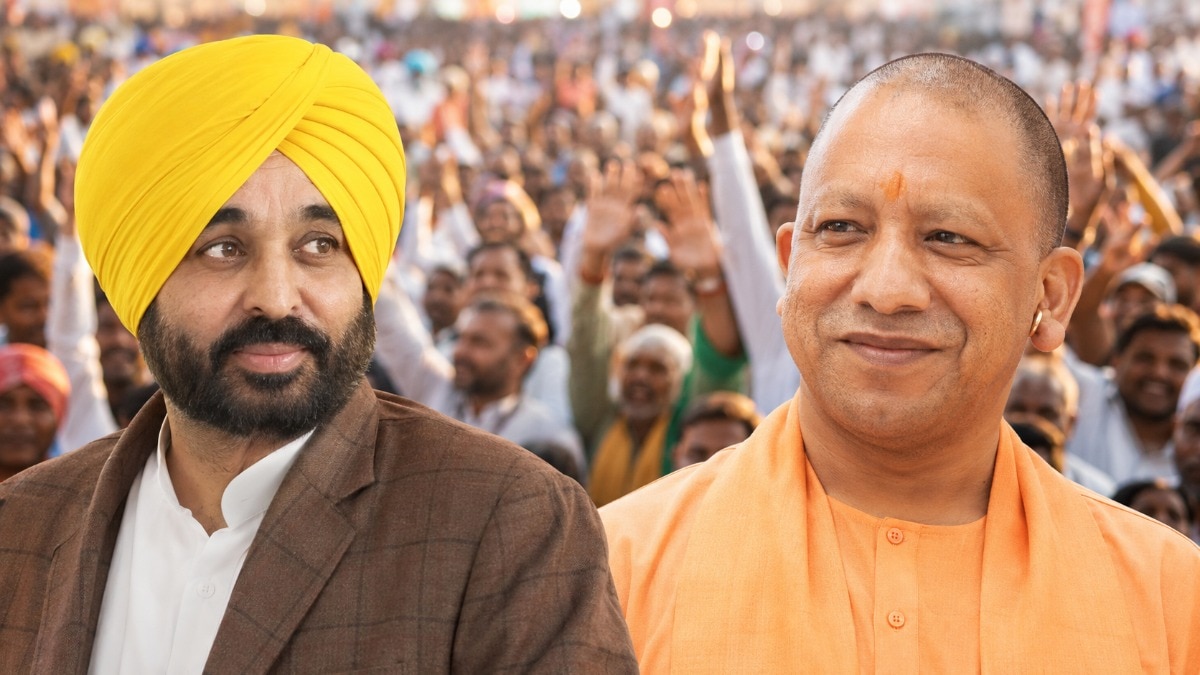
In their opinion, the state government led by Yogi Adityanath fared considerably better. A combined 41.8% said they were satisfied with its performance, against 38.4% who were dissatisfied, giving the Yogi Adityanath government a small net-positive rating.
Unemployment appears to be the biggest election issue, cited by 23.1% of respondents. It was followed by farmers’ issues at 14.1%, education and healthcare at 13.7%, inflation at 12.2%, and corruption and the Ram Temple donation controversy at 11.4%.
The BJP-led alliance was ahead of the Samajwadi Party alliance in voting intention, but only narrowly (41.8% to 38.7%). The contest was even tighter when voters were asked who they thought would win. At least 41.2 % picked the SP alliance and 41.1% the BJP-led NDA alliance.
The broader Lok Sabha picture, however, is less favourable to the BJP-led NDA, revealed the India Today-CVoter Mood of the Nation survey. Projections gave the Congress-led bloc 41 of Uttar Pradesh’s 80 parliamentary seats and the NDA 38. This marks a reversal from January, when the NDA had been projected to win 48 seats against Congress-led INDIA bloc’s 31.
Yogi Adityanath remained the preferred chief ministerial face with 43.4% support, ahead of SP chief Akhilesh Yadav at 35.5%. However, younger respondents leaned more strongly towards Akhilesh, while voters above 45 favoured Yogi and the BJP.
UTTARAKHAND GOVT HOLDS UP BUT MLAS SLIP IN TEST
Among the three states, Uttarakhand showed the clearest disconnect between attitudes towards the state government and local MLAs. While 39.1% were satisfied with the Pushkar Singh Dhami-led BJP government and 38.1% dissatisfied, the balance turned sharply negative for MLAs.
As many as 48% were dissatisfied with their current MLAs, compared with just 27.1% who were satisfied. Another 19.3% rated their MLA’s performance as average or fair.
Unemployment was the top election issue at 20.7%, closely followed by education and healthcare at 18.9%. Inflation was cited by 12.9%, law and order and women’s safety by 10.8%, corruption by 9.8%, and basic infrastructure by 9.5%.
The BJP led the Congress in voting intention by around four percentage points (40.9% to 36.7%). It also led in winner perception, with 39.7% expecting a BJP victory against 36.3% for the Congress.
The BJP’s advantage appeared considerably stronger in the India Today-CVoter Mood of the Nation projection. The BJP was projected to win four of Uttarakhand’s five parliamentary seats, with the Congress bloc taking one. The BJP had swept all five seats in the 2024 Lok Sabha election and was still projected to do so in January 2026, according to the India Today-CVoter survey.
Dhami was the most preferred CM face at 28.2%, followed by Congress veteran Harish Rawat at 23.3% and former Congress’s state chief, Ganesh Godiyal at 16.6%. Uttarakhand also had the least settled electorate. Only 52.5% had completely decided their vote, while 25.6% had a preference but were yet to make a final decision.
DRUGS, JOBS SHAPE PUNJAB CONTEST
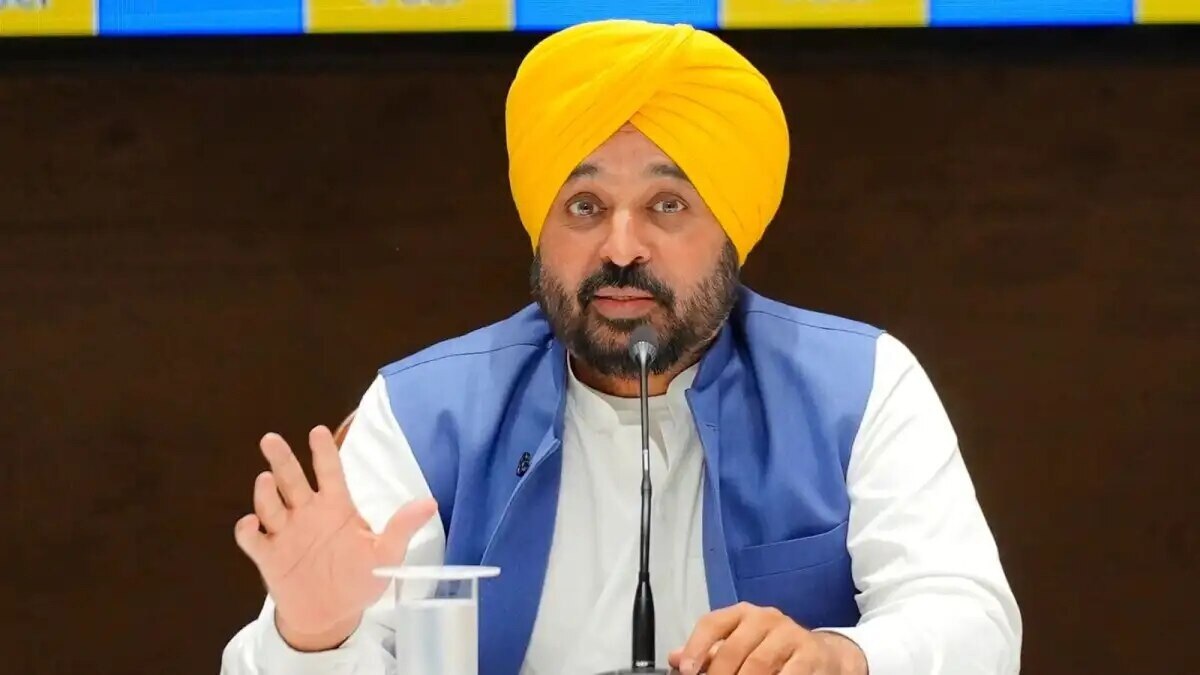
Punjab, too, showed greater anger against MLAs than against the AAP government of CM Bhagwant Mann. While 40% were satisfied with the government and 35.4% dissatisfied, MLA dissatisfaction stood at 45.3%, against satisfaction at 32.2%.
Drugs, long seen as one of Punjab’s most serious problems, emerged as the state’s biggest concern at 25.7%, followed closely by unemployment and migration at 24.3%.
The incumbent AAP led the voting preference with 34%, followed by the Congress at 30.2%. The BJP received 12.2%, the Shiromani Akali Dal 11.3%, and jailed MP Amritpal Singh-led Akali Dal (Waris Punjab De) 6.6%.
The Lok Sabha projection, revealed by the India Today-CVoter Mood of the Nation survey, underlined how differently Punjab’s voters might approach state and national contests.
The August Mood of the Nation survey projected 11 of the state’s 13 parliamentary seats for the Congress and its allies, up from 10 in the January survey and the 10 they collectively won in 2024. The BJP-led NDA was projected to win one seat, while the remaining seat went to a party outside the two national blocs.
Bhagwant Mann remained the clear first choice for chief minister with 40.1% support, nearly double of Congress leader and former CM Charanjit Singh Channi’s 20.6%. Punjab’s electorate also appeared the most settled, with 71.2% saying they had already decided their vote.
WHY VOTERS ARE ANGRY WITH THEIR MLAS
Amitabh Tiwari, who attributed the dissatisfaction with the local MLAs to the inaccessibility of elected representatives, added, the findings could materially affect the 2027 Assembly contests. He told India Today Digital, “Around 10-15% of voters across the three states were likely to base their choice on a candidate’s personality and image.”
“The candidate is, therefore, likely to play a pivotal role in the outcome,” Tiwari added.
High dissatisfaction usually prompts parties to deny tickets to unpopular incumbents. However, Tiwari cautioned that replacing candidates might not automatically neutralise anti-incumbency.
“We have to see how many sitting MLAs are denied tickets, how parties manage any sabotage that follows and how this affects voters’ choices,” Tiwari told India Today Digital.
So, across the three states, voter anger appears to be concentrated more against sitting MLAs than the governments they are ruled by. That could make candidate selection and constituency-level performance as decisive as the popularity of chief ministers before the three polls in 2027.
– Ends
Published By:
Sushim Mukul
Published On:
Aug 29, 2026 07:00 IST