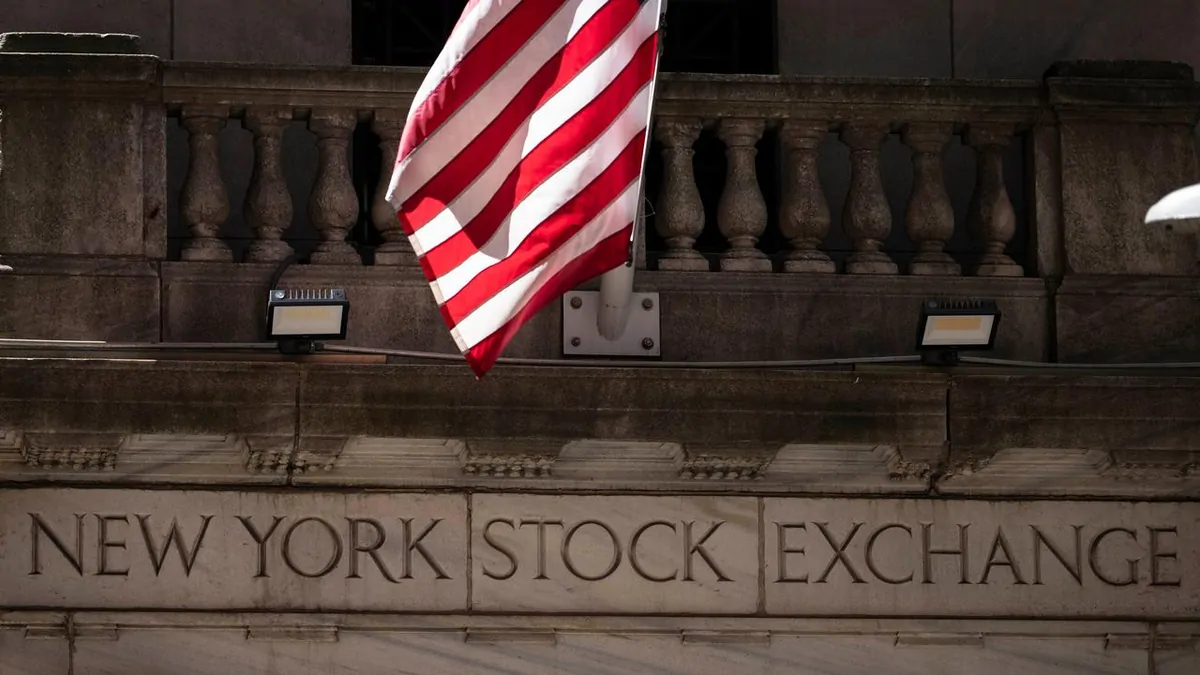
The Nasdaq and S&P 500 closed lower, with declines in Intel and other chipmakers, as investors became less confident about a deal to reopen the Strait of Hormuz.
US President Donald Trump demanded that Iran pay compensation for the people he said it had killed in wars, attacks and protests.
Earlier, Iran called for Washington to meet conditions, including recompensing Tehran for the damage caused since the US and Israel launched strikes on its territory more than five months ago.
Sign up to The Nightly’s newsletters.
Get the first look at the digital newspaper, curated daily stories and breaking headlines delivered to your inbox.
By continuing you agree to our Terms and Privacy Policy.
With investors less optimistic about a resolution of the Middle East crisis, US crude oil jumped about 5.0 per cent to settle at $US82.13 ($A116.23) a barrel.
Reopening the flow of oil through the Strait could mitigate concerns over heightened energy prices that have spurred inflation worries and led to concerns that central banks would have to raise interest rates.
Also weighing on the market were shares of Intel, which fell 4.1 per cent after the chipmaker said it was planning to raise $US15 billion ($A21 billion) through a share sale.
The S&P 500 notched a record-high close on Friday, helped by much stronger-than-expected earnings results.
“It’s record margins and record earnings. That’s just been the story of this market, and yet the overlay of the Iran conflict just pulls risk sentiment on and then pulls it off,” said Tom Hainlin, an investment strategist at US Bank Wealth Management in Minneapolis.
“The direct impact is just the energy sector and … oil prices, and they’re just sticky here above where they were on February 27 before the conflict. So there’s clearly no transparency of the path to get back to where we were before the conflict started, and so that premium’s just being built in. So far, the world’s been able to work around it, but those workarounds don’t last forever.”
Shares of Nvidia dropped 2.9 per cent.
A person familiar with the matter told Reuters on Monday that a group of financial firms, including Apollo Global and Blackstone, is working with Nvidia to put together a $US500 billion ($A708 billion) funding package for AI infrastructure development.
The S&P 500 declined 0.06 per cent to end the session at 7,753.12 points.
The Nasdaq declined 0.32 per cent to 26,605.36 points, while the Dow Jones Industrial Average declined 0.11 per cent to 53,976.04 points.
Reports later this week could offer clues on the Federal Reserve’s monetary policy path.
Data on Friday that showed US employers unexpectedly shed 23,000 jobs in July prompted traders to cut odds of a Federal Reserve interest-rate hike in September.
Traders now price in a 52 per cent chance of a rate hike in September, according to the CME FedWatch tool.
More quarterly results are on the agenda as well, including reports from semiconductor company Applied Materials and networking equipment maker Cisco.
About 85 per cent of the 436 companies in the S&P 500 that have reported earnings so far this period have beaten estimates, according to LSEG data.
Declining issues outnumbered advancers by a 1.39-to-1 ratio on the New York Stock Exchange. There were 297 new highs and 149 new lows on the NYSE.
On the Nasdaq, 1928 stocks rose and 2,841 fell as declining issues outnumbered advancers by a 1.47-to-1 ratio.
The S&P 500 posted 20 new 52-week highs and one new low while the Nasdaq Composite recorded 107 new highs and 74 new lows.