Source: Facebook / Football Association of Malawi
If you follow African football long enough, you will be familiar with the pre- and post-match karaoke in the bus or locker rooms. One player starts a familiar song, and within seconds the whole team joins in, swaying, clapping, and screaming their lungs out, and then there’s somebody’s phone camera filming it all because you do not let a moment like that pass uncaptured.
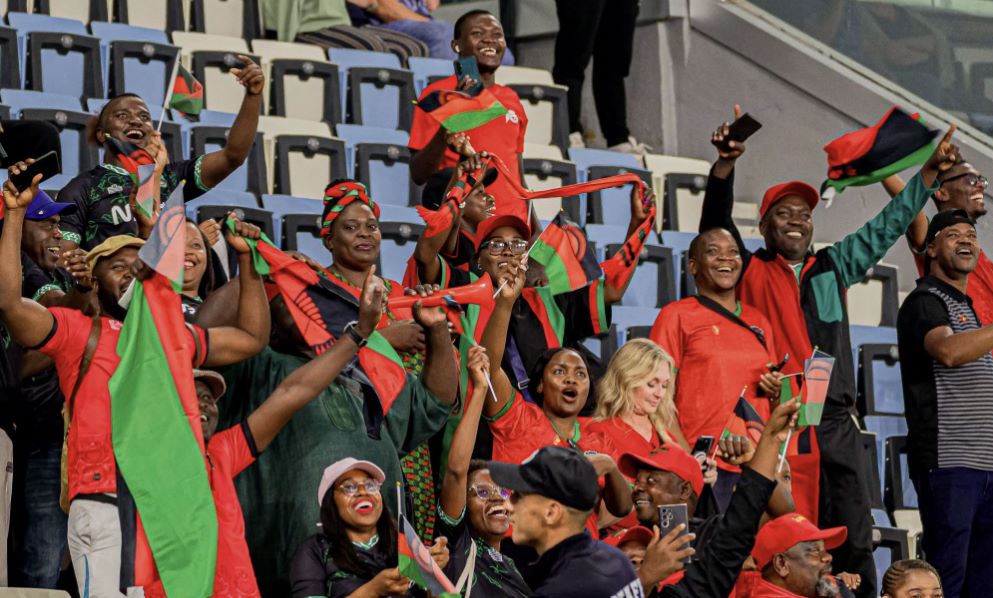
African teams have turned international and national competitions into cultural archives, places where tradition, music, and team spirit blend into something unforgettable. Every now and then, a team arrives and reminds us that football is not only about tactics and scorelines, but also about joy, identity, and culture. That is exactly what Malawi has brought to the 2026 Women’s Africa Cup of Nations (WAFCON).
Malawi is at the 2026 WAFCON in Morocco for the very first time, and that alone is a story worth celebrating. But what has captured the attention of football fans far beyond Malawi’s borders is not just their performance on the pitch. It is everything happening around it.
Let’s start with how this team left home. Before the Scorchers’ journey to Morocco, they were given a public send-off at Kamuzu International Airport, with sponsors, fans, and well-wishers gathering to see them off. National Bank of Malawi even ran a fan competition, “Waku WAFCON,” sending supporters to Morocco to cheer from the stands.
And then there is the team itself, a squad captained by Tabitha Chawinga, with her sister Temwa Chawinga returning as vice-captain. When Temwa scored twice, and Tabitha added another in Malawi’s stunning 3-2 upset over defending champions Nigeria in their opening match, they became one of the most talked-about teams.
For some viewers, WAFCON may be their first meaningful introduction to Malawi and its women’s football team beyond geography lessons or travel documentaries. It has also become an introduction to the country’s culture, one rooted in community, music, and celebration.
Malawi is home to more than 80 traditional dances, each tied to a specific tribe, occasion, or meaning. The most popular traditional dance is Gule Wankulu (translated as the “Great Dance”) performed by the Chewa people, and it has been recognized by UNESCO as part of humanity’s intangible cultural heritage. Then there’s the Chilimika dance by the Tonga tribe, performed by young boys and girls at the beginning of each year. Another is Likhuba, a traditional dance largely an acrobatic demonstration of male prowess that aims to cure psychological illness in women. Other traditional dances are Tchopa, Ingoma, Beni, Mganda, and many more.
And then, there’s the music. Across much of Africa, music is not something saved for concerts or special occasions. It is part of everyday life, and Malawi is no exception.
Most Malawian tribes have their own songs, and commonly use instruments such as drums, mambrilira (similar to a xylophone), and a variety of rattles. Their players carry this same spirit with them, turning every moment into a celebration and every gathering into a reminder of how deeply music anchors community, joy, and identity.
Photo source: Facebook / Football Association of Malawi
Players and supporters often perform energetic dances that have become part of Malawi’s matchday identity, often shared on TikTok and other social media platforms. In one of their Instagram videos, the team is seen carrying a loudspeaker, singing and dancing joyfully as they arrive at the Nyayo National Stadium for their match against Australia’s Matildas in the FIFA Women’s Series 2026. Another clip shows them doing the same ahead of their match against Nigeria, music blaring, feet moving, voices rising together as they sing in their local dialect.
These moments are cultural signatures. The local songs and dances show unity and pride, while also displaying their culture. They also create viral moments online, boosting the team’s visibility and turning Malawi into one of the most talked‑about squads of the tournament.
For many viewers across Africa, and especially those living abroad, they evoke memories of home. The joy, the call-and-response singing, the movements, and the effortless sense of community are experiences shared across countless Black households.
Culture is not expressed only through music and dance. It is also reflected in what people wear. Malawi’s culture is vividly expressed through its traditional dress, which blends ancient Bantu heritage with influences from Arab, Portuguese, and Indian traders, and later colonial and modern styles. Traditional Malawian dress includes the Chitenje, a colorful printed fabric worn as wraps, and the Kanzu, a long robe worn by men. Passed down through generations and worn in everyday life as well as during celebrations, the fabric reflects regional identity, cultural heritage, and belonging.
The colors and symbols woven into these fabrics can represent themes such as social status, marital status, or even political messages. As Western fashion continues to influence everyday wear, Malawian designers are finding innovative ways to incorporate chitenje fabric into modern outfits. Today, chitenje prints are used in dresses, jackets, trousers, and even accessories like handbags and shoes.
When the Malawi female national football team arrived in Rabat for the 2026 WAFCON, they did not wear fancy suits or uniform corporate blazers. The Scorchers expressed their national identity and made a bold fashion statement. They were proudly dressed in colorful ponchos, deliberately using the tournament’s global platform to project history, heritage, and belonging.
Photo source: Facebook / Football Association of Malawi
After the Malawi National Football Team Facebook page shared the photos, the post sparked a debate in the comments. People argued about it the way families argue about picking the right asoebi for an occasion. Some liked it, while others were not too impressed.
Shapil Chaponda commented:
“Like the outfits, screams Malawi, like the vibe… all the best.”
Another comment from Judith Jayden Nkausu read:
“The designer for this outfit will never see heaven.”
As for Humphrey Kambuku, “It’s more Kenyan-like than Malawian. The designer failed to bring Malawi’s identity.”
Everyone seemed to have a different opinion in the comment section.
Bold, patterned, communal dress has always been how Malawians turn arrival into announcement, whether it is a bridal party walking in matching cloth or a football team walking off a plane in matching colors. The ponchos signified the Scorchers doing what Malawian women have always done, using what they wear to say something before they say a word.
Football has now become another place where culture comes alive, and for a country like Malawi making its WAFCON debut, that might be one of the most important exports of this tournament. A supporter who watches a dance video today might tomorrow search for Malawian music, cuisine, fashion, or travel destinations. That is how a simple moment of joy becomes the start of a wider cultural conversation.
When the players break into traditional songs and dances, as many of us do at weddings, church services, or family gatherings, it is not choreography or a performance for the cameras. It is culture, showing up exactly where it always does, in the in-between moments, when nobody is performing for anyone but themselves.
For Black people in the U.S. and across the wider diaspora, there is something familiar in all of this, even from thousands of miles away, the locker room or bus rides turning into a concert, the outfit that doubles as a statement, and the joy that radiates without needing permission.
Black communities everywhere have their own versions of this same instinct, cookouts that turn into sing-alongs, family functions where somebody starts a funny dance or a traditional move, and the whole room follows without being asked. Watching the Scorchers display Malawian culture is a reminder of just how far our shared instincts travel, and how deeply they connect us back home, no matter where home happens to be.