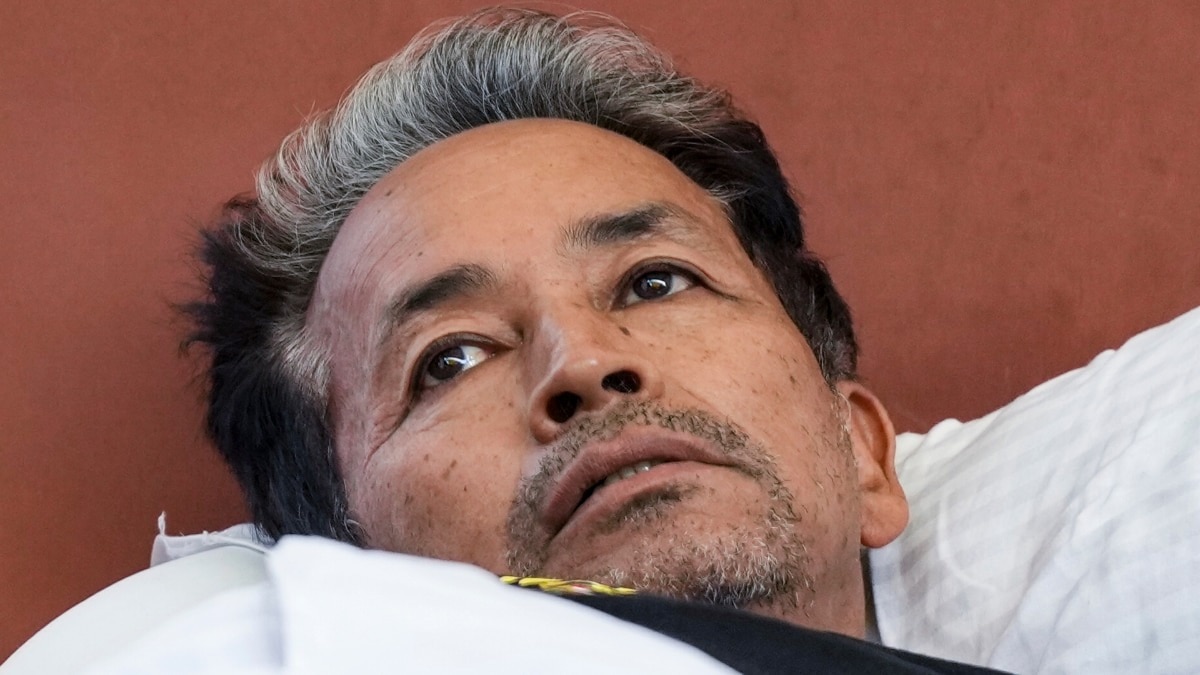
“Why is a citizen of India denied doctors of their choice?” senior advocate Kapil Sibal asked the Delhi High Court on Sunday while challenging the government’s decision to keep climate activist Sonam Wangchuk at Safdarjung Hospital instead of allowing him to shift to Medanta.
The High Court, however, upheld the government’s decision, saying Wangchuk’s deteriorating health after an extended hunger strike justified his transfer to the government hospital.
The court rejected claims that Wangchuk was under detention or that his bodily autonomy was being violated. It said he remains a free citizen and noted that doctors at Safdarjung Hospital have treated him only with his consent.
The order came on a plea filed by Wangchuk’s wife, Gitanjali Angmo, seeking his transfer from Safdarjung Hospital to Medanta. She argued that Wangchuk should be allowed to receive treatment at a medical facility of his choice.
The High Court issued notice to the Centre, Delhi Police and hospital authorities and directed them to file a status report within three days. It did not grant any interim relief and listed the matter for hearing on Thursday.
Court backs government’s decision to shift Wangchuk
The court noted that Wangchuk had been on a hunger strike for around 17-18 days and referred to a Division Bench order passed on July 16 after considering his “perilous” medical condition.
The government told the court that it shifted Wangchuk from the protest site to Safdarjung Hospital because his health had deteriorated. It cited medical reports showing low blood sugar and dangerously low potassium levels.
Accepting the government’s explanation, the court observed, “Since the government has taken the decision to shift him to hospital on account of his medical condition, this court does not see the same to be arbitrary action.”
The court also took note of the government’s submission that every life is precious and needs to be protected.
The Additional Solicitor General (ASG) told the court that Wangchuk had been fasting for around 18 days and that humid weather had added to concerns over his health. The government argued that prolonged fasting, coupled with dehydration, could lead to ketosis, a condition in which reduced insulin levels can cause the kidneys to excrete sodium and water instead of retaining them.
Sibal questions government’s stand
A key issue before the court was whether the government could insist on keeping Wangchuk in a government hospital.
Sibal argued that Wangchuk was not under detention and questioned whether the government could insist on keeping a citizen in a government hospital without a detention order or any criminal case.
“Without a detention order or offence, can the government say I want him in a government hospital?” Sibal asked.
He argued that Wangchuk should have the right to choose his doctors and the environment in which he receives treatment. Sibal submitted that government doctors could continue monitoring Wangchuk even if he were shifted to Medanta.
The High Court, however, repeatedly observed that Wangchuk was not under detention and remained a free citizen.
The court also noted that Wangchuk had not voluntarily admitted himself to a hospital and said that, given his medical condition, the government was justified in shifting him to a medical facility.
“Mr Wangchuk is not in detention,” the court said.
Court rejects bodily autonomy argument
The High Court also rejected the argument that Wangchuk’s bodily autonomy was being violated.
The court noted that doctors at Safdarjung Hospital had treated Wangchuk only with his consent. Since doctors were monitoring his health and treatment had been administered with his consent, it said it could not conclude that force had been used against him or that his bodily autonomy had been violated.
The court also recorded that Wangchuk had been given unprecedented access to his family. It said his wife, Gitanjali Angmo, could meet him at any time, while other family members had also been allowed to visit and stay with him. The court contrasted this with the access normally available to other patients, who are generally restricted to visiting hours.
Conflicting medical reports raise trust concerns
During the hearing, Angmo said she sought a second medical opinion because of conflicting reports regarding Wangchuk’s potassium levels.
“I just asked for a second opinion because 2.9 level is not a joke,” she told the court.
According to Angmo, a blood sample collected in the evening generated a report around 2 am showing a potassium level of 3.5. She questioned why a second opinion had not been facilitated earlier if a potassium level of 2.9 was considered life-threatening.
She said the conflicting reports had broken her trust in the medical process.
Angmo also informed the court that Medanta was ready to admit Wangchuk and that she intended to have him discharged against medical advice before shifting him there.
“I will get discharged against medical advice. Medanta is ready to take him. I am taking him there,” she said.
She further alleged that police personnel remained around Wangchuk inside the hospital and claimed officers stayed inside his room while she met him and listened to their conversations.
Sibal also told the court that police personnel were stationed around Wangchuk inside the hospital.
Government says it is being extra cautious
The ASG argued that the government had to exercise extra caution because of Wangchuk’s prolonged hunger strike and health condition.
“In the prevailing circumstances, the government has to be extra careful,” the ASG submitted, adding that authorities had to be “more circumspect than it is normally” and “extra cautious”.
“Whatever happens to him will have consequences,” the ASG said.
The government also informed the court that Wangchuk had alternated between cooperating and not cooperating with doctors during his stay at Safdarjung Hospital.
A doctor from Safdarjung Hospital told the court that Wangchuk had expressed distrust in the medical team.
“He has said, ‘I don’t trust you’. The question of trust is there,” the doctor said.
The hospital’s medical superintendent stated that doctors wanted to provide greater medical intervention, but Wangchuk had refused certain treatment because he did not have faith in them.
The ASG argued that doctors could not simply be told that patients had no confidence in them, particularly when the government was dealing with extraordinary circumstances.
Court asks Wangchuk to cooperate with doctors
The ASG requested the court to direct Wangchuk to cooperate with doctors.
The court observed that Wangchuk should cooperate with whatever medical intervention doctors considered necessary in light of his condition.
Sibal objected to that formulation.
The court later clarified that it was not compelling Wangchuk to undergo any specific treatment. It said he would have to cooperate with doctors and allow them to administer medical intervention if he chose to receive treatment.
It further observed that the medical team would take all decisions regarding Wangchuk’s health in accordance with medical protocol.
“The ultimate decision with regard to the medical condition of Mr Wangchuk will be monitored by the medical team, which shall take decisions as per medical protocol,” the court said.
The court also took note of the ASG’s submission that Wangchuk’s medical reports would be shared with his family.
No interim relief, next hearing on Thursday
The High Court declined to pass any interim order and directed the Centre, Delhi Police and hospital authorities to submit their status reports within three days.
The matter will next be heard on Thursday.
The court also observed that body parameters are not static and that it had to consider the larger picture.
“Every life is precious and has to be taken care of,” the court said.
The proceedings centred on whether Wangchuk should remain at Safdarjung Hospital or be shifted to a private hospital chosen by his family. While Angmo and Sibal argued that he should be allowed to choose his doctors and treatment environment, the government maintained that his deteriorating health after a prolonged hunger strike required immediate and careful medical supervision.
At this stage, the High Court has upheld the government’s decision to keep Wangchuk at Safdarjung Hospital while making it clear that he is not under detention and that the medical team will take decisions regarding his treatment in accordance with medical protocol.
– Ends
Published By:
Sonali Verma
Published On:
Jul 19, 2026 15:55 IST