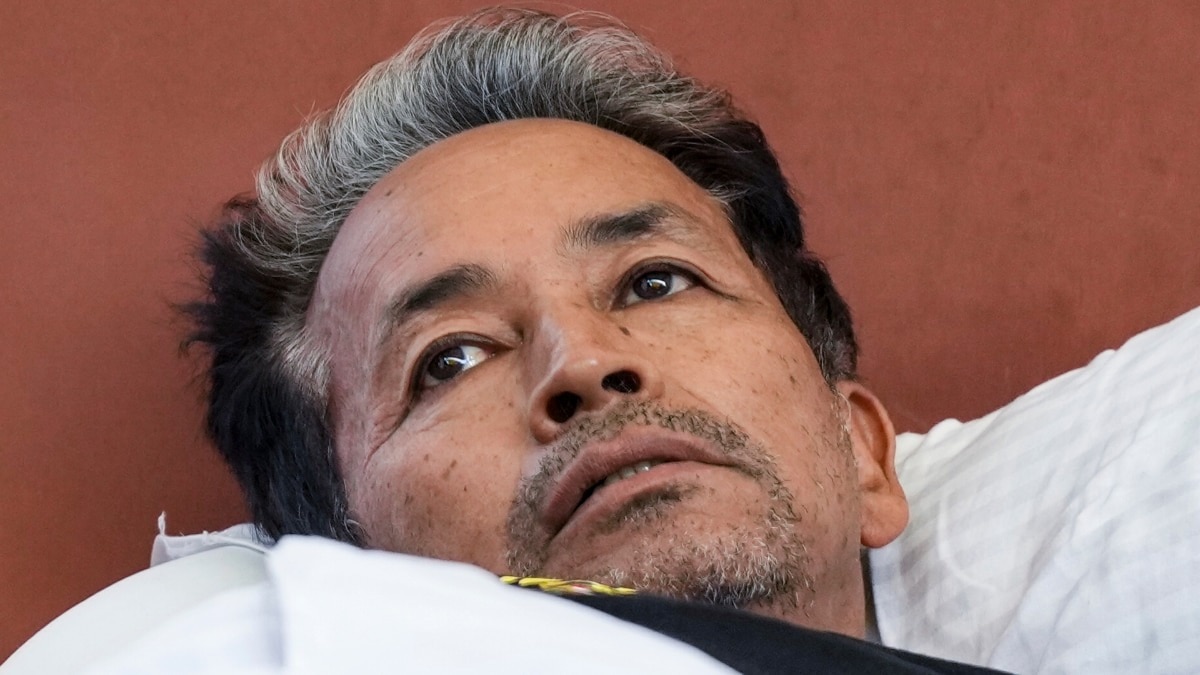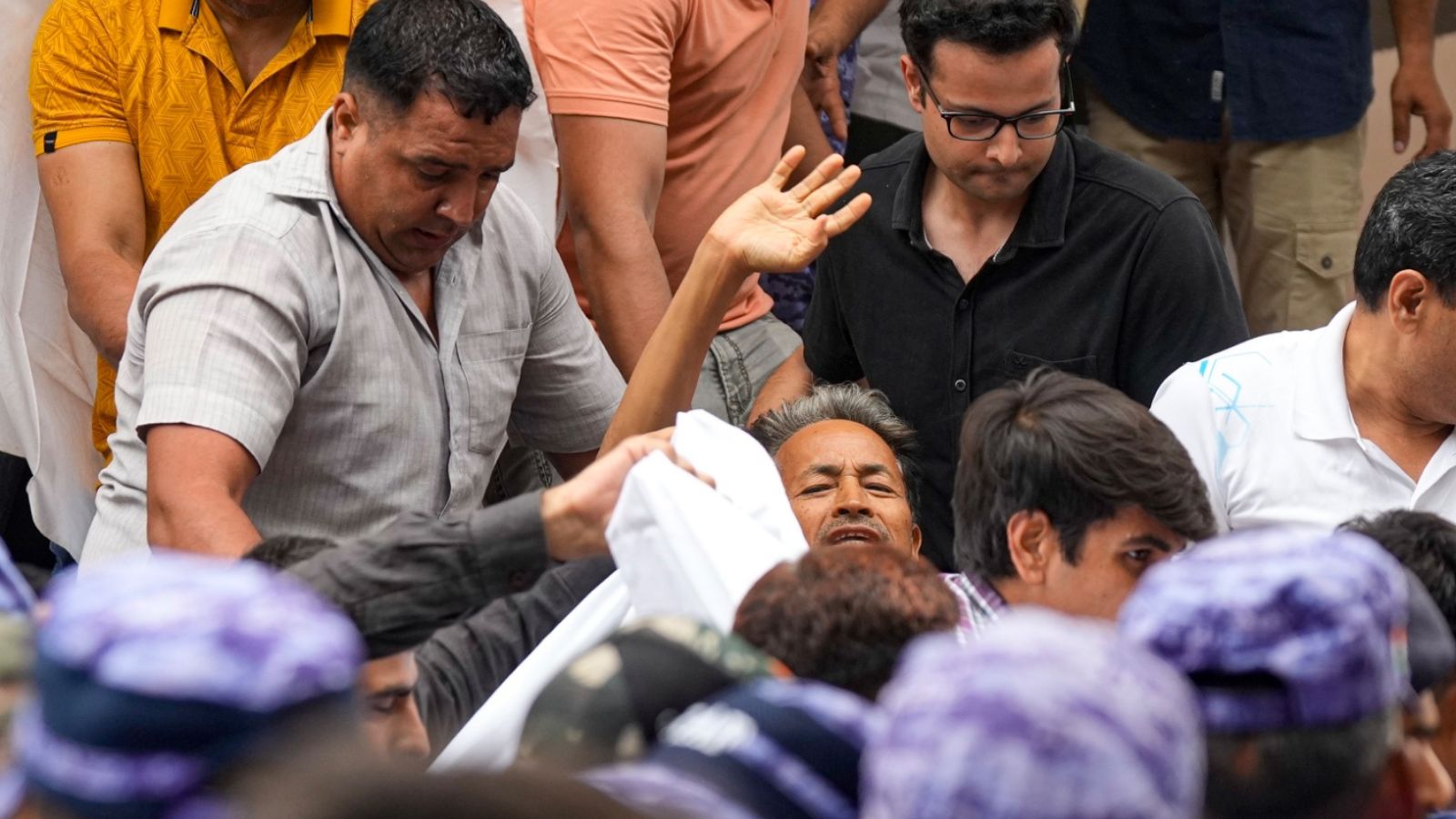
The 59-year-old activist had been on an indefinite hunger strike since June 28 as part of a protest organised by the Cockroach Janta Party (CJP) to demand reforms in the education and examination systems besides the resignation of Union Education Minister Dharmendra Pradhan over the NEET paper leak.
Wangchuk, who had also gone on a 21-day fast in 2024 to press for Ladakh’s inclusion in the Sixth Schedule of the Constitution, has now emerged as a national figure of protest, insisting that he will continue his fast after his release.
By undertaking his hunger strike, Wangchuk seemed to follow a long tradition of fasting in India, most famously associated with Mahatma Gandhi, which was also adopted by several prominent figures with varying degrees of success.
Bhagat Singh and Jatin Das’s fast
A defining fast of colonial India is associated with the country’s revolutionaries. In June 1929, Bhagat Singh, Jatin Das, Rajguru and Sukhdev went on an indefinite fast in Lahore jail against its inhuman conditions. They demanded that they be treated like political prisoners and not common criminals, asserting their right to access newspapers and books.
On the 64th day of the fast, Jatin Das died. Historian Bipan Chandra recalled in India’s Struggle for Independence that when his body was taken from Lahore to Calcutta (now Kolkata) by train, crowds thronged every station, and a crowd of more than 6 lakh people accompanied the body to the cremation ground.
Bhagat Singh continued his fast even after his comrade’s death, refusing to yield. He continued his fast for 116 days – till the British were forced to improve prison conditions.
Gandhi’s fast against separate electorates
In 1932, the British granted separate electorates for the Depressed Classes (now, Scheduled Castes) through the Communal Award. B R Ambedkar sought separate electorates – he thought that the majority in any constituency being general category people, the candidates from the Scheduled Castes (SCs) would get defeated unless the electors on reserved seats are also from the SCs – but Mahatma Gandhi took serious objection to the British move.
Gandhi was in Yerawada jail at that time and went on an indefinite fast on September 20, 1932, saying separate electorates would drive a permanent wedge in the Hindu society. The answer, he said, was eradication of untouchability, not separating voters.
His fast led to concerns globally and within India, which led to the Poona Pact being hammered out within six days.
Gandhi ended his fast on September 26, and a higher political reservation for the SCs than proposed by the Communal Award was accepted, but with joint electorates. This system prevails in the country for the SCs and the Scheduled Tribes (STs) till date.
Gandhi’s fast against communal riots
A short but impactful fast undertaken by Mahatma Gandhi was against raging Partition violence in Bengal in September 1947. He had earlier boycotted the Independence celebrations, concerning himself more with dousing the flames of riots that accompanied it as well as Partition.
Gandhi was in Beliaghata in Calcutta when violence broke out at the end of August 1947. By September 1, Ram Guha says in his book India After Gandhi, 50 people were dead. Gandhi decided to go on an indefinite fast against the violence on September 2.
His fast had immense impact – people, both Hindus and Muslims, began to come and lay down arms before him. Within three days the violence ended. Lord Mountbatten said that one unarmed man had been more effective than 50,000 troops in Punjab. The Statesman, then a British-owned daily, said, “… never in a long career has Mahatma Gandhi, in our eyes, fasted in a simpler, worthier cause than this, nor one calculated for immediate effective appeal to the public conscience”, recalls Guha in his book.
Potti Sriramulu’s fast for Andhra Pradesh
Behind the carving of Andhra Pradesh from the Madras Presidency was a fast by Gandhian Potti Sriramulu – who won the state after losing his life.
The demand for a separate state for Telugu-speaking people had been around for a long time, but Potti Sriramulu, who had stayed with Gandhi at Sabarmati Ashram, went on a fast unto death for the cause of Andhra Pradesh on October 19, 1952.
The demand was to fulfil the Congress’s original vision of linguistic provinces, but the then Jawaharlal Nehru government thought national unity was the immediate goal after Independence and did not look kindly at such demands.
Sriramulu’s fast rapidly changed things, and gave the movement a major fillip. But it was too late by the time the government intervened. On December 12, 1952, Nehru finally wrote to then Madras chief minister C Rajagopalachari that it was time to accept the Andhra Pradesh demand to cool frayed tempers, but this came too late.
On December 15, Sriramulu died, following which there was widespread violence with police resorting to firing to control mobs. Two days later, Nehru announced the creation of Andhra Pradesh.
Irom Sharmila’s fast against AFSPA
Known as the “Iron Lady of Manipur”, Irom Sharmila, a civil rights activist, decided to go on a fast till the repeal of the Armed Forces Special Powers Act (AFSPA) three days after 10 people waiting at a bus stop were reportedly killed in firing by the Assam Rifles at Malom in the Imphal Valley on November 2, 2000. On November 5, Irom started her fast near the site of the killing. This is widely known as one of the world’s longest hunger strikes. She was force-fed for 500 weeks in custody. Later, she decided to enter politics to continue her struggle. She formed a party, People’s Resurgence and Justice Alliance, and contested the 2017 Assembly election against then Congress chief minister Okram Ibobi Singh from Thoubal. However, she could garner just 90 votes as against Ibobi Singh’s 18,649 votes, with the runner-up, L Bashanta Singh of the BJP, securing 8179 votes. Even for NOTA, 143 votes were polled.
Mamata Banerjee’s fast
In December 2006, Mamata Banerjee, a feisty Opposition leader, started a fast in Kolkata against the then Left Front-led West Bengal government’s land acquisition for a Tata Nano car plant in Singur. The fast lasted for 25 days, and her health deteriorated. She broke her fast on December 29, 2006, after appeals by then Prime Minister Manmohan Singh and President A P J Abdul Kalam. Banerjee’s struggle at Singur, and later at Nandigram, led to the end of the 34-year rule of the Left Front in 2011 following its debacle in the Assembly elections.
Anna Hazare’s fasts
Between 2011 and 2013, social activist Anna Hazare undertook three fasts to demand a Lokpal law to counter corruption. The fasts became televised and high-profile events. The first fast beginning on April 5, 2011, produced an impact within three days, with the then Congress-led UPA government on April 8 agreeing to set up a joint committee with officials and civil society activists to draft a Lokpal Bill.
Hazare’s second fast in August 2011, which went on for 12 days at Ramlila Maidan in Delhi, gained more traction. Crowds thronged the ground, and Parliament within 12 days agreed to send his Jan Lokpal Bill to a Standing Committee for examination.
Hazare’s third fast in December 2013 at his Ralegan Siddhi village in Maharashtra ended after nine days after Parliament passed the Lokpal and Lokayuktas Bill. Hazare’s protege Arvind Kejriwal was conspicuous by his absence there.
Earlier, in October 2012, Kejriwal announced the formation of a political party – naming it the Aam Aadmi Party later – saying that the protesters would change the system from inside and outside Parliament. Kejriwal’s move came following his differences with Hazare over joining electoral politics with the latter sticking to the agitational route.
Hazare’s fasts are seen as the starting point of the Congress’s steep decline. The AAP remained in power in Delhi for three consecutive terms before being defeated by the BJP in the 2025 elections.
Fasts for Ganga
Two saints undertook long fasts to save the river Ganga, culminating in their deaths, The first was S K Jha, an engineering aspirant, who renounced the world and became a sadhu, adopting the name Nigamanand Saraswati. On February 19, 2011, he went on an indefinite fast to save Ganga from pollution caused by mining in the river bed, and got the monicker “Ganga Putra” (son of Ganga). After 115 days of fasting, Nigamanand passed away.
The other saint, G D Agrawal, was a career engineer and educationist who once taught at IIT Kanpur. Later, he renounced the world to become Swami Gyan Swaroop Sanand and turned his attention to saving and cleaning Ganga, which he considered his mother. He wrote to Prime Minister Narendra Modi to get the projects on Ganga stopped. He then went on a fast-unto-death for Ganga, maintaining that he would die to save the river. He passed away on the 111th day of his fast in October 2018.