BEIJING — After meeting with China’s top diplomat in Malaysia last summer, US Secretary of State Marco Rubio uttered a line that made few waves at the time but would later help pave the way for an abrupt change.
The United States and China, Rubio said, had an “opportunity here to achieve some strategic stability” and find areas of cooperation. He used the phrase again in February while talking about China in the Caribbean, also to little notice.
Chinese officials picked up on Rubio’s remarks and suggested to their US counterparts even rosier language to describe ties between the two nations, according to two people with knowledge of the previously unreported diplomacy.
Sign up to The Nightly’s newsletters.
Get the first look at the digital newspaper, curated daily stories and breaking headlines delivered to your inbox.
By continuing you agree to our Terms and Privacy Policy.
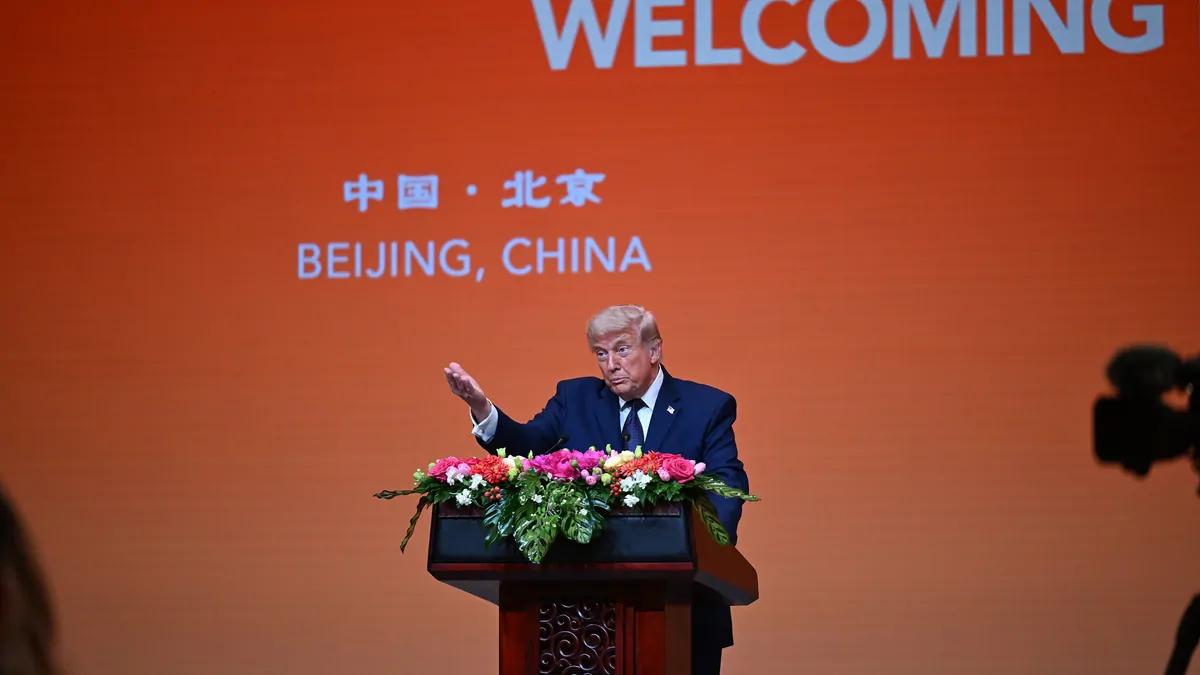
The new phrase — “constructive strategic stability” — was rolled out by both governments during US President Donald Trump’s meeting in Beijing last month with the leader of China, Xi Jinping.
Although the language sounds stiff and somewhat vague, such diplomatic terms serve as important guideposts. The new catchphrase signals to agencies in both nations, and to other powers, that the United States and China — the world’s two largest economies and most powerful militaries — are looking to work together or limit hostilities, notably on trade and Taiwan.
Mr Trump’s new policy with Beijing has stirred questions and anxieties across Asia, from Taipei to Delhi to Manila, sending officials in the region scrambling to recalibrate their own approaches to the United States and China.
The signals from the Americans became sharper over a series of official visits to Asia in recent weeks: Trump and his top aides to Beijing; Rubio to India; and Pete Hegseth, the defense secretary, to Singapore.
At an annual military forum, Hegseth said there was “rightful alarm” in Asia about China’s military buildup and activities, but he also declared, “We respect their ambitions.” He did not mention Taiwan, making him the first defense secretary in more than a decade not to do so at the forum.
After his meetings in China, Mr Trump effusively praised Xi, calling him a towering leader out of “central casting.” But more important, Mr Trump said he was holding “in abeyance” arms sales to Taiwan as a “negotiating chip” with China, and that the United States and China were forming a “G2” of equal superpowers. “It’s the two great countries,” he told Fox News.
Current and former officials in the United States and Asia say the message is clear: Trump intends to accommodate China, and other countries should fall in line.
The new policy is a sharp departure from Mr Trump’s aggressive approach during his first term. It comes after China’s retaliation during a trade war last year forced Mr Trump to retreat.
“For now at least, the perspective of the Chinese government is that their relationship with the Trump Administration is better than they had ever expected,” said Yun Sun, a China scholar at the Stimson Center, a foreign policy research group.
“They see Trump as an opportunity to cultivate a positive view of China,” said Sun, who was in Beijing during the summit. “They think maybe they can use the next 2 1/2 years to show people that China isn’t as bad as everyone thinks it is.” She added that Chinese officials are especially keen to sway opinions in foreign policy and national security circles in Washington.
The White House insists that the new “constructive relationship of strategic stability” is linked to “fairness and reciprocity.” In a sign that some competition will continue, the Pentagon on Monday added several large Chinese technology companies and an electric carmaker to a list of enterprises linked to China’s military, an effort to limit their global trade.
But China has not adopted the Trump Administration’s framing of the new phrase. The Chinese government has stressed that the language prioritizes cooperation. “It should be constant stability where differences are manageable, and the relationship should not be like a roller coaster,” the Chinese Embassy in Washington said in a statement.
Xi has been even bolder. In a speech during the summit, he told Mr Trump that “great changes unseen in a century are accelerating” — a phrase he has used before to describe the decline of US power. Xi also urged Mr Trump to try to avoid the “Thucydides Trap,” the theory that a rising power and an established power are likely to go to war.
Mr Trump has acknowledged Xi’s assertion of superpower equality. In a social media post, he wrote that Xi had “very elegantly” mentioned US decline, but argued that was a reference to the Biden era.
China has been pressing the United States to formally recognize it as a peer power for years. Xi tried to get President Barack Obama to officially state that the two nations had “a new type of great power relations.” Obama resisted.
But MrTrump has given China an opening.
“It seems the president now only sees China as an economic competitor and is trying to come to a modus vivendi with China,” said Shivshankar Menon, a former foreign secretary of India and ambassador to China, using a term that refers to a peaceful coexistence. “It doesn’t seem like this US administration is interested in the broader geostrategic issues in Asia.”
The most obvious — and to many, most concerning — shift by Mr Trump has come on Taiwan. Early this year, to avoid angering Beijing before the summit, the White House ordered the State Department not to move forward with a large package of weapons for Taiwan that Congress had already approved, The New York Times reported.
Xi repeatedly warned Mr Trump about such sales after the administration announced an $11 billion package in December.
The Trump Administration’s new stance appears to violate a long-standing US-Taiwan diplomatic agreement called the “Six Assurances” and the Taiwan Relations Act of 1979. Lawmakers from both parties questioned Rubio last week about Taiwan, but he insisted the policy had not changed.
“We’re not withholding,” he said of the frozen $14 billion arms package. “It’s just under review.”
Perhaps just as worrying for the Taiwanese government and its supporters is Mr Trump’s language on Taiwan.
He has long considered China to be much more important than Taiwan, the democratic, self-governing island that the Chinese Communist Party aims to absorb, and around which the Chinese military is conducting aggressive air and sea activities. After his Beijing bromance with Xi, Mr Trump appeared to blame Taiwan for helping set the stage for potential war.
“I’m not looking to have somebody go independent, and you know, we’re supposed to travel 9,500 miles to fight a war,” he said. “I’m not looking for that. I want them to cool down. I want China to cool down.”
Mr Trump said that he and Xi had discussed Taiwan and arms sales to the island “in great detail.”
“Based on the sum total of what President Trump has said to the media, it seems like he has absorbed a great deal of Xi Jinping’s thinking on Taiwan,” said Bonnie S. Glaser, the managing director of the Indo-Pacific program at the German Marshall Fund. “People are anxious.”
In another significant act, Mr Trump recently decided to allow Nvidia, the US technology company, to sell powerful chips to Chinese companies. That move has drawn some criticism from lawmakers and former officials of both parties who had endorsed the Biden administration’s export controls on advanced chips.
China has not immediately approved the imports. But in recent weeks, Chinese executives have sensed a potential easing by Beijing and sought ways to buy the chips, Sun said. Jensen Huang, the CEO of Nvidia, hitched a ride on Air Force One to fly to China with Mr Trump when the plane stopped to refuel in Alaska.
Officials across Asia are trying to discern where their nations fit into Mr Trump’s strategic shift. Rubio’s trip to Delhi after the Beijing summit was aimed at reassuring Indian leaders after a tumultuous year and a half of policies and statements by Mr Trump that have been widely perceived as against India.
But little of substance came from the trip, which included tourism and a gala hosted by the US Embassy alongside a meeting with the top diplomats from Australia, India and Japan, the other members of a group known as the Quad.
Some officials and analysts see Mr Trump’s warming toward Beijing as leading to an inevitable move away from shared goals with India and other Asian countries.
“The strategic convergence on China was the glue that held US-India policy together,” said Milan Vaishnav, the director of the South Asia program at the Carnegie Endowment for International Peace. “Now there’s an absence of that.”
At the forum in Singapore, some analysts said Hegseth’s speech sidestepped the region’s main concerns and failed to address how the United States planned to recover from the war that it and Israel started with Iran, which has depleted stockpiles of US weapons and compelled the American military to move resources out of Asia.
Some American officials and analysts argue that the United States is not backing away from Asia. US Indo-Pacific Command is creating a new logistics and refuelling hub on the Pacific island of Palau. Training exercises across the region led by the United States have been growing.
Exercise Balikatan, the annual joint military drills between the Philippines and the United States, brought together 17,000 troops from seven countries in April and May. During the exercise, Japanese combat troops were active in the Philippines for the first time since World War II, and the United States tested the Typhon missile system, widely seen as a deterrent against Chinese forces.
“This was being done as a clear show of force, a demonstration that the United States and its allies could defend against a PLA amphibious assault,” Matt Turpin, a White House national security official in the first Trump Administration, wrote afterward, referring to the People’s Liberation Army of the People’s Republic of China. “I feel confident that the Trump administration is taking the military threat from the PRC seriously.”
© 2026 The New York Times Company