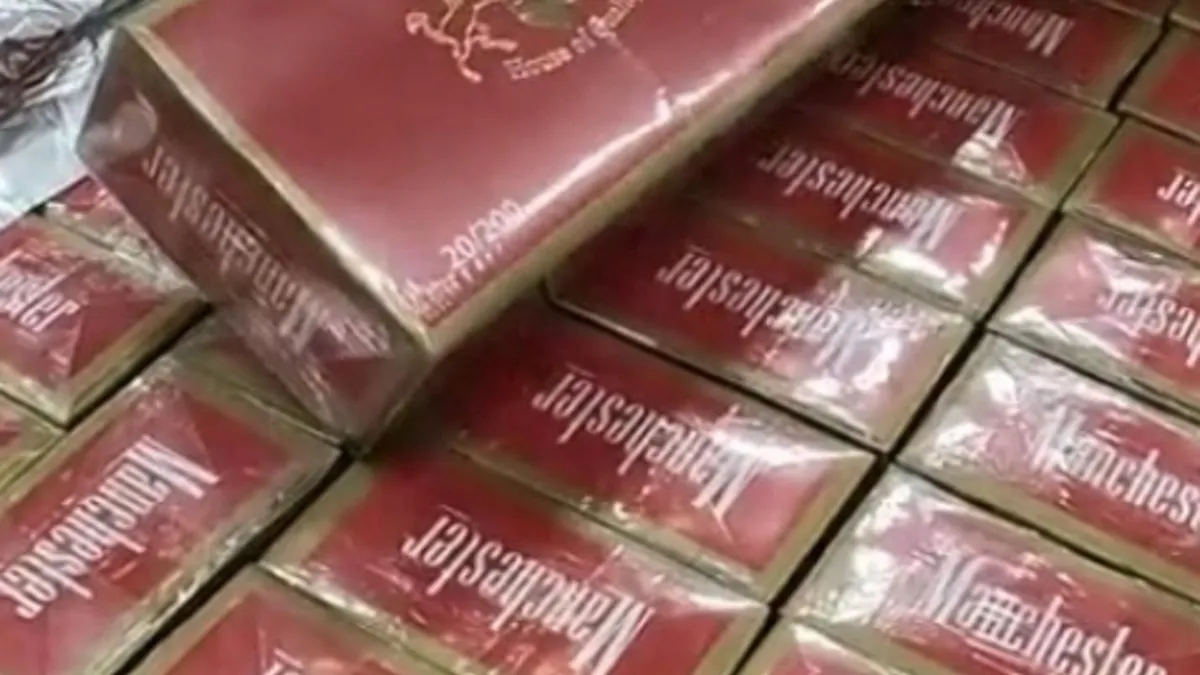
Australia’s illicit tobacco crisis has driven a $5 billion black hole in the Federal Budget and is helping to fund organised criminal activity in the community, a parliamentary inquiry has been told.
Members of the Australian Federal Police and the Australian Criminal Intelligence Commission on Monday fronted a Senate inquiry into the country’s growing illicit tobacco trade that is costing the federal government $5.4bn in lost tax revenue, according to this year’s Budget papers.
ACIC deputy chief executive officer of intelligence Adam Meyer said the black market had sparked violence between organised crime gangs that has spilt onto the streets, claiming three lives as a result. He described the figure as “very concerning”.
Sign up to The Nightly’s newsletters.
Get the first look at the digital newspaper, curated daily stories and breaking headlines delivered to your inbox.
By continuing you agree to our Terms and Privacy Policy.
“We’ve seen a range of violent activities, whether it be violence against individuals or over 200 arson attacks that we’ve seen at tobacconists and a range of other facilities, which is largely linked to inter-group violence,” Mr Meyer told the inquiry.
“Various groups (have been) trying to take greater control of the illicit tobacco market themselves, and that violence has unfortunately spilt into the community.”
Mr Meyer added the black market had a high level of profitability and “lower barriers for entry” into criminal activities.
ACIC deputy chief executive officer of intelligence Adam Meyer said the black market had sparked violence between organised crime gangs. Credit: NewsWire
“It’s easier for actors to become involved. The penalties against them are generally lower for other illicit commodities, drugs in particular,” Mr Meyer said.
“It’s often co-mingled with a range of other organised criminality … whether it be drugs or money laundering or a range of other activities. They also see it as a way of building up other criminal enterprise within their business model.”
During the inquiry, Tasmanian senator Richard Colbeck pressed AFP Deputy Commissioner Hilda Serec on whether the AFP was monitoring shipments of illicit tobacco through Australia Post and other private parcel carriers.
Tasmanian senator Richard Colbeck said Australia Post was ‘terribly exposed’ to the illicit tobacco trade. Credit: NewsWire
Senator Colbeck added that Australia Post did not require a declaration on the contents of domestic parcels – a measure he said left the carrier “terribly exposed” to the trade.
Ms Serec said the AFP would work closely with freight carriers and other partner agencies.
“There has been some engagement with Australia Post … and we will consider anything that frustrates criminality,” she said.
AFP Deputy Commissioner Hilda Serec said the agency would work closely with Australia Post. Credit: NewsWire
The Albanese government said in the May 12 Budget it would provide $20.3m over four years to combat illicit tobacco, including $14m of additional funding to boost state and territory compliance and enforcement capabilities.
The NSW government has introduced a range of measures to crack down on illicit tobacco sales, including bolstering powers for health officials to shutter stores and tougher enforcement, while other jurisdictions, including Queensland, Victoria, and the ACT, have made similar moves.
The federal government will spend a further $5.2m for data collection on nicotine users and markets. The spending will also involve “monetary and imprisonment penalties for illicit tobacco offences, nationally consistent protective order power for restraining order applications, and expanded law enforcement powers to target proceeds of crime, unexplained wealth and tainted property”, according to Budget papers.