When an Alabama man visited a Florida hospital in August 2024, he reported a pain in his left side, near the spleen. Three days later, he died on the operating table, missing a different organ, his liver, on his right side.
A grand jury in Walton County, Florida, on Monday indicted a surgeon, Dr Thomas Shaknovsky, 44, on a charge of second-degree manslaughter in the death of the patient, William Bryan, the Office of the State Attorney for the 1st Judicial Circuit said.
Dr Shaknovsky was arrested Monday morning and has since been released on bond, the Walton County Sheriff’s Office said. He is scheduled to be arraigned in Walton County Circuit Court on May 19. He faces up to 15 years in prison if convicted.
Sign up to The Nightly’s newsletters.
Get the first look at the digital newspaper, curated daily stories and breaking headlines delivered to your inbox.
By continuing you agree to our Terms and Privacy Policy.
A lawyer for Dr Shaknovsky did not immediately respond to a request for comment.
The hospital where Mr Bryan was treated, Ascension Sacred Heart Emerald Coast Hospital in Miramar Beach, Florida, said in a statement that surgeons face “rigorous credentialing standards” and must hold a license from the state to practice.
Dr Shaknovsky, the statement added, “was never a Sacred Heart Emerald Coast employee and has not practiced at any of our facilities since August 2024.”
In August 2024, Mr Bryan, 70, and his wife, Beverly, of Muscle Shoals, Alabama, were visiting their rental property in Okaloosa County, Florida, when he was seized by pain.
Mr Bryan underwent diagnostic imaging at the hospital Aug. 18 that indicated his spleen was possibly enlarged, according to an account that Florida’s Health Department gave in an emergency order suspending Dr Shaknovsky’s license in September 2024.
There was blood in the membrane lining Mr Bryan’s abdomen, but no signs of haemorrhaging, the filing said.
Dr Shaknovsky told Mr Bryan that he needed to have his spleen removed, a minimally invasive procedure that is still considered major surgery, with a recovery time of up to six weeks.
The procedure, which was not regularly performed at Ascension Sacred Heart Emerald Coast Hospital, could have serious complications, the Health Department statement said.
Over three days, Mr Bryan declined to have the surgery and said he wished to return to Alabama for further medical care, but the Health Department said Dr Shaknovsky “continued to pressure” Mr Bryan.
Mr Bryan eventually agreed to have the surgery in Florida and the procedure was scheduled for the afternoon of Aug. 21, a Saturday, when staffing was not sufficient, the Health Department said.
Colleagues in the operating room “had concerns that Shaknovsky did not have the skill level to safely perform this procedure,” the Health Department said.
The signs of trouble came almost immediately.
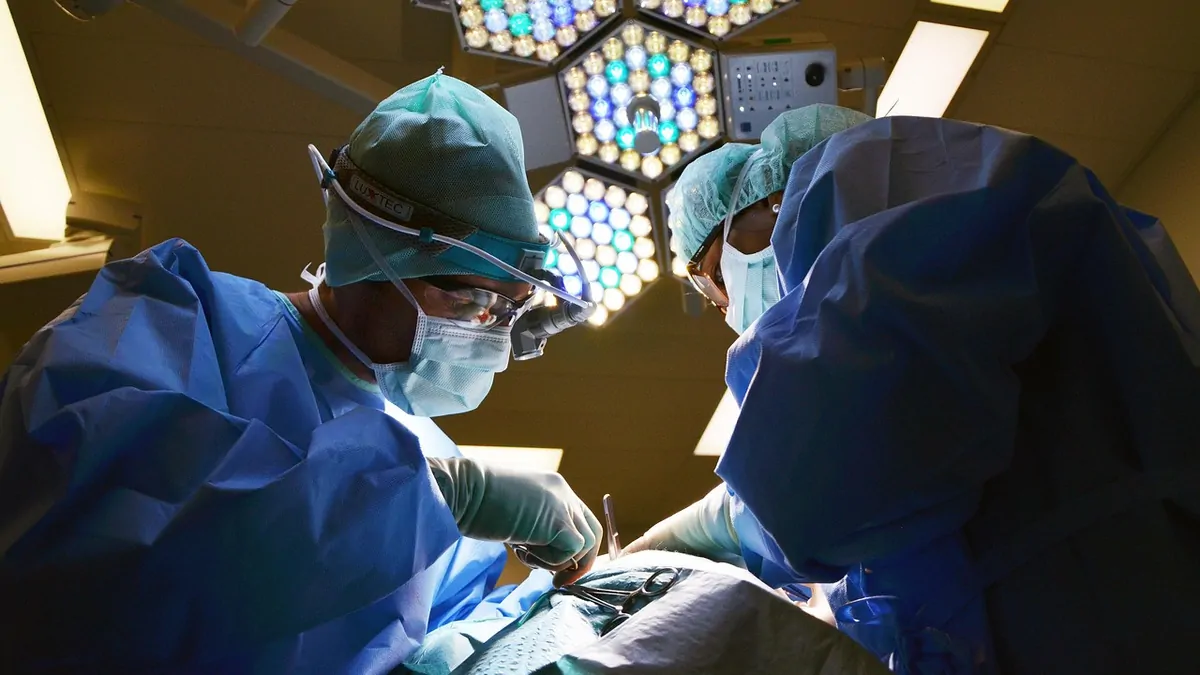
Dr Shaknovsky began the procedure as a laparoscopy but switched to open surgery because he could not clearly see the organs, having failed to document that Mr Bryan had a distended colon that would have partly obstructed the view, according to the Health Department.
Staff members in the operating room later reported that Mr Bryan’s colon “burst out of the abdominal cavity” after Dr Shaknovsky opened his abdomen, and they began suctioning blood to clear visibility, the documents say.
Dr Shaknovsky then took a surgical stapling device to a vessel that he planned to cut to remove the organ, and fired the stapler.
Mr Bryan immediately began haemorrhaging and went into cardiac arrest, with blood pouring out as nurses and other medical staff members attempted to suction it.
They began an emergency transfusion and tried to revive him, the report said.
Dr Shaknovsky did not ask his colleagues for a clamp or cauteriser to quell the bleeding, and instead continued to dissect Mr Bryan’s organ “even though the abdomen was full of blood,” the state said.
He eventually removed Mr Bryan’s liver, thinking it was his spleen.
The Health Department noted in its report that, in addition to being on different sides of the abdomen, “spleens and livers are anatomically distinct, have different consistencies, and are different colours.”
After Dr Shaknovsky removed the organ, “The staff looked at the readily identifiable liver on the table and were shocked when Shaknovsky told them that it was a spleen,” the state documents said. “One staff member felt sick to their stomach.”
In follow-up interviews with the Health Department, Dr Shaknovsky claimed that he dissected the spleen from its surrounding tissue when an apparent aneurysm in the spleen ruptured suddenly, and caused severe bleeding — an account that conflicts with those of other witnesses in the operating room.
An autopsy revealed that Mr Bryan’s liver was missing, but his spleen was intact and there was no evidence of a ruptured aneurysm.
Joseph Ladapo, Florida’s surgeon general, suspended Dr Shaknovsky’s medical license one month after Mr Bryan’s death.
Dr Shaknovsky tried to convince his colleagues in the operating room that the liver he removed from Mr Bryan was his spleen, the Health Department said in its report.
The Health Department had sanctioned Dr Shaknovsky before, finding that he erroneously removed part of another patient’s pancreas instead of an adrenal gland in 2023.
Dr Shaknovsky said at the time that the adrenal gland “migrated” to another part of the patient’s body, the documents say. State records show that Dr Shaknovsky paid $400,000 to settle a medical malpractice claim in that case.
Mr Bryan was a retired boilermaker and a US Navy veteran who loved being by the ocean, Beverly Bryan said in an interview. The couple had two daughters and one son.
Ms Bryan, a retired nurse, received the news of her husband’s death from Dr Shaknovsky at the hospital chapel, where she was waiting with her daughters for her husband to get out of surgery.
“I never even imagined that he wouldn’t come out of that surgery alive,” she said.
“Living without him is almost unbearable,” Ms Bryan said. “He would want his death to be the reason that more people didn’t get hurt by that doctor.”
© 2026 The New York Times Company