Overview:
Jéir Pierre, chief prosecutor in Haiti’s Northwest Department, said missing evidence — including weapons, ammunition and drugs seized — have complicated the work of judges and worsened prolonged detention. In a recent letter, he urged the local police to improve the handling of evidence needed in major criminal cases.
PORT-DE-PAIX, Haiti — The chief prosecutor in Haiti’s Northwest is accusing departmental police of mishandling, and in some cases outright “tampering with,” critical evidence in criminal cases, a practice he says is undermining prosecutions and reinforcing a cycle of impunity.
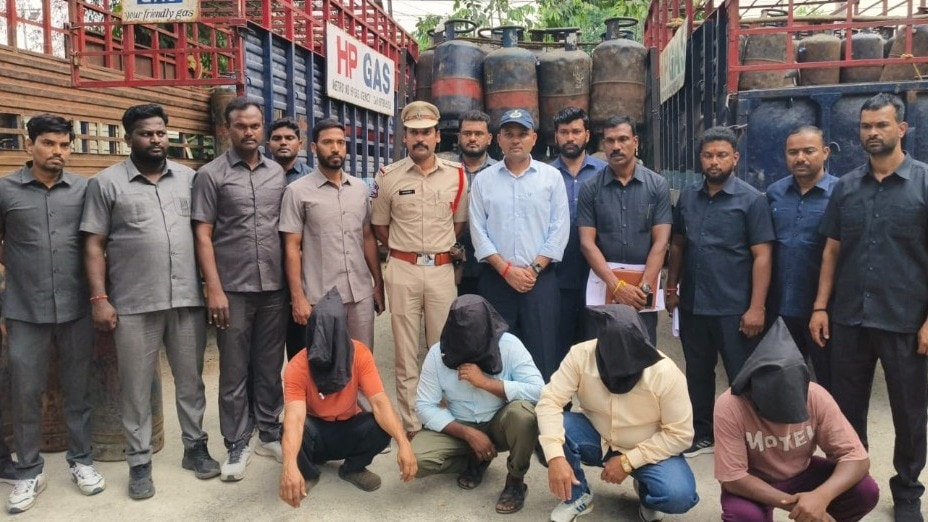
Government Commissioner Jéir Pierre said missing or improperly transferred evidence — including weapons, ammunition and drugs — has stalled investigations and weakened the judiciary’s ability to hold suspects accountable. Pierre said he formally requested in an official letter that Fred Joseph, the departmental director of the Haitian National Police (PNH), provide an explanation after multiple case files were submitted without essential evidence.
“The absence of this evidence prevents the courts from doing their work,” Pierre said in a recent interview with The Haitian Times. “It directly contributes to impunity.”
In the letter made public, the Port-de-Paix Prosecutor’s Office criticized police for failing to consistently submit key evidence alongside case files. Magistrates, Pierre said, are often left to proceed without the physical proof needed to substantiate charges. Such gaps complicate already fragile judicial proceedings, particularly in cases involving prolonged pretrial detention, where suspects can spend years without trial.
Pierre also accused police of overstepping their authority by handling or transferring evidence before judicial authorities are formally involved.
“Two boats seized in Port-de-Paix were sold without a court order,” he said. “Weapons and ammunition were transferred to Port-au-Prince without any judicial process.”
He added that, except for drug-related cases, evidence should remain under judicial control before being sent to central authorities.
PNH officials in the Northwest have yet to publicly respond to the prosecutor’s letter.
Pattern tied to broader dysfunction with asset seizures
The demand for accountability highlights long-standing coordination failures between Haiti’s police and judicial institutions — two bodies meant to function in tandem.
Legal experts and rights groups have repeatedly warned that weak case management, corruption and political interference routinely compromise investigations. Evidence mismanagement, in particular, has been cited as a key factor in failed prosecutions.
The issue is especially critical in Haiti’s current security crisis, where trafficking networks and armed groups operate with limited fear of consequences. The Northwest region remains a key corridor for maritime trafficking between the United States and the Caribbean. In 2025, authorities also recorded one of Haiti’s largest drug seizures there — more than one metric ton of cocaine.
Pierre pointed to past major seizures that now illustrate the problem.
In July 2022, authorities confiscated a large cache of weapons and ammunition in Port-de-Paix, including more than 120,000 rounds of ammunition, firearms, magazines and cash. The shipment, transported from Florida aboard a cargo vessel, was one of the region’s most significant arms seizures in recent years.
Four years later, Pierre said, much of that evidence has disappeared.
“The corpus delicti [material evidence] is no longer available,” he said, adding that the loss has effectively stalled the case.
Police mum on calls for better coordination
However, a source inside the institution, who spoke on the condition of anonymity because they were not authorized, told The Haitian Times that weapons and ammunition are routinely transferred to central authorities in Port-au-Prince, which may explain some of the missing evidence, though not the lack of judicial authorization.
Pierre said his new directives to police require that all serious criminal cases — especially any involving firearms, drugs and seized assets — be submitted with full documentation and physical evidence.
The standoff underscores deeper structural weaknesses in Haiti’s justice system, where under-resourced courts, poor coordination and corruption often collide, allowing cases to collapse and suspects to evade accountability.
Residents say both institutions must work together to avoid further breakdown.
“The decision made by the commissioner is commendable,” said Louinet Métayer, 49, an informed resident. “But justice cannot function without the police. They must resolve their differences.”
Like this:
Loading…