

Local News
The Massachusetts Department of Transportation announced the installation of 86 wrong-way driver detection systems across the commonwealth.
Massachusetts state officials announced progress on the installation of wrong-way driver detection technology across the system in the wake of a fatal wrong-way collision that killed a 17-year-old over the weekend.
The Massachusetts Department of Transportation has installed 86 wrong-way detection systems since the implementation began in June. Officials estimate that 40 more will be installed by the end of the year, with a total nearing 300 set to be in place by the end of 2027. The department also rolled out 12 portable detection systems.
The $75 million program followed a long history of fatal wrong-way collisions across the commonwealth with the death of State Trooper Kevin Trainor in May as the tipping point.
“It’s one of those dangers where seconds can mean the difference between life and death,” MSP Lt. Col. Brendhan Shugrue said at a news conference Monday. “It demands a coordinated response that combines enforcement, public awareness, technology, and responsible decision making by every person behind the wheel.”
Wrong-way collision data
Since the installation of the technology began in June, the detectors have verified 215 wrong-way driving events, State Highway Administrator Jonathan Gulliver said. The technology appears to have had an impact, with 140 of those drivers self-correcting, Gulliver said.
Data from early September data indicates that Massachusetts roadways have seen 25 wrong-way collisions this year — shy of the 33 crashes in 2025 and the 52 crashes in 2024. Just this weekend, Shugrue said, State Police responded to three wrong-way drivers.
One of those incidents ended in a collision that took the life of a 17-year-old senior at Triton Regional High School on Sunday. The teenager was driving the wrong way on Route 1 in the Saugus-Revere area when he collided with another vehicle in a head-on collision, State Police said.
“There is still a lot more work to be done. That’s evidenced by the terrible crash that happened in Revere,” Gulliver said. “This is why we do this: We want to make sure we have as many protections as we can in place for all drivers of Massachusetts.”
Two weeks ago, a woman struck and killed another driver in Cambridge while allegedly driving the wrong way. The woman is charged with vehicle homicide and operating under the influence in Cambridge District Court.
Trainor died in May after responding to reports of a wrong-way driver on Route 1 in Lynnfield. Weeks after that, another state trooper sustained injuries from a wrong-way collision. In total, there have been at least six deaths from wrong-way collisions in 2025, according to state data.
Wrong-way collisions have a higher fatality rate than other accidents, according to a 2016 report from a nationwide transportation program. The primary origin of these crashes is someone accidentally entering an exit ramp — the focus of the state’s detection implementation.
The report also found that impaired and older drivers are over-represented in these types of collisions.
How do the wrong-way drivers detectors work?
The state retrofitted existing signalized intersections and camera systems with the wrong-way detection technology. These systems will detect wrong-way movements and alert both transportation officials and law enforcement, according to a news release.
The systems will integrate warning measures, such as signs with flashing lights to alert drivers before they enter the wrong side of the highway. In the future, Gulliver said the alert could go into the car’s dashboard.
Since more than 60 percent of drivers who were alerted self-corrected, State Senator Bruce Tarr said that “what we’re doing makes a difference.”
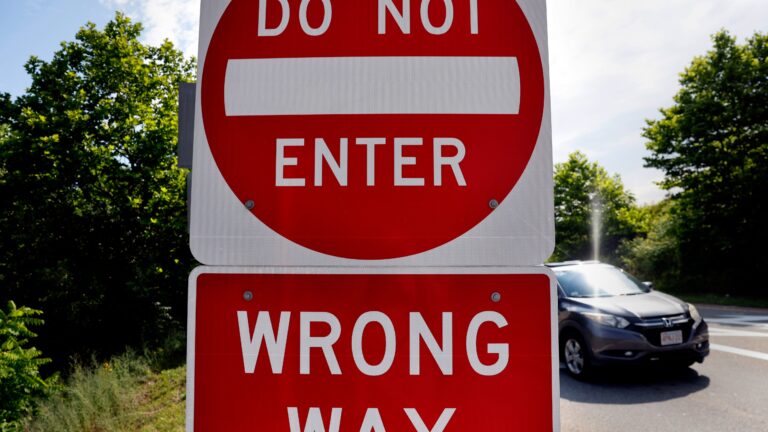
The department of transportation also upgraded “wrong way” and “do not enter” signs, as well as improved pavement markings at 85 percent of highway ramps across the state, according to a news release.
“We’re doing everything we can to take action to prevent these tragedies before they happen,” said Governor Maura Healey in the release. “We’re seeing encouraging results, and we’re going to keep expanding these protections across Massachusetts to save lives and keep people safe.”

Sign up for the Today newsletter
Get everything you need to know to start your day, delivered right to your inbox every morning.
