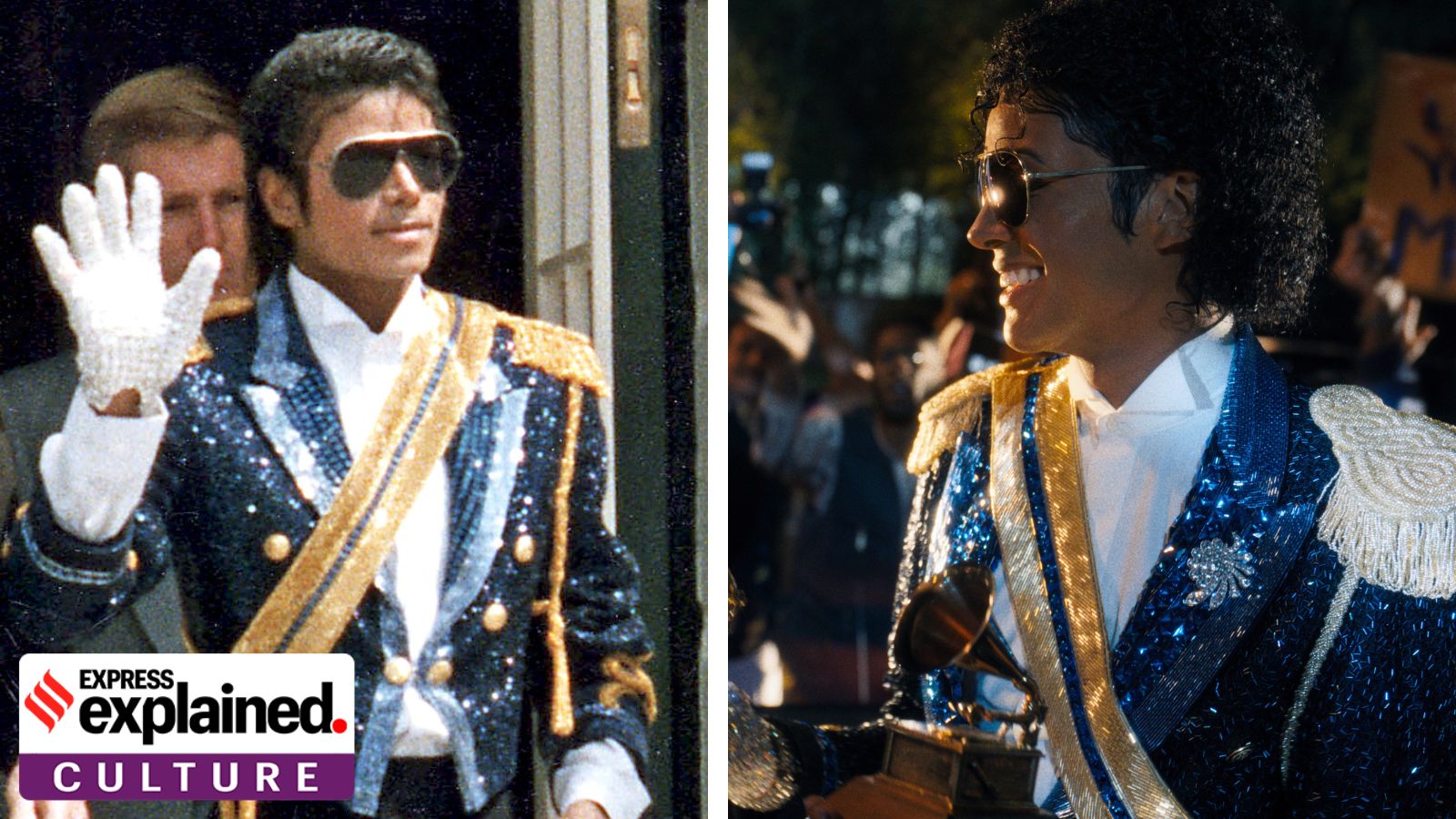
Over 15 years after his death, a biopic on Michael Jackson hits theatres this week, taking on the formidable task of depicting the life of the best-selling solo artist of all time. Or not.
Early reviews noted that the film only covers Jackson’s life until the late 80s, after the release of his album Bad. In doing so, Michael sidesteps dealing with Jackson’s life after his spectacular rise, including the multiple allegations of child sex abuse against him. These allegations affected the rest of his career and complicated the legacy of one of the most influential figures in music.
The film focuses on the beginnings of Jackson’s career and his relationship with his father. One of the 10 children born to an African-American working-class couple, Joe and Katherine, Jackson and his five brothers displayed signs of musical ability early on.
Joe was a steel mill worker, intent on lifting the family out of poverty through musical success, even if it required harsh methods. A 2018 report in The Guardian said, “The Jackson 5, as they were to become, were not allowed outside to play with other children: they rehearsed for five hours a day after school, their enthusiasm incentivised by the fact that if they got a dance step wrong their father would order them to break a branch off a tree in their garden that he then hit them with.” Years later, Jackson would say in an interview with Oprah Winfrey, “I love my father but I don’t know him.”
Michael was the youngest of the group, aged five, when The Jackson 5 — also comprising Marlon, Jermaine, Randy and Tito — were assembled. Jermaine’s son, Jaafar, plays Michael’s role in the new film.
The Jackson 5 in 1969. (Wikimedia Commons)
Starting from local talent competitions, Jackson and his brothers eventually signed with the popular music label, Motown. They were one of the earliest examples of boy bands in American pop music and of a successful Black musical group whose appeal crossed over to White audiences, at a time when this was rare.
Over time, the group chafed under the fixed template set for their work. They decided to change labels and continued releasing music together, but Michael, now in his 20s, was intent on exploring his individual artistry. He moved to New York for some time and released his first solo album, Off the Wall (1979), which spawned several hits, including Don’t Stop ‘Til You Get Enough.
Story continues below this ad
This dictated the direction of his career, now steered towards becoming a solo artist. His next full album was the seminal Thriller (1982), for which he won eight Grammy Awards. Even beyond awards and mammoth sales records, its impact was felt musically and artistically for years to come. For instance, the unusual, horror-inspired music video for Thriller evoked such interest that it made the concept of a music video for songs mainstream, and an emerging TV channel the destination for them.
The Guardian noted, “Thriller sealed MTV’s reputation as a new cultural force; dissolved racial barriers in the station’s treatment of music (though MTV has always denied they existed); revolutionised music video production… helped create a market for VHS rentals and sales, because fans were desperate to see it when they wanted, rather than at the will of TV stations…”
The charges
Fame and success were accompanied by a greater scrutiny of Jackson’s personal life and his public appearances. Media reports published stories pointing out certain eccentricities, like his keeping a pet monkey named Bubbles, or his private residence, Neverland, attached to an amusement park.
Story continues below this ad
Some of the coverage, however, also seems to have stemmed from preconceived notions about Jackson, who had been media-shy and somewhat awkward in public interactions, in contrast with the confidence he exuded while performing. At times, the usage of terms like “Wacko Jacko” to describe him took on racial connotations. His changing appearance, which he later attributed to vitiligo, also added to his public perception as a popular but strange figure.
For fans, these quirks made Jackson more real and were somewhat explained by his unusual life path, lacking a normal childhood. But for others, it spoke of something disingenuous.
Then came the allegations. In 1993, Jackson was accused in civil court of molesting a 13-year-old boy named Jordan Chandler. Jackson was subjected to a full-body search, which he called “The most humiliating ordeal of my life.”
While many allegations of sexual abuse are often dismissed when it comes to those in power, what added to the public’s somewhat unfavourable perception of Jackson was his history of “friendships” with children. These included Home Alone actor Macaulay Culkin and his brother Kieran, who visited Neverland. Jackson was known to have had children sleep in his house, away from their parents, stating that he loved being around children. He vehemently dismissed the allegations against him.
Story continues below this ad
The next year, Jackson settled the molestation case out of court. But in 2003, a period in which his career was seeing somewhat of a lull, Jackson was charged with seven counts of child sexual abuse. All charges were made by Gavin Arvizo, a cancer survivor who was under 14 at the time of the alleged crime.
Jackson would be acquitted in 2005 in the case. His defence team argued that the family exploited the boy’s illness to blackmail celebrities for money and presented information to challenge the credibility of the family. Despite the acquittal, these claims would continue to raise questions about Jackson’s legacy, and whether they took away from his art.
Close to his death due to cardiac arrest at the age of 50 in 2009, he was preparing to undertake a global tour to revive his public image. His passing brought an immediate boost in his popularity, but years of allegations continue to follow Jackson after his death. The 2019 documentary Leaving Neverland, which told the story of two men who alleged abuse at Jackson’s hands when they were children, again put those questions front and centre.
It has been reported that Michael was set to include some of these details, but that in 2024, the makers were forced to undertake extensive reshoots over potential violations of a nondisclosure agreement in one of the legal cases. And, with the involvement of Jackson’s estate, which permitted the use of some of his music for the film, it became even more unlikely for these aspects to be put on the screen.