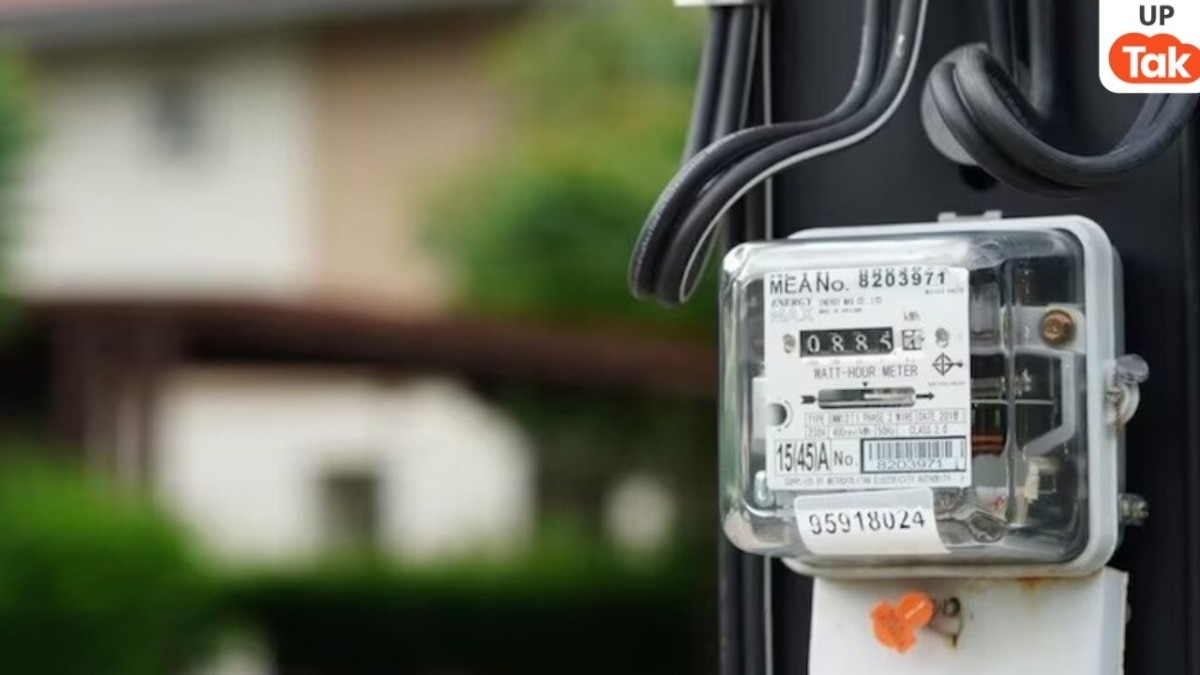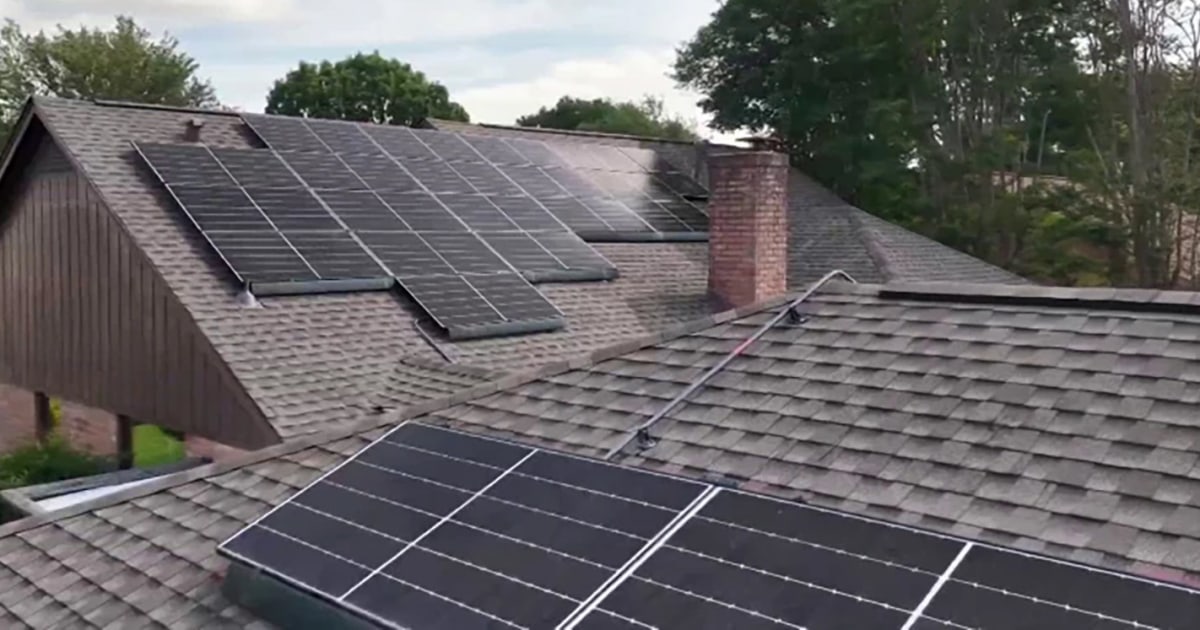
HOUSTON — Jeff and Jenny Wright haven’t paid an electric bill for their Houston home in more than a year. Instead, the couple sells their unused power back to the grid in a system that some states hope can offer a way to help meet surging demand for electricity.
Subscribe to read this story ad-free
Get unlimited access to ad-free articles and exclusive content.
Americans today pay 40% more, on average, for their electricity than they did just six years ago.
Generating their own power makes a big difference for the Wrights and rarely more so than it did this spring, when energy costs soared even higher because of the U.S.-Israeli war with Iran. Nationwide, energy prices jumped 4% in April alone.
“I’m getting fairly close to retirement, so cost control for us is a big thing,” said Jeff Wright.
The Wrights have solar panels on their roof that are capable of powering the home appliances and the TVs they use on a daily basis.
But they also have two Tesla battery packs mounted on the side of their home — the key equipment they needed in order to turn their home from a solar-powered stand-alone into part of a virtual power plant (VPP) network. Any excess energy not used by the Wrights can be stored and sent back to the central power grid to help stabilize it during times of peak demand.
VPPs currently exist, or are in the works, in 35 states and Washington, D.C. The largest networks are in California and Texas.
In Texas, the Wrights are paid a $240 yearly reward from their solar provider, Sunrun, on top of monthly credits, which have been up to $30 once all their power needs are met.
But credits and saving on electric bills may not immediately cover the cost of installing solar panels, which can run into the tens of thousands of dollars, and sometimes involve leasing plans.
For the Wrights, the energy independence is worth it. They also say the system is more resilient during extreme weather events.
“I never notice it, the lights don’t dim,” said Jeff Wright. “We’ve never come close to running out of energy.”
Energy companies like Sunrun and Reliant, one of Texas’ primary energy providers, say there are broader implications to more houses contributing to VPP networks.
America’s power grid is currently not generating enough power to meet what experts predict will be needed to power the AI data centers being planned and built in communities across the country.
According to the U.S. Department of Energy, the country will need to add new resources to support about 200 gigawatts of peak demand. For reference, 1 gigawatt is equal to about 1.3 million horsepower and can power about 750,000 homes for a year.
According to a report by the Rocky Mountain Institute, VPPs could reduce peak demand in the United States by 60 gigawatts by 2030 and help reduce annual power sector expenditures by $17 billion.
“The grid hasn’t seen growth for decades, and people don’t realize that,” said Paul Dickson, the president of Sunrun, America’s largest distributed energy company. “That’s getting turned on its head over the next 15 years — the grid is anticipating 40% growth, and so it’s a lot of strain on the same poles and wires.”
The last time the grid experienced this level of demand growth was around the turn of the millennium, as the U.S. economy grew and air conditioning, the internet and personal computers all saw massive growth.
For the past two decades, however, typical annual growth from factors like population have been offset by increased energy efficiency across everything from appliances to light bulbs to cars.
Sunrun said it currently has 107,000 customers nationwide enrolled in a VPP. In 2025, those customers contributed 18 gigawatt-hours of power back to the grid, which is enough to power 15 million homes for one hour. The company paid those customers $17 million for that energy.
For Dickson, stabilizing the power grid is a race against time. Building a conventional power plant can take 10 to 12 years, while a nuclear facility could take decades. Booting up a functioning VPP takes just a few months.
“The 100,000 homes that we do every year equates to the same output as a nuclear power plant,” he said. “Smaller power plants that are being built in three to five years, we do every three to four months.”
Sunrun said it aims to grow its fleet of dispatchable battery systems to 10 gigawatt-hours by the end of 2028.
A gigawatt-hour is a unit of energy that measures how much electricity is produced or used over time. One gigawatt-hour is equal to 1 billion watts of power used or generated continuously for one hour.
But VPPs can draw power from a variety of sources, not just solar panels. A smart thermostat can be part of a VPP system.
“You really don’t need a bunch of fancy devices in order to be a participant in any of our virtual power plant programs,” said Bill Clayton, senior vice president of Reliant, which says it currently has 300,000 customers participating in VPPs.
Reliant says it’s working on ways to power VPPs through electric vehicles parked in people’s garages.
“EVs are the crown jewel in terms of putting demand or putting supply back on the grid or reducing demand on the grid,” Clayton said. “It’s going to be a critical phase for us.”
In Houston, Jeff Wright says his neighbors are already asking him about VPPs after his home system zapped his monthly utility bills to effectively zero.
“We’ve got two batteries here, and what we have is not going to stabilize the entire grid, but if enough of us get together and do this, it will help everybody in Texas and ourselves as well,” he said.