Politics
The ballot measures range from adjusting the cap on state tax revenue and modifying the state’s voting and election procedures to overturning previous legislation related to firearms and marijuana.
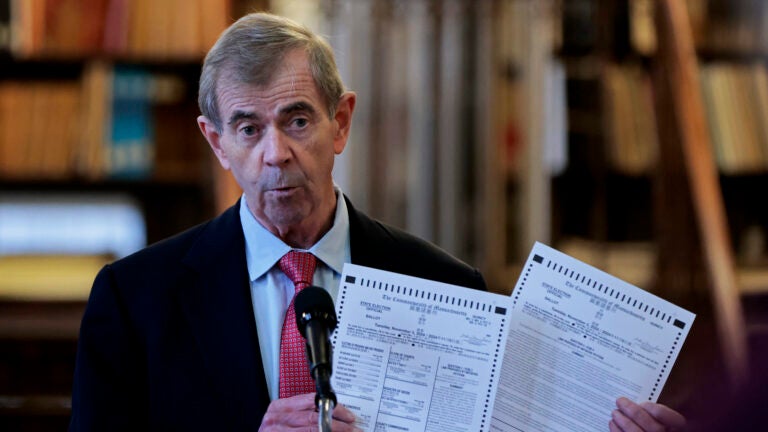
Secretary of the Commonwealth William Galvin holds ballots for the 2024 election. Pat Greenhouse/The Boston Globe
Massachusetts voters will face nine statewide ballot questions when they head to the polls for the next statewide election.
-
As Mass. ballot initiatives multiply, critics want to limit them
-
Takeaways from the first elections of the 2026 midterm campaigns
Secretary of State William Galvin’s office announced on Tuesday the nine ballot questions for the Nov. 3 state election ballot.
Massachusetts has not seen this many ballot questions since 1994. With this number of questions, the ballots in most communities are expected to be two to three pages long, though ballot length also depends on other factors, including how many local candidates are running in that community, Galvin’s office said.
Here is a list of certified questions for the 2026 election in the order in which they will appear on the ballot, per the Elections Division.
Question 1: Expanding the Public Records Law
Under this ballot initiative, records kept by the governor’s office and the state legislature, which are currently excluded from the access requirements in Massachusetts law, would be classified as public records.
Question 2: Collective Bargaining for CPCS Employees
This measure would allow public defenders and other employees of the Committee for Public Counsel Services to unionize and participate in other collective bargaining practices.
Question 3: State Primary Elections
This proposed initiative would merge individual political party primaries into a single election. All candidates, regardless of political affiliation, would be listed on the ballot together, and the two candidates that receive the most votes would move forward to the general election.
Question 4: Election Day Registration
This question would allow Massachusetts residents to register and vote on the day of the election.
Question 5: State Revenue Limit & Rebate
If passed, officials will use a new method for determining the state tax revenue cap.
Currently, this cap is based on the previous year’s limit combined with the three-year average growth of wages and salaries in Massachusetts. If the question is passed, the limit would instead be calculated using the actual net state revenue from the preceding year along with the wage and salary growth.
Question 6: Natural Resource Conservation Fund
This measure proposes creating a “Nature for All Fund,” which would allocate state finances to fund nature conservative efforts.
Question 7: Single Family Homes
Under this initiative, municipalities would be permitted to allow for the construction of single-family residences on residentially zoned lots that meet specific minimum standards: at least 5,000 square feet of area, at least 50 feet of frontage along a public way or street, and connection to public sewer and water services.
Question 8: Prohibit Retail Sale of Adult Recreational Use Marijuana
This proposal seeks to overturn the 2016 ballot question that legalized the sale of recreational marijuana across Massachusetts.
If approved, this measure would repeal the current laws permitting the sale and home cultivation of recreational marijuana, as well as establish new possession limits and civil penalties for violations.
Question 9: Firearms Regulation
The final question proposes repealing the 2024 gun reform law, which changed the ban in state law from an assault weapon ban to an assault-style firearm ban.
Sign up for the Today newsletter
Get everything you need to know to start your day, delivered right to your inbox every morning.