An airstrike on a train line that endangered the lives of former European leaders and CIA officers.
Armed drones in Moldova suspected of stalking the plane of Ukrainian President Volodymyr Zelensky.
A clandestine effort to assemble an international network of assassins, including plans to “eliminate” a Kremlin critic in Washington.
Sign up to The Nightly’s newsletters.
Get the first look at the digital newspaper, curated daily stories and breaking headlines delivered to your inbox.
By continuing you agree to our Terms and Privacy Policy.
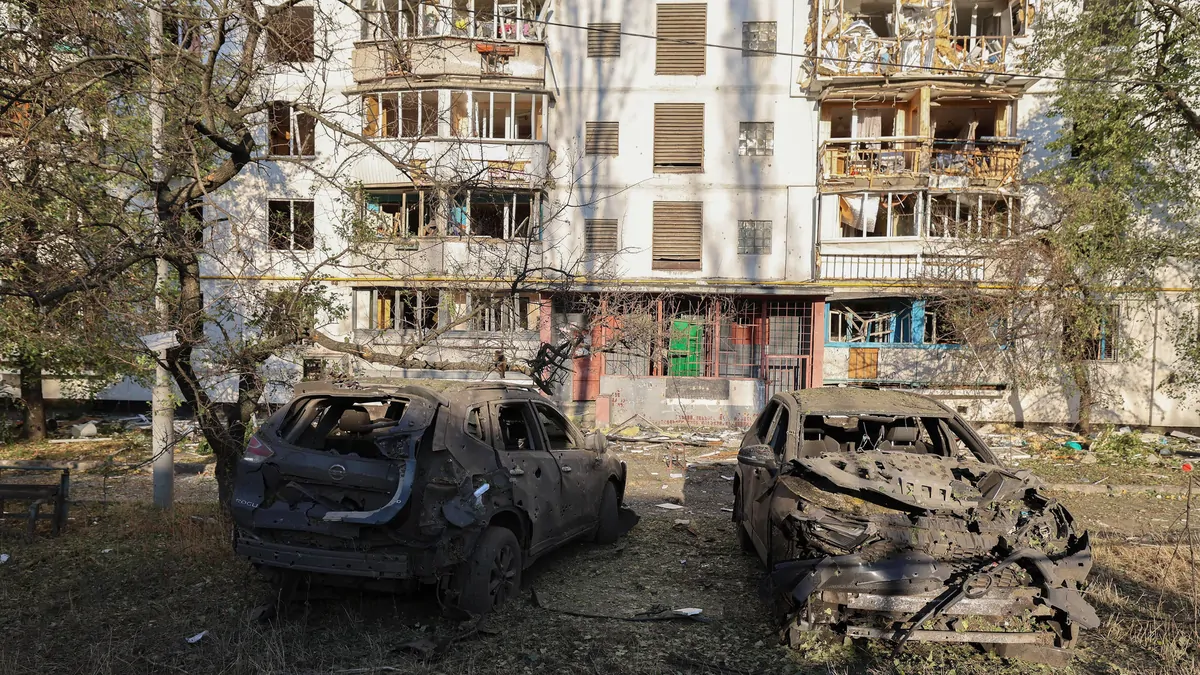
In a matter of weeks, Russia has been linked to a stunning series of attacks and plots that — had any one of them turned deadly — carried the potential to trigger a dangerous escalation in the war in Ukraine and the West’s broader conflict with Moscow, according to security officials and experts.
The spate of attacks — at a moment when the Trump administration is pushing to revive peace negotiations — has put security agencies on edge, officials said, threatened travel routes that are critical to Ukraine’s ability to maintain ties with its supporters, and raised concerns that Russia once again is probing how far it can go in widening the war as it seeks to break the will of Kyiv’s backers.
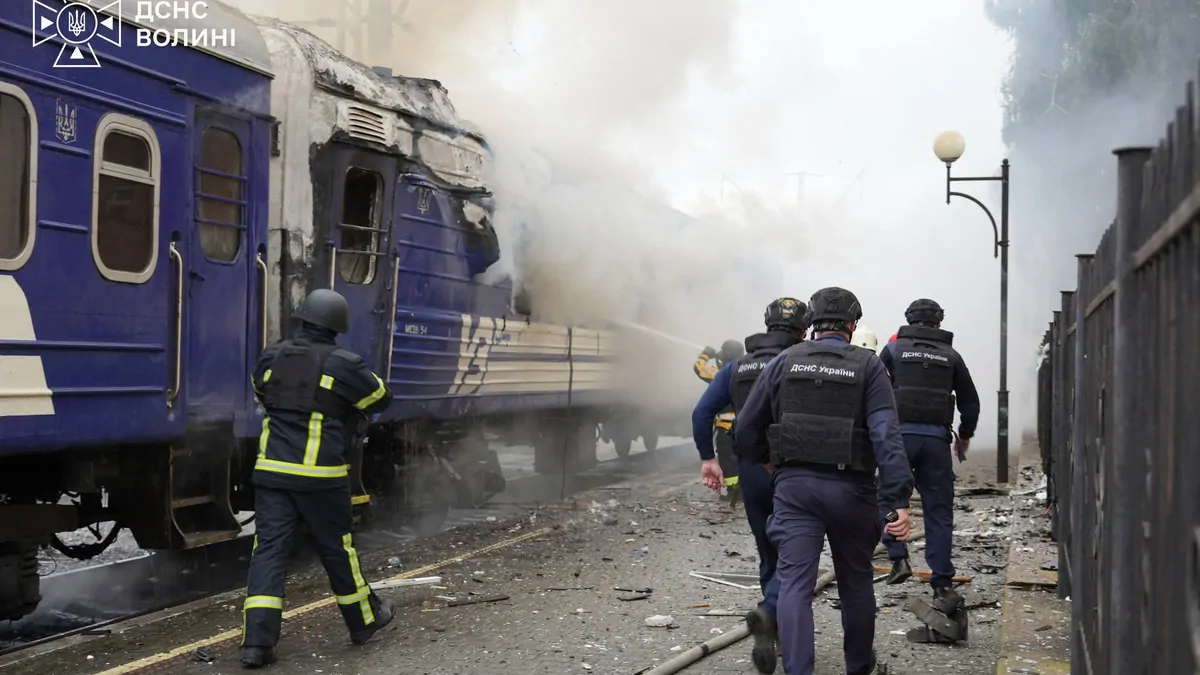
Russia’s drone strike on a train near the Ukraine-Poland border early Sunday seemed to mark a worrisome new development in Moscow’s calculations, officials said.
The attack destroyed a locomotive on a section of track where a delegation of diplomats and former top European officials – including former British prime minister Boris Johnson – had passed a short while earlier after attending an annual Yalta European Strategy conference in Kyiv.
Former CIA director David Petraeus and two other former agency officials were on a separate train that was evacuated minutes before the explosion, officials said.
Former officials and experts said Moscow likely intended to send a signal of intimidation, but that a minor mistake in timing or coordinates could have left dozens dead and put pressure on the United States and its allies to retaliate.
“My assessment was that it wasn’t intended to kill Boris Johnson or David Petraeus,” said Glenn Corn, a former senior CIA official with responsibilities for operations in Russia and Eurasia who was also aboard the evacuated train. “But it was definitely premeditated and intended to send a strong message: We don’t want you coming to Ukraine. This is our sphere of influence. This is a warning.”
An errant strike on trains carrying Johnson or Petraeus risked unleashing a “snowball effect,” Corn said, an “escalatory chain” that could test the restraint of Moscow and Washington.
The strike came just days after Zelensky said his government plane was targeted by Russian drones at an airstrip in Moldova as he was traveling to the Sept. 9 funeral of the king of Norway, a country that has been a staunch supporter of Ukraine since Russia’s 2022 invasion.
“In Moldova, my presidential jet was there, and that’s why they attacked Moldova,” Zelensky said in an interview with CBS. “When we went back home, again through Chisinau, they did the same.”
Ukrainian and Moldovan officials confirmed that Russian drones had crossed into Moldovan airspace while Zelensky’s jet prepared to depart Chisinau International Airport, though officials said that one of the drones was destroyed near the border about 100 miles from the airport and that Zelensky’s plane was never in danger.
On Tuesday, the U.S. government exposed another alleged front in Russia’s campaign against perceived external adversaries. A criminal indictment unsealed by the Justice Department accused operatives in Russian intelligence services of using encrypted communications apps to recruit assassins to kill dissidents or critics of Moscow.
The indictment, filed in the Southern District of New York, describes communications in late August between alleged agents in Russia and an unidentified U.S. resident as part of a plot to “eliminate” or “disappear” a Russian dissident in Washington.
The network also sought an assassin to kill a Russian dissident in Lithuania, according to the indictment, as well as other recruits to carry out terrorism attacks in the Czech Republic. At one point, according to the indictment, a Russian intelligence officer identified as Yuri Khrameev suggested killing an alleged Kremlin critic by “throwing a bottle of gasoline” or “sticking a knife” in him.
Kremlin spokesman Dmitry Peskov dismissed the allegations this week, saying Russia had not seen “any coherent evidence or arguments based on anything tangible.”
Officials emphasized that Russia has been linked to assassinations, and to plots targeting alleged dissidents, in Europe for decades, and that in recent years Moscow has pursued other plots that similarly alarmed security services.
In 2024, Russia’s GRU spy agency used operatives recruited online in a plot to place incendiary devices aboard cargo aircraft, causing parcels to catch fire in Britain, Poland and Germany.
The Biden administration was so alarmed by the prospect of explosions on transatlantic cargo planes that CIA Director William J. Burns and national security adviser Jake Sullivan were enlisted to issue warnings to their counterparts in the Kremlin.
It is not clear if President Donald Trump, who recently scolded Ukraine for carrying out attacks on energy targets in Russia, has taken similar steps to caution Moscow about the train strike or the potential targeting of Zelensky’s aircraft.
European officials have repeatedly denounced Russia in recent months for drone incursions, arson attacks and other plots attributed to Kremlin security services. German authorities last month found a drone carrying explosives near a Ukrainian cargo plane at an airport in Leipzig.
Polish Prime Minister Donald Tusk warned on Thursday that Russia could launch “hybrid drone and missile strikes” against NATO countries while depicting them as accidental.
Russia’s ability to strike trains near the Polish border or violate Moldova’s airspace has been driven by new military capabilities, including the development of powerful jet-powered drones whose speed and high-altitude trajectories overwhelm Ukraine’s air defenses and have altered the war’s dynamic, according to officials and experts.
Russia rarely succeeded in striking moving targets including trains early in its invasion because of the technical limitations of its air force and the inexperience of its targeters, experts said. Advanced drones, combined with experience, have reduced these shortcomings. As a result, a war in which the front lines have been effectively frozen is now characterized by penetrating strikes by both sides meant to disrupt and exhaust the enemy.
Ukraine has “been doing well at the front and it’s their best year since 2023 in terms of combat performance,” said Michael Kofman, a military analyst at the Carnegie Endowment for International Peace. But now “it is the rear, the infrastructure in cities, that looks increasingly precarious heading into winter.”
With Ukraine running extremely low on interceptors and other air defenses, Russia has been bombing civilian targets including shopping centers and distribution warehouses used for food and medicine, leading to some shortages. In a diplomatic gesture, Putin agreed to halt attacks on Kyiv for 72 hours while U.S. envoys Steve Witkoff and Jared Kushner made their first visit to Kyiv since Trump’s return to the presidency.
Ukraine’s airspace has been closed since the start of the invasion, so visiting dignitaries almost universally arrive by railroad.
The number of attacks on trains, however, has “grown exponentially” over the past year as part of a Russian drone campaign aimed at crippling Ukraine’s economy and infrastructure, Ukrainian Railways boss Oleksandr Pertsovsky said this week. He said about 40 trains were hit in August alone, among 400 targeted since the invasion’s outset.
In an interview, Petraeus, who was a four-star U.S. Army general before becoming CIA director under President Barack Obama, said that his recent train trip to and from Kyiv was the 11th he’s made since the invasion of February 2022. Petraeus, who attended the YES conference, said he had never before been forced to evacuate a train on the overnight journey, but that his train was evacuated three times this week because of the drone threat.
Asked whether he believed that Russia intended to kill him or other dignitaries who had attended the conference, Petraeus said, “I think that would have been unwise.”
Doing so would likely bolster Western resolve in its support for Ukraine, a response that “would undermine what it is [that Russia] is trying to achieve, and they would recognize that.”