

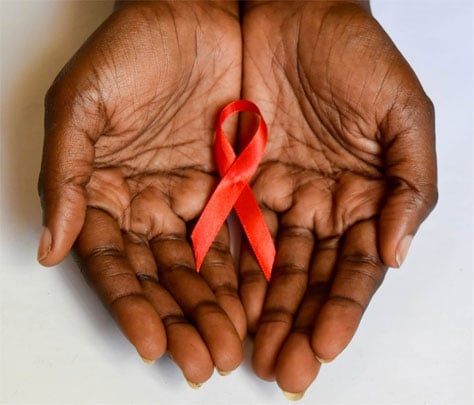
Source: NIH Office of AIDS Research
Twice a year. One shot in the stomach. That is what it now takes to bring a person’s risk of catching HIV down to almost nothing. In trials among women in South Africa and Uganda, people taking lenacapavir went a full year without a single new infection, a result that researchers are calling one of the biggest turning points in prevention science.
Read that again, because it matters before we get to the part that doesn’t feel as good. We are living in the year science actually solved this. And Black America is still burying people over it.
Nearly forty thousand people are diagnosed with HIV in this country every year. Black Americans, who make up 12% of the population, account for close to 40% of them. Despite that, we made up just 15% of pre-exposure prophylaxis (PrEP) users in 2024, the lowest share of any racial group in America, and the lowest PrEP-to-need ratio there is. Six months after lenacapavir hit pharmacies, only 17% of the people using it were Black. That is not a rounding error. That is the same gap oral PrEP has carried for fourteen years, just wearing a new outfit.
Dr. Pamela Foster has spent her career inside that gap. A preventive medicine specialist and provost at Tougaloo College, she will tell you the barriers are not mysterious. People still do not know PrEP exists. The ones who do cannot always afford it once insurance stops covering the difference. Foster’s read is blunt: we know what’s broken, we just haven’t fixed how we talk about it or pay for it.
Bithiah Lafontant, who leads communications for ViiV Healthcare, put her finger on the quieter part of that same problem. The company built an entire campaign, “Do It For Future You,” around getting people to actually bring HIV prevention up with their own doctor, because so few do. Her explanation for why is only five words: “Stigma thrives in the shadows”. And she is right. You cannot fix a silence with a pamphlet.
Two Black women researchers made an argument this summer that goes even further than access. Dr. Brit M. Williams and Dr. Marissa N. Robinson point out that Black women account for nearly 57% of new HIV diagnoses among women, despite being just 13% of the female population in this country. Their case is not only that we are locked out of PrEP. It is that for years, people have talked to Black women about it instead of with us. After co-editing a book with 28 Black women researchers, clinicians, and advocates, their conclusion landed like a closing argument: “we are the solution we’ve been waiting for.”
Across the Atlantic, the same drug tells a different story there, and it is not a happier one.
South Africa launched lenacapavir on June 5th, the ninth African country to do so. It did so after the Trump administration ended most PEPFAR funding to the country and left it off the list of nations receiving U.S. supplied doses, part of a deepening political standoff between Washington and Pretoria. PEPFAR money made up about 17% of South Africa’s HIV budget. Not the majority. Just enough that losing it gutted the testing sites, the outreach workers, and the clinic staffing the country needed right as it tried to deliver a brand new drug at scale.
Source: Black Men’s Health
Kenya’s Dr. Kenneth Ngure, who now leads the International AIDS Society, summed up the entire year at the Rio conference in one line: for all the scientific progress, “the funding cuts have also taken us back.” More than 1,700 HIV service sites have closed worldwide because of it. Winnie Byanyima, the Ugandan head of UNAIDS, said it plainest of all: “Scientific breakthroughs alone will not end AIDS. Access will”
There are people answering all of this instead of just naming it. Rep. Bonnie Watson Coleman reintroduced the PrEP Assistance Program Act this year to fund the copays, the clinic fees, and the outreach that keep falling through the cracks, and her framing cuts right to it: “it’s a social justice issue too”. And with National HIV/AIDS and Aging Awareness Day landing on September 18th, the National Minority AIDS Council is already pushing the conversation forward, because more of us are living into our fifties and sixties with HIV than ever before, and most of our health systems still are not built for that reality.
Put both halves of this story next to each other, and one pattern shows up twice. Here at home, the tool exists and the price tag and the silence keep it out of reach. Across the water, the tool exists, and a funding decision made in Washington decides who gets it and who waits. Different mechanisms. Same result. The people who need this shot most keep ending up last in line for it.
That is not a failure of science. The science actually worked, for once. It is a failure of everything sitting on top of it: insurance, stigma, and a foreign policy that treats African lives as negotiable. Closing that gap does not take another breakthrough. It takes treating access like it matters as much as the lab work that got us here.
Anand Subramanian is a freelance photographer and content writer based out of Tamil Nadu, India. Having a background in Engineering always made him curious about life on the other side of the spectrum. He leapt forward towards the Photography life and never looked back. Specializing in Documentary and Portrait photography gave him an up-close and personal view into the complexities of human beings and those experiences helped him branch out from visual to words. Today he is mentoring passionate photographers and writing about the different dimensions of the art world.
