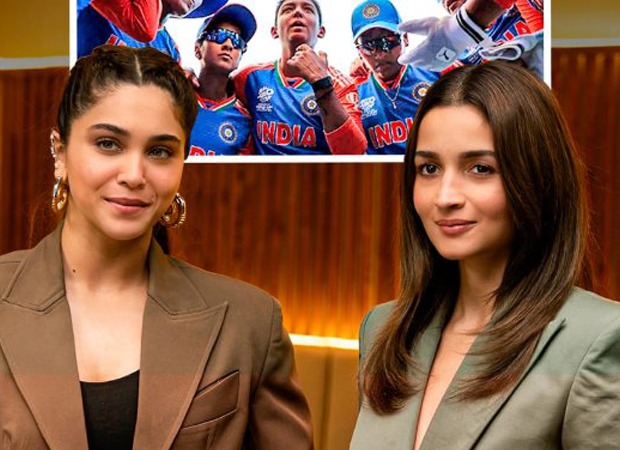
It’s not hard to speculate where this rumour could have originated from and why people are so enthusiastically running with it. It has become deceptively easy to run PR campaigns surrounding upcoming films, using them to stir cultural discourse. Even though Cocktail 2 director Homi Adajania has said there is a good reason behind Sanon’s now-viral ‘threesome’ dialogue from the trailer, what is more interesting is what these conversations reveal about us as a film-going audience. Films like Kabir Singh and Animal, and in the more recent past, Dhurandhar and Tere Ishk Mein, have created the kind of celluloid landscape that mainly swings between masculine hero-worship and trite rom-coms. If two girls in a movie aren’t fighting for the affection of the lone male protagonist and Bollywood is still years away from perfecting genuine female friendships on-screen, the only option is for the audience to brand them as lesbians.
Despite the history of queerness in India spanning centuries, mainstream culture has rarely paid its due to non-heteronormative stories. Since the decriminalisation of Section 377 in 2018, the queer films we have gotten have been few and far between, with Badhaai Do delving into the lavender marriage between a gay cop and a lesbian PE teacher, Ek Ladki Ko Dekha Toh Aisa Laga tracking a Punjabi woman (Sonam Kapoor)’s coming-out story, ‘Geeli Pucchi’ from Ajeeb Daastaan following an intercaste lesbian love story, and Chandigarh Kare Aashiqui centring the romance between a cisgender man and a transwoman (minus points casting Vaani Kapoor in the role) being the last few attempts.
Within mainstream culture, the lesbian still exists as a caricature to titillate the male gaze, never as an autonomous individual. Recently, Accused (2026), a film about a successful gynaecologist (Konkona Sen Sharma) facing anonymous allegations of sexual misconduct, explored the fetishistic accusations that lesbians are often slammed with for living their truth and how easily they can be turned into predators when the stigma surrounding their sexuality is weaponised against them. A nuanced portrayal like that could have benefitted from a wider theatrical release, but there’s a real chance that it would not have been given the CBFC greenlight for ‘defiling Indian culture’ by showing a married Indian lesbian couple. When Deepa Mehta’s Fire released in 1996, it had passed through the censor board with no cuts. Only once it reached the masses did right-wing political parties call for a ban against the “immoral and pornographic” film, saying it went “against Indian tradition and culture”. Theatres were vandalised, cinema-goers were threatened. Despite the fact that Fire released 30 years ago, it is still hailed as one of the most progressive portrayals of sapphic love to ever come out of Indian cinema.