On roughly 40 occasions since March, Donald Trump has claimed that he was close to a deal with Iran. This time, he was, at last, right. Overnight on Sunday both America and Iran announced an agreement that they claim will end their nearly four-month war and reopen the Strait of Hormuz.
It will bring needed relief to a scarred region, and to global energy markets. But it will not resolve the issues that brought America and Iran to war in the first place.
The agreement, which the Americans describe as a memorandum of understanding (MOU), is meant to be signed in Geneva on Friday. Until then the text will probably remain a secret. Both sides will spend the week trying to present it in a favourable light, but their claims should be treated with scepticism: some will be nonsense.
Sign up to The Nightly’s newsletters.
Get the first look at the digital newspaper, curated daily stories and breaking headlines delivered to your inbox.
By continuing you agree to our Terms and Privacy Policy.
Still, many details of the MOU have been reported in recent weeks, and a diplomat familiar with the text says those reports are broadly accurate. It will start with America and Iran lifting their blockades of Hormuz, which should be reopened within 30 days. Beyond that, it is a deal to keep talking about a deal: they will begin 60 days of negotiations over a final agreement about Iran’s nuclear programme.
The most pressing topic for America will be how to dispose of Iran’s stockpile of more than 400 kilograms of uranium enriched to near-weapons-grade (Iran also has almost 9000kg of the less enriched kind).
For months Mr Trump demanded that Iran hand it over to America. Iran refused, offering instead to dilute the stuff to a lower level of purity. The Americans seem to have relented. The International Atomic Energy Agency, the UN’s nuclear watchdog, will join their talks and advise on the best way forward (exporting the uranium to a third country may also be an option).
America will offer Iran some short-term sanctions relief when the MOU is signed. That may include a waiver allowing it to export oil, and the release of up to $US24 billion ($34b) in frozen Iranian assets (albeit in stages, and with restrictions on how the money can be spent).
The MOU is also meant to end Israel’s war with Hezbollah, an Iranian-backed Shia militia in Lebanon. But the language is said to be vague: it is unclear whether the deal will insist on an Israeli withdrawal from territory it occupies in south Lebanon.
Pakistan brokered an initial ceasefire between America, Iran and Israel in April, which has largely held despite repeated violations by all sides. But it played a lesser role in mediating the MOU. Diplomats from Qatar have shuttled back and forth to Tehran in recent weeks and worked closely with J.D. Vance, America’s vice-president, who led the negotiations in Washington.
News of the deal sent oil prices down more than 5 per cent in Monday-morning trading. At $US83 a barrel, Brent crude is now at its lowest level since the first week of March (though still almost $US20 above pre-war prices).
There is a glut of oil waiting to leave the Persian Gulf once Hormuz reopens. Around 60 tankers laden with crude have been stranded for months, according to Kpler, a data firm. Gulf producers also have an ocean of the black stuff ready to burst their storage tanks, which filled up earlier in the war.
Still, it will likely take months until the strait returns to anything like pre-war traffic — especially if talks over a final agreement falter, as they easily could. Negotiating one in 60 days is a tall order.
The highly enriched uranium is only the first issue. America will want to discuss other restrictions on Iran’s nuclear programme, and Iran will insist on broader sanctions relief in return. What is meant to be an interim deal could calcify into something longer-term.
If that is indeed how the war ends, it ends with no outright winners. When the bombs started falling Mr Trump told the Iranian people that “the hour of your freedom is at hand”. Now he is making a deal with the regime he sought to topple.
Any such agreement is likely to be controversial in Washington. Lindsey Graham, a hawkish Republican senator, has already said it must be subject to congressional review. He also looks keen to lay the blame for a bad deal at the feet of Mr Vance, who he describes as the “architect” of the MOU.
The ledger looks worse for Israel, which has long insisted that any deal address not only Iran’s nuclear programme but its missile arsenal and its support for regional militias. Neither is likely to feature in a final accord.
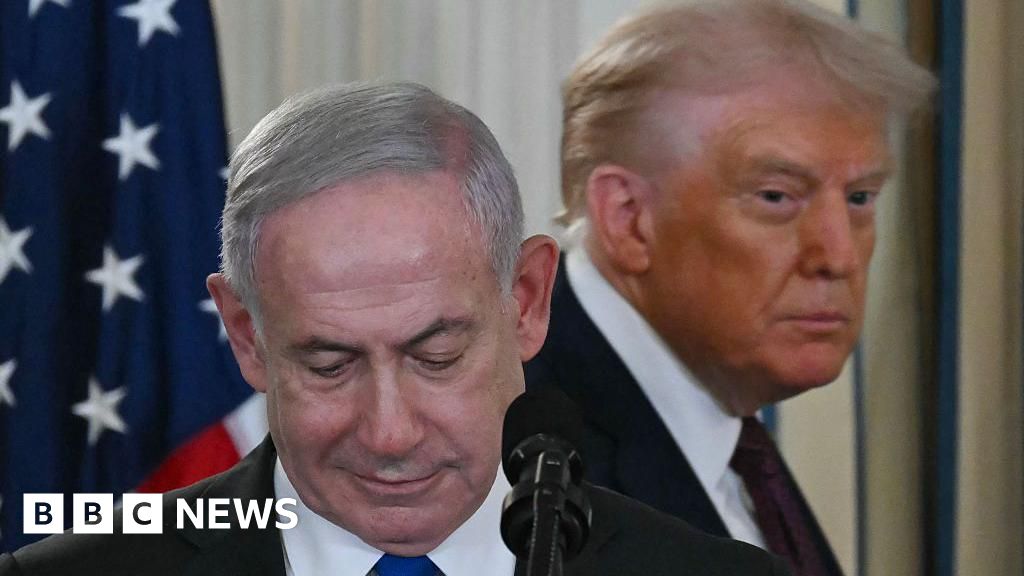
Though Iran’s missile programme has been damaged, it has continued to fire at Israel; its support for Hezbollah remains intact as well. On top of that, Israel has hurt its standing with its closest ally. Both left-wing Democrats and isolationist Republicans blame it for dragging America into the war. In recent weeks even Mr Trump has sounded furious with Benjamin Netanyahu, the Israeli prime minister.
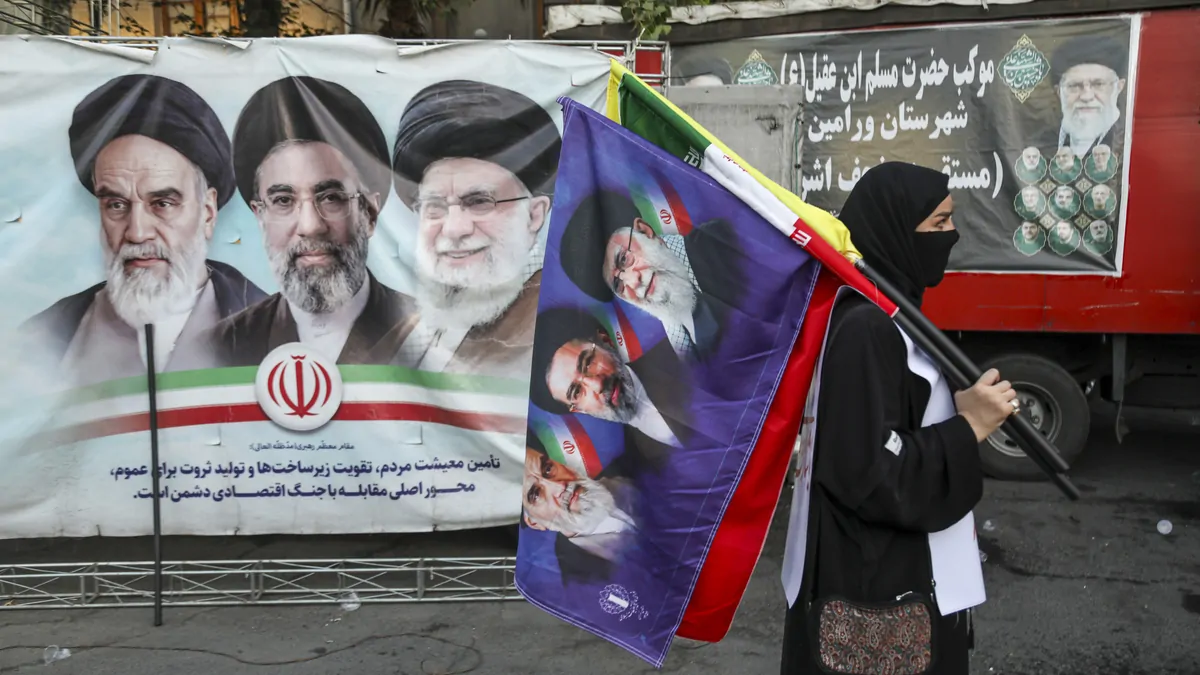
Iran’s regime will no doubt claim victory, having survived the war and fought two superior foes to a stalemate. Its new crop of leaders feels that its more aggressive approach has given it the upper hand over Mr Trump.
Yet its 92 million people are likely to feel exhausted rather than triumphal. They endured two wars in less than a year. Their economy is in shambles, with triple-digit food inflation and, according to one official estimate, more than 1 million people thrown out of work by Israeli strikes on Iranian industry. Unless a final agreement brings a guarantee of no further conflict and real improvement for the economy, Iran will have won a Pyrrhic victory.
A pair of events helped bring America and Iran to this point: the failure of two previous rounds of nuclear negotiations, in February and in early 2025; and the mass protests in Iran this past winter, fuelled by high inflation and a collapsing currency, which became Mr Trump’s pretext to attack.
The MOU addresses neither of these. It leaves the nuclear dispute unresolved, and the limited sanctions relief it offers will not be enough to pull Iran out of its severe economic crisis.
The risk, then, is that a stripped-down deal may not be the end of the war after all. America cannot tolerate leaving Iran’s nuclear program intact, and the Iranian regime cannot solve its domestic crises while its economy remains isolated.
If they cannot agree on a comprehensive accord in the coming months, they may be tempted to resume fighting in the hope of gaining a better one.