Boston Bruins
“You look at the elite teams in the league, we’re not there.”
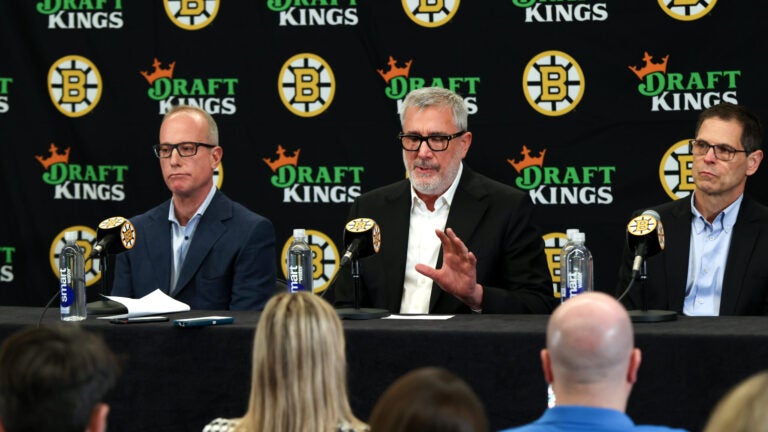
Cam Neely, Don Sweeney, and the Bruins’ top brass spoke with the media on Wednesday. (Jonathan Wiggs Globe /Staff)
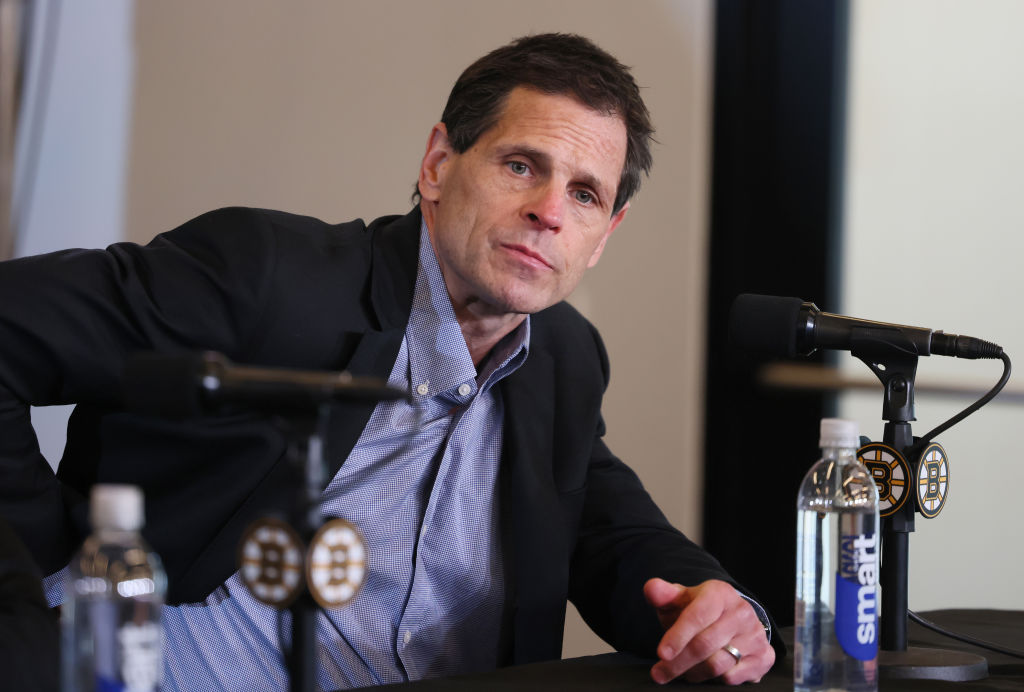
Cam Neely’s approach at the podium tends to mimic his play style during his playing days with the Bruins — direct, blunt, and oftentimes unyielding.
So when asked on Wednesday if the Bruins — as currently constituted — still need elite talent to realistically contend in a shifting NHL landscape, he didn’t mince words.
“Obviously,” Neely interjected when asked if Boston’s roster needed more high-end skill. “We got bounced in the first round. So yeah, we need more talent, we need more speed. That’s something that we have to try to acquire in one way, shape or form. You look at the elite teams in the league, we’re not there.”
All things considered, the Bruins’ top brass was pleased with the progress made during the 2025-26 campaign.
A year removed from bottoming out in the Eastern Conference, a retooling roster bought into first-year head coach Marco Sturm’s messaging. Boston made a 24-point improvement from the previous season, securing 100 points in the standings and punching their ticket back to the playoffs.
Even if Boston’s success leaned heavily on its core trio of Jeremy Swayman, David Pastrnak, and Charlie McAvoy, Neely and Co. believed the main focus of what was initially believed to be a gap year was on resetting the culture and laying the foundation for future growth.
The “piss and vinegar” Bruins did their part as a scrappy team that incorporated some younger talent, overshot expectations, and cleared out some of the rot that festered during that disastrous 2024-25 campaign.
But even a feared former power forward like Neely was candid on Wednesday when asked about just how far scrappiness and snarl can get you in today’s NHL.
“I know that there were nights where some teams didn’t want to be on the ice with us, and that’s what I was hoping for, and that’s what they delivered on,” Neely said of the 2025-26 Bruins. Now it’s up to us. We have that implemented in our group. Now, to get better, is adding more skill at the top end.”
After prioritizing physicality and grit last season, the Bruins have made it clear that speed and skill are the main focus this summer if this club wants to take another step forward. But how they go about achieving said goal is easier said than done.
The talent gap between the Bruins and Sabres was evident during Boston’s six-game playoff series.
While Alex Tuch and Tage Thompson headline Buffalo’s forward corps, the Sabres’ depth chart is littered with fleet-footed, competitive talent who can both hound pucks and possess the skill to capitalize on chances both on the rush and in Grade-A ice.
Forwards like Josh Doan, Zach Benson, Ryan McLeod, Noah Ostlund, and others have made their presence felt this postseason up front for Buffalo.
Meanwhile, the Sabres’ top-four defensemen in Rasmus Dahlin, Mattias Samuelsson, Bowen Byram, and Owen Power can kill plays, transport the puck out of danger, and serve as another layer of offense down the other end of the ice.
The Bruins desperately need an impact forward or two to sprinkle into the top-six — alleviating some of the pressure off Pastrnak and steeling against any potential scoring regression from the likes of Pavel Zacha or Morgan Geekie.
Boston — which ranked 29th in the NHL during 5-on-5 play at expected goals against per 60 minutes — needs a top-four fixture on the blue line as well to make life easier for Swayman.
How Boston goes about injecting that type of talent across its roster remains to be seen.
Don Sweeney and his staff could opt to play the waiting game with their replenished prospect pool.
Granted, that long-term plan would have been far more palatable had Boston secured either the sixth or seventh pick in the upcoming 2026 NHL Draft from Toronto — giving an already improving roster a prime opportunity to add a potential star D-man like Carson Carels, Daxon Rudolph, or Alberts Smits.
But that option is no longer on the table — not with the Maple Leafs winning the draft lottery (and Gavin McKenna, most likely) and that now-unprotected first-round pick likely pushed all the way to 2028.
Even with that brutal luck with the ping-pong balls, the Bruins’ once-barren pipeline has made some strides.
While both James Hagens and Fraser Minten could further develop into impact forwards in 2026-27, other youngsters like Marat Khusnutdinov, Matt Poitras, and defenseman Frederic Brunet can fill out the rest of the depth chart.
Both Dean Letourneau and Will Zellers could turn pro next spring as potential middle-six pickups, while 2025 third-round pick Cooper Simpson is a name to watch in the coming years.
Boston also has five first-round picks in each of the next three years, including the unprotected Toronto pick and a 2028 Florida first-rounder.
But can the Bruins just hold steady and wait for those picks and prospects to potentially develop into impact players — especially if the fruits of that long-term outlook can’t be realized until skaters like Pastrnak and McAvoy are in their mid-30s?
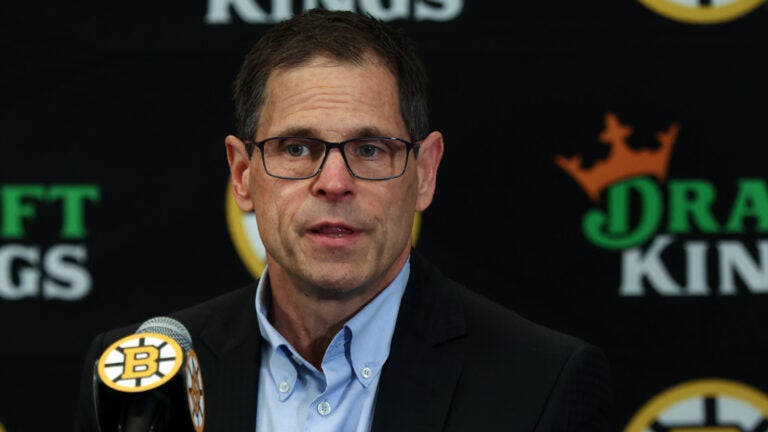
“He’s not wrong in the sense that we would like to accelerate when we can,” Don Sweeney said of David Pastrnak’s candid comments last week about entering his age-30 season. “If that means we use the assets of what you represented, all [of] the 2028 draft, or is it one push to [2027]?
“That’s still to be determined to some degree. …We have to have everything in play in terms of how we continue to improve our club, and we have that mindset. We didn’t sit back last year and say, ‘This is a five-year process.’ We just said we need to attack these areas.”
So what other options are on the table for the Bruins to add immediate talent?
The free-agency front is largely barren in terms of multiple high-end players. Alex Tuch would be an immediate top-six upgrade, but he turns 30 years old in just a few days — and could command a long-term contract worth over $10 million a year.
Right-shot blueliners like Rasmus Andersson and Darren Raddysh would slot into the vacancy below McAvoy on Boston’s depth chart and inject both skating and scoring punch into the defense. But Andersson (29 years old) and Raddysh (30) both invite plenty of risk if Boston wants to sign them to long-term deals.
Relinquishing some of those draft picks and prospects in search of impact talent that can both help out this current core and still thrive five-plus years down the road seems like the ideal route.
But it takes two to tango in those types of blockbusters.
Stars in their mid-20s like Robert Thomas and Jason Robertson would cost a hefty portion of first-round picks and prospects — potentially even blue-chip talents like Hagens, Minten, or Letourneau.
Much like how the Flyers dealt for Trevor Zegras or the Capitals rolled the dice on Pierre-Luc Dubois, Boston might have to gamble on a combination of high-priced assets, reclamation projects, unproven talents, or red-flag skaters if this team plans on injecting talent without selling the farm.
Kicking the tires on young players seemingly in purgatory with their respective clubs like Mason McTavish, Simon Nemec, and Shane Wright might be a risk worth taking — similar to how Boston elevated the value of players like Geekie and Zacha after bringing them to the Bruins.
A Vancouver Canucks team staring at a long rebuild could be a potential trade partner — especially when it comes to 27-year-old center Elias Pettersson.
Boston taking on Pettersson’s contract (six more years at a whopping $11.6 million cap hit) could be a disaster, especially with his production stalling the last two years (96 points in his last 138 games).
But Boston could bank on a change of scenery helping Pettersson regain his form as one of the top centers in the NHL — a sentiment he validated after averaging 36 goals and 95 points per year from 2022-24.
A Canucks team playing the long game could also be an avenue for Boston to offload some cap space in order to balance out Pettersson’s deal — with players like Elias Lindholm, Casey Mittelstadt, Mason Lohrei, Henri Jokiharju, and others standing as trade chips along with the aforementioned picks and prospects.
There are several moves on the table that Sweeney, Neely, and the Bruins could turn to in order to add skill and speed to Boston’s roster.
What is the right move is the bigger question ahead of a consequential summer on Causeway Street.
Conor Ryan is a staff writer covering the Bruins, Celtics, Patriots, and Red Sox for Boston.com, a role he has held since 2023.
Get the latest Boston sports news
Receive updates on your favorite Boston teams, straight from our newsroom to your inbox.