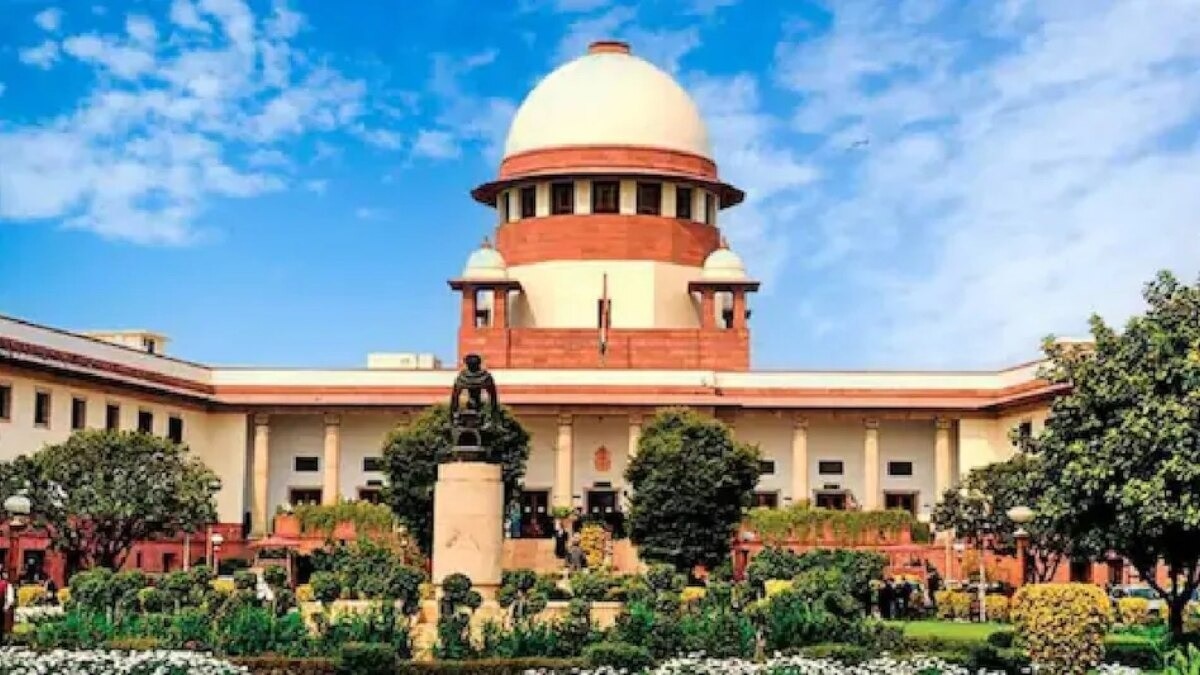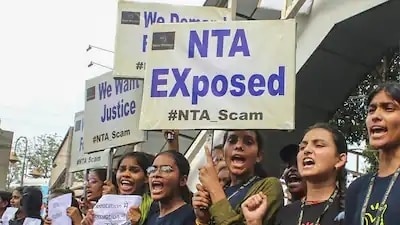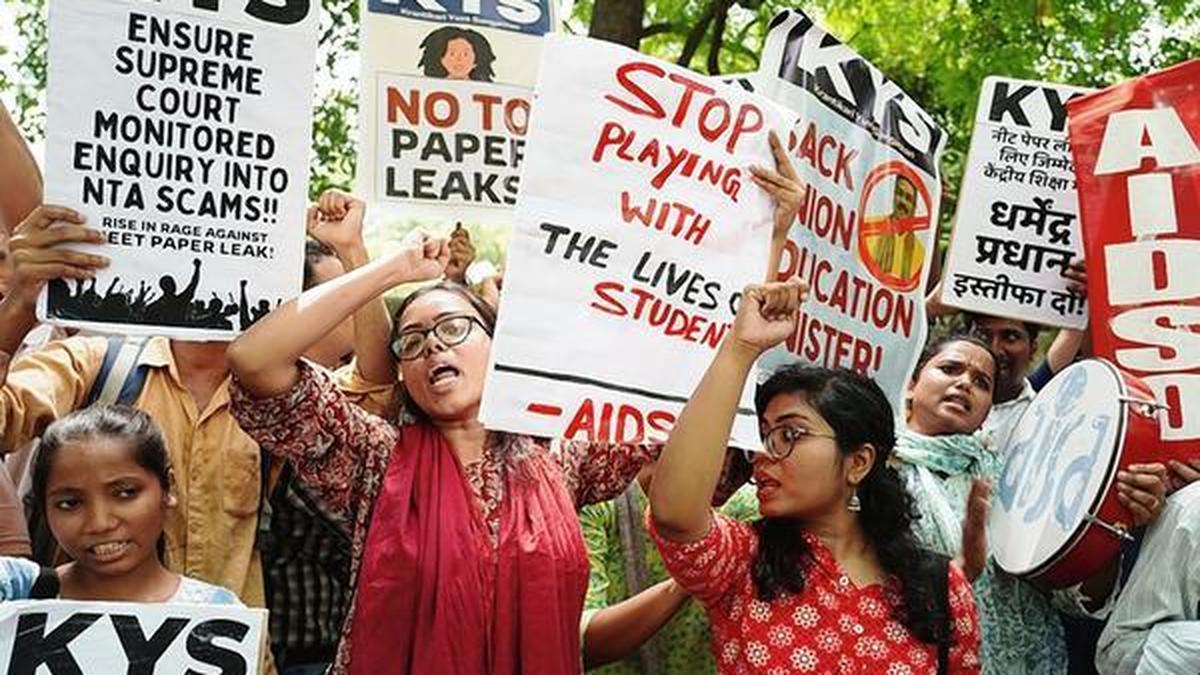
Students and entire families have been traumatised by the National Eligibility-cum-Entrance Test-Undergraduate (NEET-UG) paper leak episode, the Supreme Court said on Friday (May 29, 2026). The court observed that years of hard work and emotional investment had gone waste even as the Centre said Prime Minister Narendra Modi is “personally monitoring” the situation.
A Bench headed by Justice P.S. Narasimha asked why the National Testing Agency (NTA), which holds the NEET-UG exam, repeats its mistakes when the Union Public Services Commission had so far made none.
The court zeroed in on the problem of “ad-hocism” in the NTA, and lack of “institutional memory and framework”. The court directed the Ministry of Human Resource and Development to file an affidavit explaining measures it intends to take to tackle the lack of “physical and intellectual wherewithal” and improve institutional capacity within the NTA.
The NTA maintained that the cancellation of NEET-UG 2026 and the transfer of the investigation to the Central Bureau of Investigation (CBI) by itself reflected the seriousness with which examination integrity was treated by both the NTA and the Union government.
“It is actually traumatic when something like this happens. Traumatic, not just for students, but for their families too. There is investment of so many years of emotion and study involved, and gone,” Justice Narasimha said.
The cancellation of NEET-UG 2026, conducted on May 3, had left around 23 lakh candidates facing uncertainty over their academic future. But the court also struck an optimistic tone, saying the situation was “not beyond us”.
“We have some of the best officers heading these institutions. But they get transferred and take their experience and know-how with them. The knowledge is not percolated to the next group of people who are going to run the institution. It is not the individual who should have the memory, the institution must retain its memories, experiences and learn from them,” Justice Narasimha observed.
The court asked the Ministry to specify the steps taken to retain specialised personnel, preserve institutional memory and ensure plurality of expertise in the conduct of NEET.
“The endeavour is to ensure that the NTA has the physical and intellectual wherewithal to ensure no incidents like in the NEET-UG 2024 and 2026 exams occur again,” Justice Narasimha said. The apex court has scheduled the next hearing on the matter in the second week of July.
The court highlighted the need for accountability in the face of such severe mishaps which affect lakhs of students.
“The real problem will not stop till there is actual accountability. Not in terms of so and so will be liable, it will be effective when we know which individual shoulders the responsibility. Unless you identify the specific duty-bearers, it will be difficult,” Justice Narasimha observed.
In its affidavit, the NTA said it was all set to conduct the NEET-UG in the computer-based test (CBT) mode from next year instead of the pen-and-paper mode after consulting the Centre.
The NTA said a high-level committee of experts (HLCE) has recommended transition of the NEET-UG to the CBT mode. It said all other major NTA examinations are already conducted in the CBT mode.
“The transition will be implemented from the next examination cycle in consultation with the Ministry of Health and Family Welfare (the client Ministry for NEET-UG) – thereby bringing all major NTA examinations onto the CBT platform,” it said.
An NTA affidavit in the court said the organisation has overhauled several aspects of the examination system, including question paper preparation, printing, transportation and storage protocols.
Among the key changes, the agency said it has introduced multiple sets of question papers, with one set retained as a backup. A designated senior officer will oversee the entire printing process, and the use of electronic devices has now been prohibited. All CCTV recordings wouldl also be preserved.
The NTA said transportation of question paper trunks is now being carried out through India Post (a government entity), with a chain-of-custody protocols. The papers would be escorted by the Central Armed Police Force (CAPF) from the printing press to nodal hubs. India Post would then transport the papers to district custodians, and the District Police would take them to examination centres.
The affidavit further stated that Confidential Operations (CONOPs) guidelines have been operationalised. A dedicated area has been carved out in the office for confidential work, while question paper setters would be isolated in insulated rooms without internet or mobile access.
The NTA informed the court that the re-examination scheduled for June 21 would be conducted under a strengthened standard operating procedure (SOP) framework incorporating multi-layer authentication, enhanced surveillance and inter-agency coordination.
The Chairman of the High Powered Steering Committee (HPSC) on NTA Reforms, Dr. K. Radhakrishnan, who was present in the court, said a comprehensive “clean-up” of the systemic issues haunting the conduct of NEET-UG was underway. He pointed out in a separate affidavit that NEET-UG 2025 was conducted satisfactorily after incorporating the recommendations made by the HLCE.
Published – May 29, 2026 01:48 pm IST