Synopsis: The government has revived the credit guarantee playbook, this time in response to the West Asia crisis. ECLGS 5.0 unlocks ₹2.55 lakh crore in guaranteed credit for MSMEs and airlines. For markets, the opportunity lies in identifying which lenders, NBFCs, and sectoral players capture the most value from this liquidity injection
The Union Cabinet approved the ECLGS 5.0, providing credit guarantee coverage of 100% for MSMEs and 90% for non-MSMEs and airlines through the National Credit Guarantee Trustee Company Limited, targeting a total additional credit flow of ₹2.55 lakh crore, including a dedicated ₹5,000 crore carve-out for the aviation sector.
The guarantee fee is zero. Eligible businesses can access additional credit of up to 20% of their peak Q4 FY26 working capital, capped at ₹100 crore. Airlines get even more generous terms, up to 100% of their credit exposure, capped at ₹1,500 crore per borrower, with a 7-year tenure including a 2-year moratorium.
The trigger is the West Asia conflict, which has disrupted Indian supply chains, trade finance, and aviation routes. The playbook is the same one that reached over one crore MSMEs during COVID. The beneficiaries this time span two distinct pillars: lenders who deploy the capital, and sectors whose liquidity stress gets directly relieved.
Pillar 1 — Banks: Loan Book Growth Without Proportionate Risk
A 100% government guarantee on MSME defaults removes the single biggest barrier to small business lending, credit risk. Banks can now grow MSME loan books where demand exists, but risk appetite was previously limited.
State Bank of India is the largest MSME lender by volume and fastest to deploy, its branch reach and existing relationships give it a structural first-mover advantage. Bank of Baroda and Punjab National Bank follow closely, with significant MSME exposure and active retail expansion underway.
Among private banks, HDFC Bank and Axis Bank have been scaling MSME franchises aggressively. ECLGS 5.0 allows them to accelerate without proportionate balance sheet risk.
Pillar 2 — NBFCs: The Smarter Play
For NBFCs, the real benefit is indirect but powerful. A government guarantee on MSME loans makes co-lending arrangements with banks significantly easier to execute, and lenders are more willing to partner when default risk is covered.
Capri Global Capital is the most directly positioned. With a 100% secured MSME model, AUM of ₹36,623 crore, and already in co-lending arrangements, the guarantee framework fits its existing operating model precisely.
Cholamandalam Investment and Finance brings SME loan and vehicle finance exposure; the guarantee cover reduces risk on its SME portfolio while it actively scales that segment. CreditAccess Grameen, focused on microfinance and rural small business lending, benefits as disbursements to West Asia-disrupted borrowers accelerate.
The Relief Play — Airlines
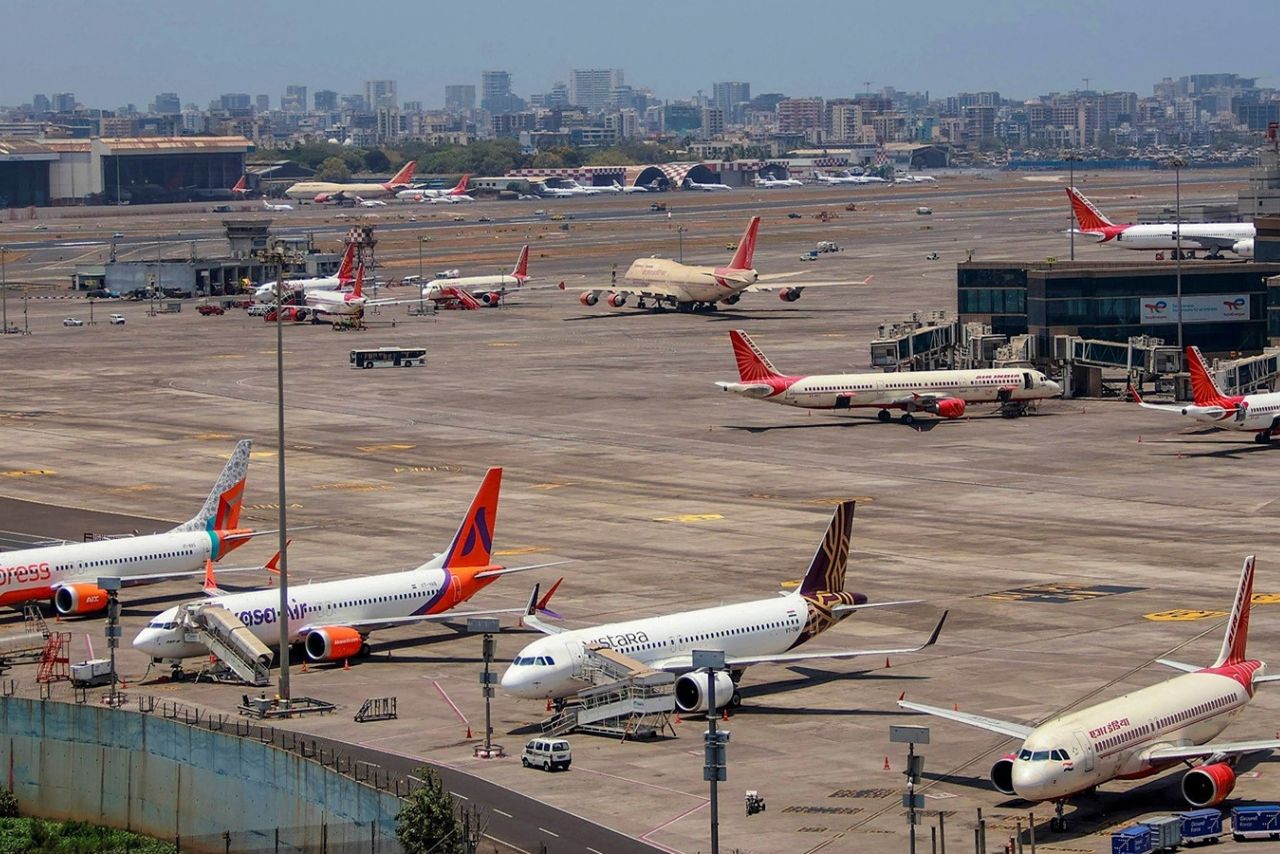
The aviation sector has taken the hardest hit from the West Asia crisis. However, IndiGo shares jumped 3.98% post the news, the most direct market reaction to the ECLGS announcement. The stock remains down 23% over the past six months.
SpiceJet is the most stressed listed carrier, operating with a truncated fleet and acute liquidity pressure. The ₹1,500 crore per borrower cap with a 7-year tenure and 2-year moratorium was effectively designed for carriers in its position. Air India, battling massive losses despite Tata Group backing, gets working capital support, but structural issues run far deeper than any liquidity scheme can fix.
ECLGS 5.0 buys time for weaker carriers and strengthens buffers for stronger ones. It does not fix high fuel costs or route disruptions. IndiGo’s 3.98% move today reflects that the market understands the difference.
The Second-Order Play — MSME-Linked Sectors
Improved MSME liquidity flows into every sector dependent on small business health. Ashok Leyland and Tata Motors commercial vehicles benefit as small fleet operators and logistics companies, primary CV buyers, regain working capital access. Larsen & Toubro benefits through supply chain resilience as MSME subcontractors stabilise.
Market Takeaway
ECLGS 5.0 is not a sector re-rating event; it is a liquidity bridge during an external shock. The stocks that benefit most are not the ones that needed rescuing, but the ones already executing well in MSME lending and aviation that can now do more of what they were already doing. SBI and Capri Global were growing their MSME books before this scheme; the guarantee simply removes friction.
IndiGo was the strongest airline before this announcement; the scheme simply adds a layer of safety. For investors, the signal is not the scheme itself. It is the companies that were already positioned to use it.
Disclaimer: The views and investment tips expressed by investment experts/broking houses/rating agencies on tradebrains.in are their own, and not that of the website or its management. Investing in equities poses a risk of financial losses. Investors must therefore exercise due caution while investing or trading in stocks. Trade Brains Technologies Private Limited or the author are not liable for any losses caused as a result of the decision based on this article. Please consult your investment advisor before investing.