Spider-Noir comes with two different ways to watch.
It’s not exactly a choose your own adventure (oh hey, a movie adaptation of those books are actually in development, wild), but a choose your own viewing experience.
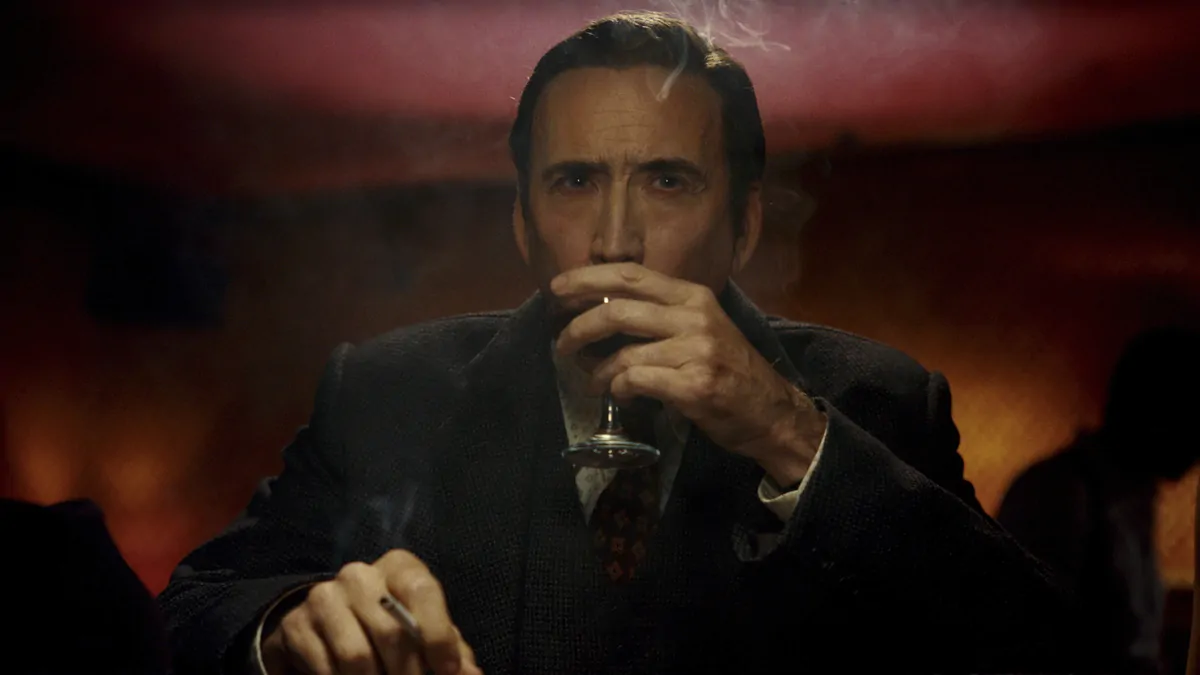
If you watch it in black-and-white, Spider-Noir takes on even more of the tone and style of the classic Hollywood genre from which it heavily borrows, drawing on the likes of The Maltese Falcon, The Big Sleep and Laura.
Sign up to The Nightly’s newsletters.
Get the first look at the digital newspaper, curated daily stories and breaking headlines delivered to your inbox.
By continuing you agree to our Terms and Privacy Policy.
There are long shadows, and in greyscale, the secrets and lies of its characters seem even murkier.
Or you could watch it in full colour, vibrant and dynamic, the opposite of the dull colour-grading weirdly favoured by so many modern productions. Here, the jewel tones pop off the screen, situating this series not just in its art deco era but also the hyper-realism of its superhero genre.
Both choices are rewarding in its own ways, but for the record, Nicolas Cage would love it if you did it in black-and-white. Just FYI.
Spider Noir is on Prime Video. Credit: Prime Video
Spider-Noir has its origins in the Marvel comics as an alternate version of Spider-Man who lives in New York City during the Great Depression, and first appeared on the page in 2009. On screen, this enterprise was born out of Cage’s voice appearance in the 2018 animated film Spider-Man: Into the Spider-Verse.
Cage’s velvety take on a film noir Spider-Man has a massive hit, which triggered the wish-fulfilment of a spin-off. But in live-action!
That’s how we ended up with Spider-Noir, an eight-episode crime thriller in which Cage plays Ben Reilly, a private dick with a coat, a hat, a witty secretary and a habit for getting into trouble, see?
It’s 1930s New York and crime is rampant, even more so since the mysterious superhero known as the Spider disappeared some years ago, which allowed mob boss Silvermane (Brendan Gleeson, in full Irish accent) to spread influence and fear further across the city.
The Spider was Reilly, who hung up his balaclava after the death of his fiancée, the tragic Ruby (Amanda Schull) – of course, Reilly feels responsible. As a kind-of atonement, he hasn’t allowed himself to be a hero because he doesn’t feel like one, and mostly stakes out philandering spouses.
One such job sets off a chain of connected events. He’s hired to follow a client’s “wife”, who turns out to be Cat Hardy (Li Jun Li), a nightclub singer connected to Silvermane and the mayor, and this series’ classic femme fatale.
Li Jun Li as femme fatale Cat Hardy. Credit: Aaron Epstein/Prime Video
Reilly can smell something’s off with the assignment, and he doesn’t give her up to the client but still becomes embroiled in whatever is going on, especially since, you know, feminine wiles.
At the same time, he and another private detective are both hired to track down a man named Jimmy Addison, who then reveals he has a way with fire. Oh yes, superpowered beings (Jack Huston, Abraham Popoola, Andrew Lewis Caldwell) other than The Spider exist, and their histories are entwined with Reilly’s.
Cage is such a distinctive performer and it’s difficult to imagine anyone else could have played this noir version of Spider-Man.
Reilly is grizzled, disillusioned and carrying great pain, but he’s also playful, especially when he has to perform certain personas in front of different characters, whether that’s to throw suspicion off him or to elicit something specific.
Spider-Noir has been released in both black-and-white and colour. Credit: Aaron Epstein/Prime
Cage then does Reilly doing essentially an Edward G. Robinson, before he falls back into a more “neutral” Humphrey Bogart. There’s a rich cinematic history for Cage to draw from, and he does, and, as always, there’s a magnetism to his screen presence you can’t ignore, nor do you want to.
He also has great screen chemistry with Li, Karen Rodriguez as his secretary Janet, and Lamorne Morris as resourceful journalist Robbie Robertson, who knows Reilly’s great secret.
Cage is Spider-Noir’s best asset and its filmmakers, including producers Phil Lord and Chris Miller, know it.
The show is more derivative than it is original and the story doesn’t rise to the same level as Cage’s performance, but there is a lot of like in Spider-Noir, especially if you’re tickled by the thought of watching Cage contracting his limbs into a spider pose or shoot webs from his wrists.
Spider-Noir is on Prime Video