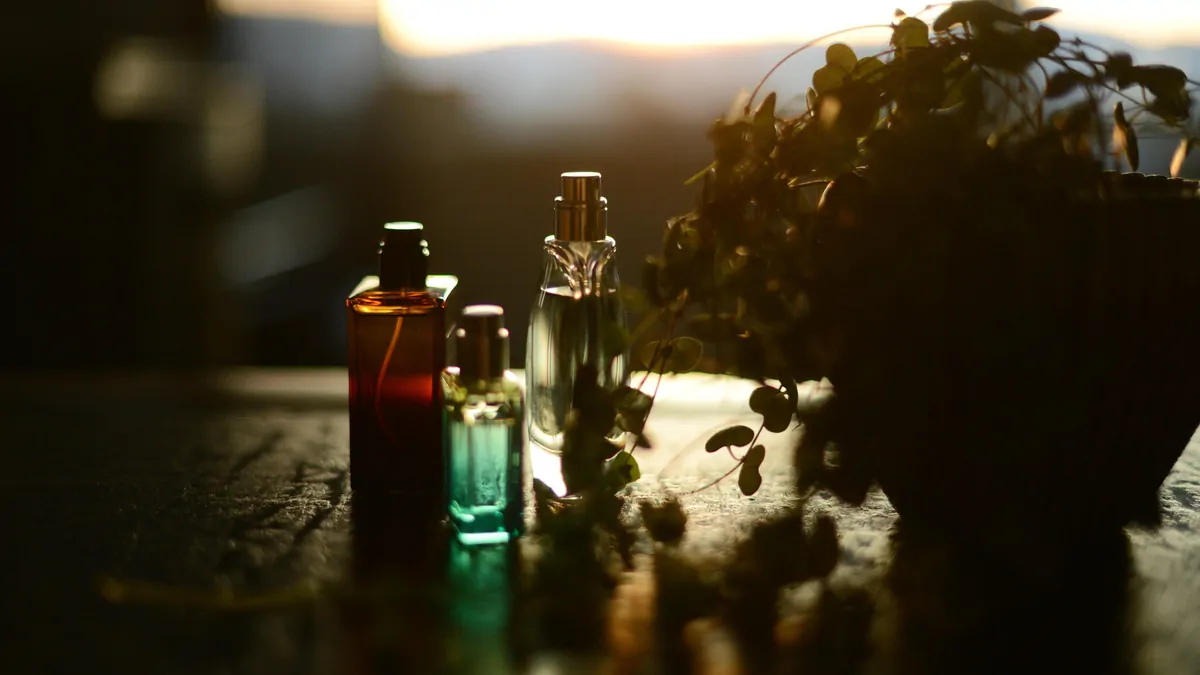
It’s said that true hospitality allows you to exhale the moment you set foot in the lobby. However, a growing number of luxury hotels are focusing their efforts on refining the inhale.
At Sydney’s Capella, the subtle if addictive floral notes (and might we suggest you inhale at this point given what’s ahead) of freesia and peony intermingled with delicate verdant accords of green tea leaves and vetiver (… and breathe) hit you before even the most vigilant porter has time to utter a greeting.
Once a rarified space, the intricacies of luxury hotels have been dissected and distilled for mass online consumption.
From YouTubers with selfie sticks documenting every facet of the guest experience via detailed tours that traverse from lobby to spa and everywhere in between, to interior designers publishing posts on how to “get the look at home”, it’s now possible to deconstruct and emulate the aesthetic points of a hotel without ever having set foot in the property.
ROAM. Landing in your inbox weekly.
A digital-first travel magazine. Premium itineraries and adventures, practical information and exclusive offers for the discerning traveller.
By continuing you agree to our Terms and Privacy Policy.
Today, when it comes to creating an inimitable guest experience, established hospitality groups and emerging boutique hotels are going beyond visual aesthetics and leaning into the invisible, intangible, and often ineffable quality of scent.
And they’re spending big — the hotel sector accounting for more than 20 per cent of the $3 billion invested in so-called scent marketing from 2024 to 2026.
One company making the intangible tangible is Air Aroma, which has developed signature scents for luxury multinationals like Capella, Four Seasons, Ritz-Carlton, The Langham, Standard Hotels, and Kimpton, as well as boutique outfits such as Brisbane’s Calile Hotel.
Lara Baker, Air Aroma’s global head of fragrance creative, says scent is a key element in connecting with guests and building brand loyalty.
Brisbane’s Calile Hotel is using scent to connect with guests and building brand loyalty. Credit: Supplied
Employed as an olfactory signature, or what Air Aroma dubs a “scent logo”, custom scent marketing acts as an additional layer of modern hotel design and works to differentiate brands within a saturated market, preventing them from falling into the sameness of certain luxury chains.
Scent’s strength as an element of branding lies in its direct ability to trigger emotions and memories.
Now, for a simplified biology lesson: unlike other senses, scent enters the brain through the frontal cortex, bypassing the thalamus and travelling directly to the olfactory bulb — the only sensory system connected to the limbic system which controls and processes mood, memories, emotions, and stress.
“Scent is a core part of the brand architecture in creating emotion and a sense of atmosphere in the space,” Baker tells ROAM.
Indeed, for many new boutique hotels and established brands launching into new markets, scent design is woven into the fabric of the building.
Baker shares that Air Aroma is often brought into the conversation during the initial planning stages, prior to a physical space being established.
In addition to its work in the scent marketing space, Baker’s outfit is responsible for patenting HVAC scenting technology, an advanced form of diffusion that sees scent injected into the existing airflow and seamlessly integrated into the build, with early collaboration allowing for an invisible finished result.
The verdant floral scent at Capella Sydney is a constant across its locations, creating a welcome thread of familiarity that links its properties across the Asia-Pacific.
The verdant floral scent at Capella Sydney is a constant across its locations, creating a welcome thread of familiarity that links its properties across the Asia-Pacific. Credit: Supplied
Langham Hotels takes a similar approach, so too Sofitel Hotels & Resorts.
The former offers a dewy green grass accord complemented by bitter ginger flower and soft white florals, while the latter taps into its French heritage by bringing the sun of southern France — by way of crisp citrusy bergamot and lemon, tempered with white florals and sandalwood — to its diverse crop of properties that span five continents.
Although most hotels opt for a singular olfactory option, a burgeoning trend sees hospitality groups and boutique hotels employ scent mapping as a means of guiding the guest experience across the property.
Baker notes that many hotels opt for different scents in the bathroom as well as the spa and fitness centre, selecting more energising notes in the latter while preserving the “luxury” association of the original scent.
Melbourne’s new Hannah St Hotel tapped master perfumer and founder of luxury Australian fragrance brand The Raconteur, Craig Anrade, to develop individual scents.
Master perfumer and founder of The Raconteur, Craig Anrade. Credit: TN
Shirking the one-spray-fits-all approach, Hannah St Hotel has commissioned a trio of distinct scents, each crafted with native botanicals, that serve to olfactorily delineate its three distinct areas.
The lobby and ground floor greet guests “dressed” in Hannah St No 1 — “light citrus and spice notes that contrast with rich woods and resins, interwoven with cues of urbanity and the cool salty weather drifting in from the Bay”.
Not to be outdone, the “calming and reflective” High Green bathes the rooftop, pool, and wellness offering, while Solar Veil covers the rooftop’s terrace lounge in a vibrant concoction of green jasmine vine, tuberose, sandalwood, and amber. “The fragrances are designed with intention — they tell a story, reflect a sense of place, and invite an emotional connection,” says Pearse. “In essence, they’re an expression of the whole Hannah St experience.”
This sense of localisation and locality, as opposed to blanket signature scenting, is being spritzed by Four Seasons.
With more than 100 properties across 44 locations, the revered luxury brand works to create a hyperlocal experience in each space — the Sydney location a green, herbal and woody scent that nods to Australiana with notes of manuka honey and local sandalwood.
Downtown New York, meanwhile, is defined by refined woody notes that echo the dark woods of the lobby, while the brand’s tropical locations lean into sweet florals.
Taking things a step further, Abbaye des Vaux-de-Cernay — a boutique hotel located in a converted monastery outside Paris — adopts a seasonal scent design approach that serves as a form of sensorial storytelling.
“At Abbaye des Vaux-de-Cernay, nature is not a backdrop — it is a rhythm,” shares Antoine Menard, chief creative officer of Vaux-de-Cernay owners Paris Society.
Abbaye des Vaux-de-Cernay — a boutique hotel located in a converted monastery outside Paris — adopts a seasonal scent design approach that serves as a form of sensorial storytelling. Credit: Supplied
“We wanted the olfactory signature to follow that rhythm … The Abbey is not experienced in the same way in November, wrapped in mist, as it is in May, when the gardens burst into life.”
Designed in collaboration with an independent perfumer, the spring/summer scent allegedly acts as a “breath of fresh air” with notes of freshly cut grass, lily of the valley, and green accords.
Menard describes the autumn/winter offer as “almost monastic, yet always elegant”, evoking aged parquet flooring, warm wood, fireplaces and wax to cultivate an introspective mood.
Whether employed to foster a cross-continental “home away from home” feeling or to add to the immersive emotion of being in a new place — and keep guests coming back — scent has officially been embraced as an invisible yet integral part of the modern hospitality experience.