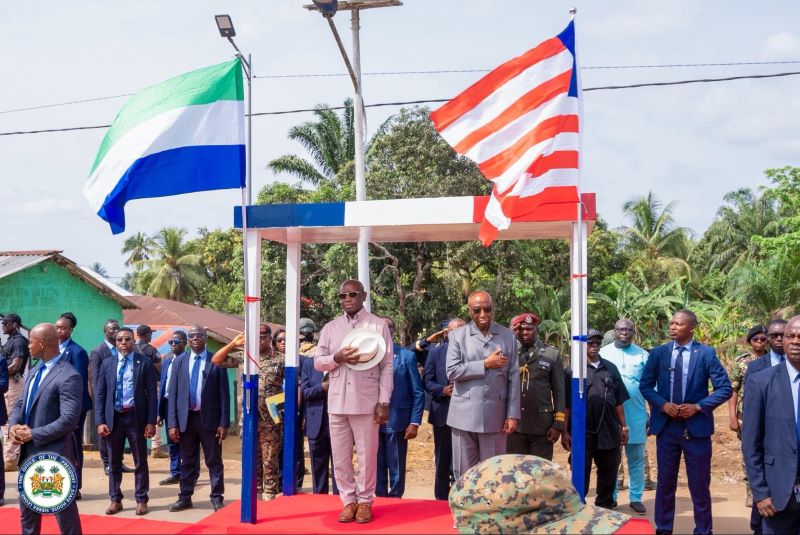
Photo source: Twitter / @Presidency_SL
April 27, 2026, marks Sierra Leone’s 65th Independence Day from British rule. For this West African nation, renowned for its history as one of the earliest settlements for freed Black slaves, with its capital, Freetown, playing a pivotal role in that story, the journey toward nationhood has been anything but ordinary. From its founding ideals to its modern-day struggles and aspirations, Sierra Leone embodies both the promise and paradox of African development.
Sierra Leone stood as one of the earliest experiments in what it means for a displaced people to return home. Its capital, Freetown, was established as a settlement for freed slaves, Black Loyalists from Nova Scotia, Jamaican Maroons, and recaptured Africans liberated from slave ships. It was not merely a geographic return, but an attempt to reconstruct identity, dignity, and belonging after centuries of displacement and dehumanization.
Now, centuries later, the question is no longer just about return. It is about what return can mean in a modern African state navigating complex development challenges, identity politics, and global expectations. What does it mean to come home to a nation still grappling with its own internal contradictions? And more importantly, can that return serve as a catalyst for transformation?
Beyond the powerful narrative of repatriation, Sierra Leone occupies a unique place in history, one shaped not only by its people but also by its immense natural wealth. Beneath its soil lie diamonds, gold, and vast mineral resources that have long promised prosperity. Yet, rather than serving as a foundation for inclusive growth, these resources have often fueled conflict, political instability, and economic distortion.
For all its abundance, Sierra Leone continues to struggle with uneven development outcomes. According to a report by Moody’s Analytics, “Sierra Leone is extremely poor, and nearly half of the working-age population engages in subsistence agriculture. The country possesses substantial mineral, agricultural, and fishery resources, but it is still recovering from a civil war that destroyed most institutions before ending in the early 2000s.”
This stark reality underscores a troubling paradox: a nation rich in resources yet constrained by poverty and structural fragility.
For decades, Sierra Leone has been defined by a seeming ideological conflict rich in resources but poor in development, rich in history yet still searching for a positive and sustainable future narrative. Today, as the nation commemorates 65 years of independence, a new question emerges: can Sierra Leone align its natural wealth with the strength and potential of its diaspora to finally rewrite its story?
A Nation Finding Its Footing
Sierra Leone’s story has never been simple. It was born out of one of the earliest global experiments in Black repatriation, when freed slaves and recaptured Africans settled in Freetown. From that moment, the country became a living project, an ongoing effort to rebuild identity, reclaim dignity, and redefine belonging.
At the same time, its economic foundation evolved around extraction. From the colonial era through independence, minerals became the backbone of state revenue and political power. This dependence on extractive industries would later prove to be both a blessing and a curse.
Diamonds, in particular, came to define Sierra Leone’s trajectory. Initially a source of immense wealth, they later became synonymous with conflict during the country’s brutal civil war. The cost of this abundance has been staggering.
According to a Stanford University article titled Blood Diamonds: The Conflict in Sierra Leone, the country “suffered terrible social and economic costs as a result of its civil war and the fight over diamond control. Under the cover of warfare, rebels committed heinous crimes against humanity, including murder, rape, and mutilation. The war between 1991 and 1999 claimed over 75,000 lives, caused 500,000 Sierra Leoneans to become refugees, and displaced half of the country’s population. Meanwhile, the economy was deprived of millions of dollars through the illegal diamond trade.”
The term “resource curse” has often been used to describe Sierra Leone’s economic reality, and with good reason. Despite decades of mining activity, many communities remain underdeveloped. Infrastructure gaps persist, access to basic services is limited, and youth unemployment continues to rise.
Data from the African Development Bank further illustrates this structural imbalance. Agriculture grew from 47% of GDP in 2003 to 60% in 2022, yet its employment share declined significantly. Industry, on the other hand, shrank while more people were employed, indicating low productivity. The services sector also saw a contraction in GDP contribution despite absorbing a larger share of the workforce. These trends point to a lack of meaningful structural transformation, an economy growing in fragments rather than as a cohesive whole.
While reforms have been introduced, ranging from new mining regulations to transparency initiatives and anti-corruption frameworks, the gap between policy and lived reality remains wide. Too often, reforms exist on paper but fail to translate into tangible improvements in people’s lives.
This disconnect continues to erode trust and slow the pace of national progress.
Leveraging the Diaspora Factor
Photo source: His Excellency Julius Maada Bio
As Sierra Leone continues to navigate its internal challenges, a new and potentially transformative opportunity is emerging, one that extends beyond its borders. Across Africa, there is a growing movement to engage the global African diaspora more intentionally in the continent’s development. For Sierra Leone, this is not just a policy option; it is a historical continuation of its founding identity.
Across continents, there is a renewed interest in reconnecting with Africa not only culturally, but also economically and politically. Sierra Leone, with its deep-rooted history in diasporan repatriation, is uniquely positioned to benefit from this shift.
Citizenship initiatives and diaspora engagement programs are beginning to foster new conversations around return. However, this is not a repetition of the post-slavery era. Today’s diaspora brings with it a different kind of capital, financial resources, technical expertise, global networks, and exposure to diverse systems of governance and innovation.
The real opportunity for Sierra Leone lies in harnessing this momentum and developing clear strategies to ensure that return becomes more than symbolic. It must become functional, structured, and impactful. Diaspora engagement should not be treated as an emotional or cultural exercise alone, but as a deliberate economic and developmental strategy.
Investments from the diaspora in agriculture, technology, manufacturing, services, and education can have significant multiplier effects. These investments can stimulate local industries, create employment opportunities, and introduce new standards of efficiency and innovation. In healthcare, partnerships between diaspora professionals and local institutions can improve service delivery and expand access. In education, knowledge transfer and mentorship can help build a more competitive workforce.
However, unlocking this potential requires more than goodwill. It demands clear policies, investment-friendly frameworks, and institutional support systems that make integration seamless. Bureaucratic bottlenecks, policy inconsistencies, and weak governance structures can quickly discourage even the most committed diaspora investors.
Equally important is the issue of trust. Transparency and accountability must form the foundation of any diaspora engagement strategy. Without these, the enthusiasm for return risks being undermined by frustration and disillusionment.
The Role of Citizens and Collective Responsibility
Beyond government policies and diaspora contributions, the role of citizens cannot be overstated. Real transformation rarely comes from top-down reforms alone. It is sustained by a citizenry that is engaged, informed, and unwilling to accept the status quo.
In Sierra Leone, as in many parts of Africa, there is a growing recognition that accountability must be demanded, not assumed. Citizens who push for better governance, who challenge inefficiencies, and who actively participate in civic processes are essential to driving lasting change.
The future of Sierra Leone will not be determined solely by its resources or its history, but by the collective actions of its people both at home and abroad. It will depend on the ability to align its abundant natural wealth with effective governance, strategic diaspora engagement, and a citizen-driven demand for progress.
As Sierra Leone celebrates 65 years of independence, it stands at a critical crossroads. Its past is rich with lessons of resilience, of struggle, and of missed opportunities. Its present is filled with challenges that demand urgent attention. But its future still holds promise.
The question is no longer whether Sierra Leone has the potential to thrive. It is whether it can finally bring together its history, its resources, and its people to build a nation that reflects the fullness of that potential.
Okechukwu Nzeribe works with the Onitsha Chamber of Commerce, in Anambra State, Nigeria, and loves unveiling the richness of African cultures. okechukwu.onicima@gmail.com