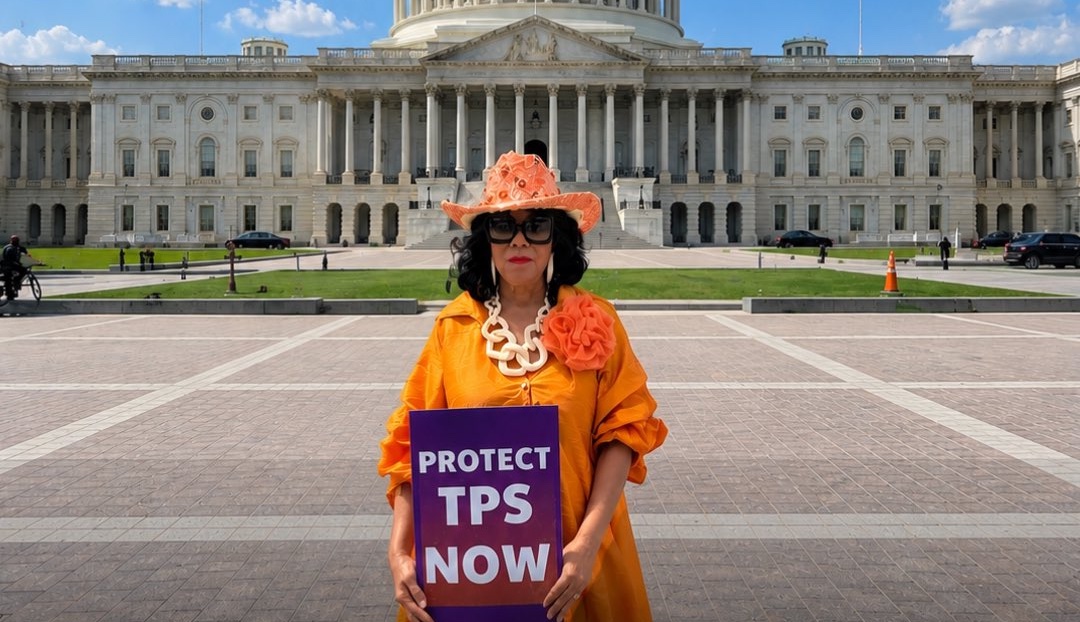
Just hours after the U.S. Supreme Court cleared the way for the Trump administration to end Temporary Protected Status (TPS) for hundreds of thousands of Haitians, U.S. Rep. Frederica Wilson (D-FL) introduced new legislation aimed at providing long-term immigration relief for affected families.
The Haitian Refugee Immigration Fairness Act would establish a pathway to lawful permanent residency—and eventually U.S. citizenship—for eligible Haitian nationals who have continuously resided in the United States since June 26, 2024, as well as certain qualifying family members.
Wilson announced the legislation following the Supreme Court’s 6-3 decision that allows the Department of Homeland Security to move forward with terminating TPS protections for approximately 350,000 Haitians. The Court’s ruling lifts lower court injunctions that had temporarily blocked the administration’s efforts while legal challenges continue.
“Today’s Supreme Court decision is heartbreaking, but it will not be the final chapter,” Wilson said in a statement. “For more than forty years, I have stood with the Haitian community, and I will not stop now. The Court may have cleared the way for this administration to end TPS protections, but Congress still has the power to protect these families.”
Wilson said the proposed legislation recognizes that TPS was created as a temporary humanitarian program and was never intended to leave families living in decades of uncertainty. The bill would allow eligible Haitians who have established lives in the United States to apply for permanent legal status while maintaining existing public safety requirements.
“TPS was never meant to become a lifetime of uncertainty,” Wilson said. “Haitian families have done everything this country has asked of them. They registered, paid the required fees, worked, paid taxes, raised their children, and strengthened our communities. My Haitian Refugee Immigration Fairness Act creates a responsible pathway to lawful permanent resident status while maintaining strong safeguards to protect public safety.”
If enacted by Congress, the legislation would provide qualifying Haitian immigrants with greater stability after years of renewing temporary protections, allowing many to continue building their lives in the United States without fear of losing their legal status.
The bill now heads to Congress, where it will require approval in both the House of Representatives and the Senate before it can be signed into law.
For many Haitian families facing uncertainty after the Supreme Court’s decision, Wilson’s proposal represents a renewed legislative effort to secure permanent immigration protections and prevent widespread family separation.