New data shows the housing market varies greatly state by state as local markets in some cities flatline, while others continue to sprint into new growth territory.
Market analysts reveal that the housing market has split into two speeds as a clear divergence in housing trends has emerged, with Sydney and Melbourne housing values flatlining, while mid-sized capital cities continue to record a solid rate of gain of more than one per cent month-on-month growth.
Regional spotlight
Sign up to The Nightly’s newsletters.
Get the first look at the digital newspaper, curated daily stories and breaking headlines delivered to your inbox.
By continuing you agree to our Terms and Privacy Policy.
The Cotality Home Value Index also shows that buying in a regional area five years ago would have been a good investment.
Regional markets are outperforming the capitals across NSW, Victoria, South Australia and Tasmania, with demand more resilient due to lower price points and evidence of rising internal migration rates.
Canberra has experienced a monthly growth rate of 0.8 per cent, or 6.2 per cent annually, with median house values now sitting at $903,374.
Change in dwelling values over the past five years:
Regional NSW: 44.1 per cent
Regional Vic: 27.4 per cent
Regional QLD: 75.5 per cent
Regional SA: 76.7 per cent
Regional WA: 88.8 per cent
Regional Tasmania: 44.5 per cent
Regional NT: 0.4 per cent
Top 10 regional towns with highest 12-month value growth:
Region: Median value: Annual change:
NSW: Tamworth $567,175 17.1 per cent
Vic: Mildura $550,232 17.5 per cent
QLD: Darling Downs, Maranoa 20.6 per cent
SA: Eyre Peninsula and South West 15.6 per cent
WA: Bunbury 21.3 per cent
TAS: Devonport 12.3 per cent
Comparing capitals
Sydney and Melbourne prices have traditionally led the nation’s housing cycles but have been less resilient to the February rate hike and the continued drop in sentiment, with home values flat over the month and down -0.1 per cent and -0.4 per cent respectively, the data shows.
Cotality research director Tim Lawless says the clear slowdown in housing conditions could signal an easing in growth conditions down the track, but that for now, mid-sized capitals continue to see support from extremely low inventory levels, bolstering the growth in values.
Meanwhile, the housing market in Perth has sprinted ahead, with home values jumping 2.3 per cent in February, adding more than $22,500 to the median dwelling value over the month. Brisbane, Adelaide and Hobart have also recorded a rise of more than one per cent in February.
For example, in Perth, stock levels are nearly 50 per cent below it’s five-year average, leading to price rises even as demand softens in the larger cities. Brisbane listings are 31 per cent below and Adelaide 23 per cent lower than usual, he says.
Affordability issues
Mr Lawless said that affordability pressures were reshaping market demand, with strength concentrated in lower-priced segments and regions, while higher-end markets and investor cash flow face growing constraints from serviceability limits and rising costs.
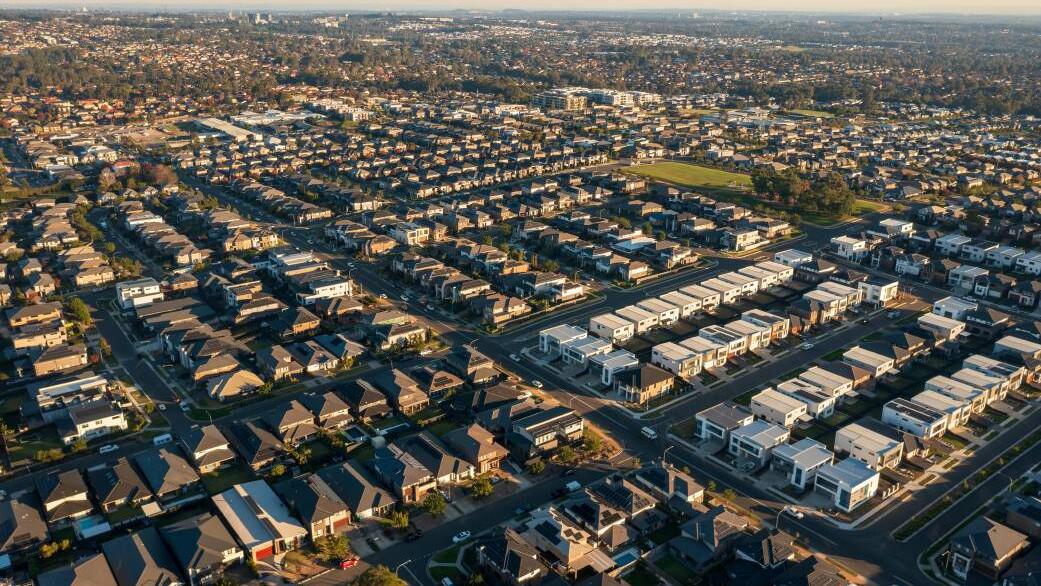
Affordability pressures remain one of the most significant influences on the housing sector, deflecting demand towards lower-priced markets.
Housing affordability is on Australians’ minds. Pic: Shutterstock Credit: View
Dwelling values remain elevated relative to household income, and the February rate hike has further eroded borrowing power and repayment capacity, the report says.
With the average loan size for a new mortgage approaching $700,000, serviceability pressures have intensified amid higher interest rates limiting the depth of demand at higher price points where prospective buyers are likely to find it harder to demonstrate an ability to service a mortgage.
At the same time, income growth has weakened in real terms, with wages growth falling into negative territory once adjusted for inflation.
This decline in real purchasing power is constraining households’ ability to absorb higher mortgage repayments and will likely contribute to more cautious purchasing behaviour.