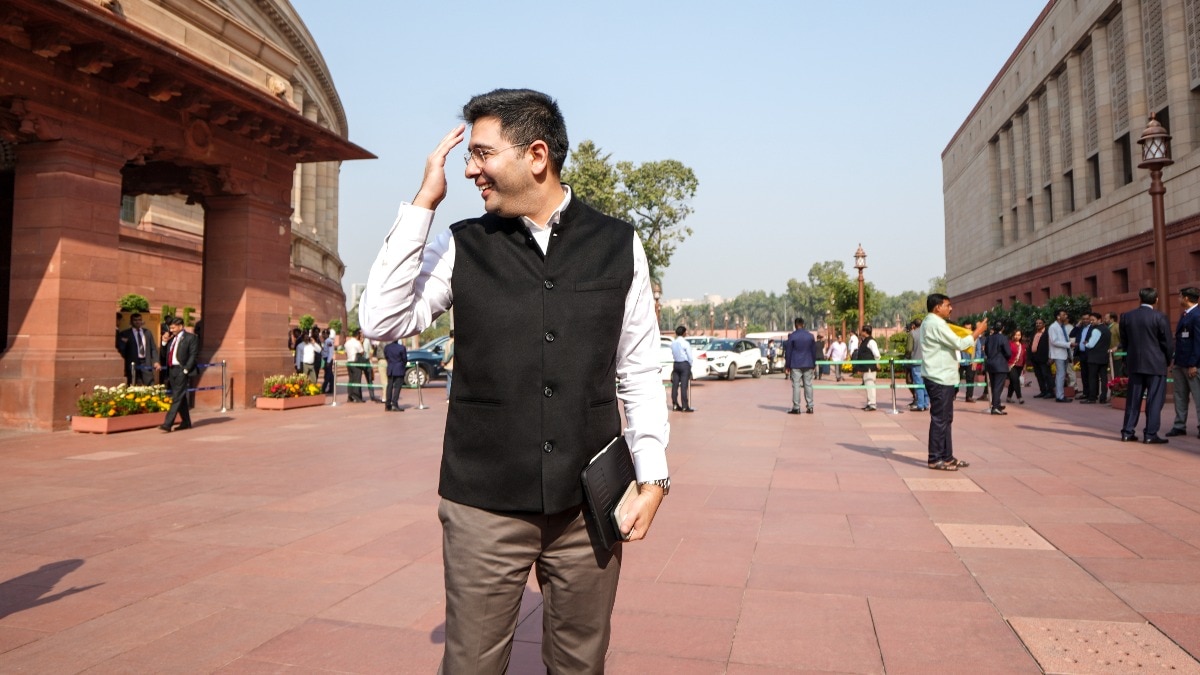
Raghav Chadha was demoted in Rajya Sabha. Then almost all AAP leaders went public with their allegations against him. Many predicted he would quit AAP, but Chadha stayed mostly quiet, just a few social media posts here and there, no big action or outburst. A calm claim: “Silenced, Not Defeated.”
Yet the silence was eerie. The kind that comes before a storm. And the storm came, 19 days later.
Chadha did not merely quit AAP. He walked out with a decisive bloc of MPs and announced a merger with the Bharatiya Janata Party. A big jolt to AAP. Far bigger than the one they dealt to Chadha. What looked like a sidelined leader now looked like a strategist who had been counting numbers, not nursing grievances.
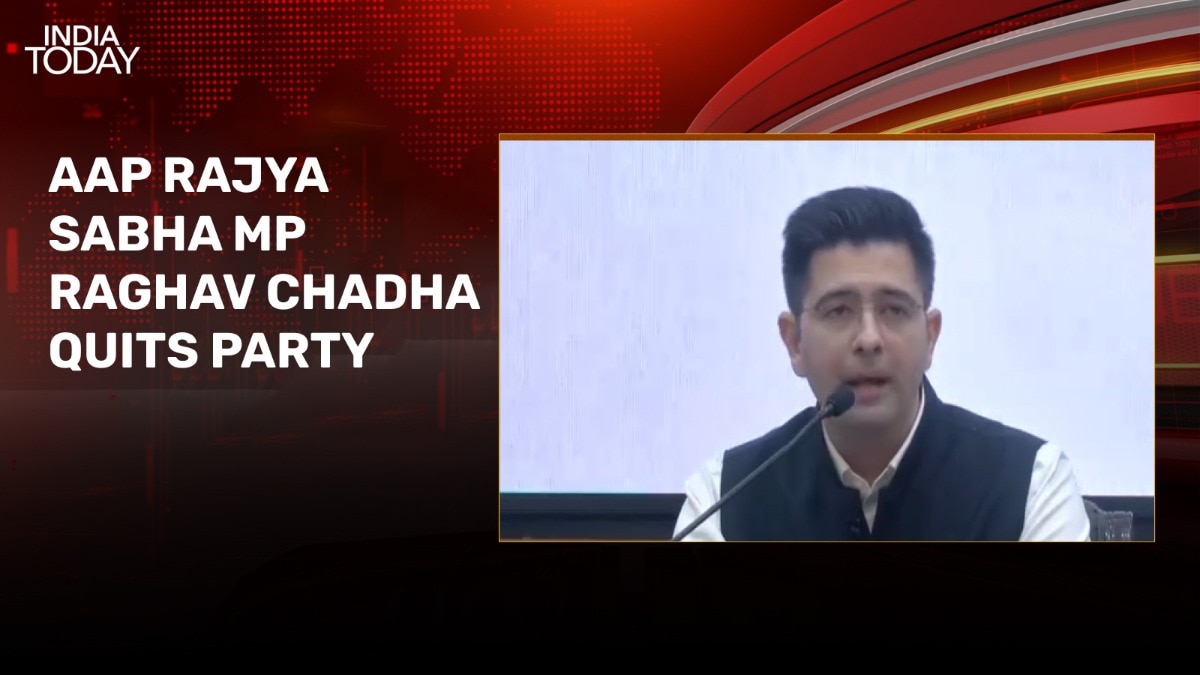
When TV screens flashed the news of Raghav Chadha quitting AAP, it was expected. That he would have two more MPs with him was unexpected, and the real shocker was his announcement that two-thirds of AAP MPs would merge with the BJP. Chadha claimed that besides Ashok Mittal and Sandeep Pathak, former cricketer Harbhajan Singh, Swati Maliwal, Rajinder Gupta, and Vikram Sahney would also join the BJP. Chadha’s coordinated move has left AAP with just three Rajya Sabha MPs.
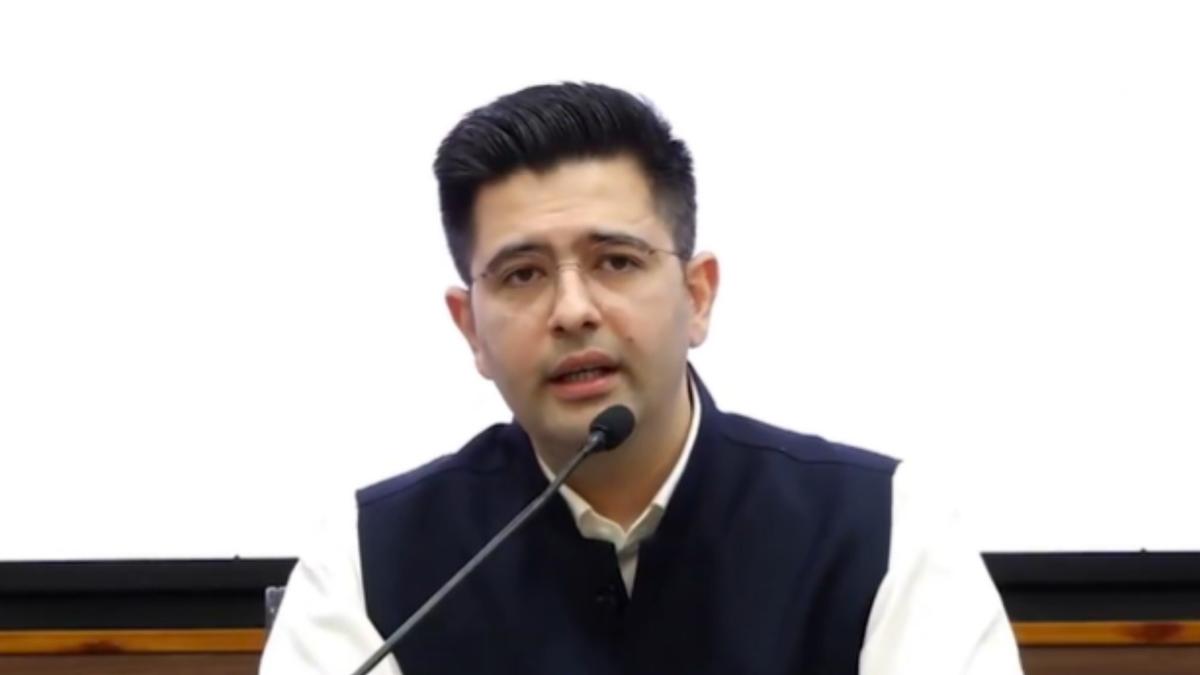
“We have decided that we, the 2/3rd members belonging to the AAP in Rajya Sabha, exercise the provisions of the Constitution of India and merge ourselves with the BJP,” he said addressing a press conference.
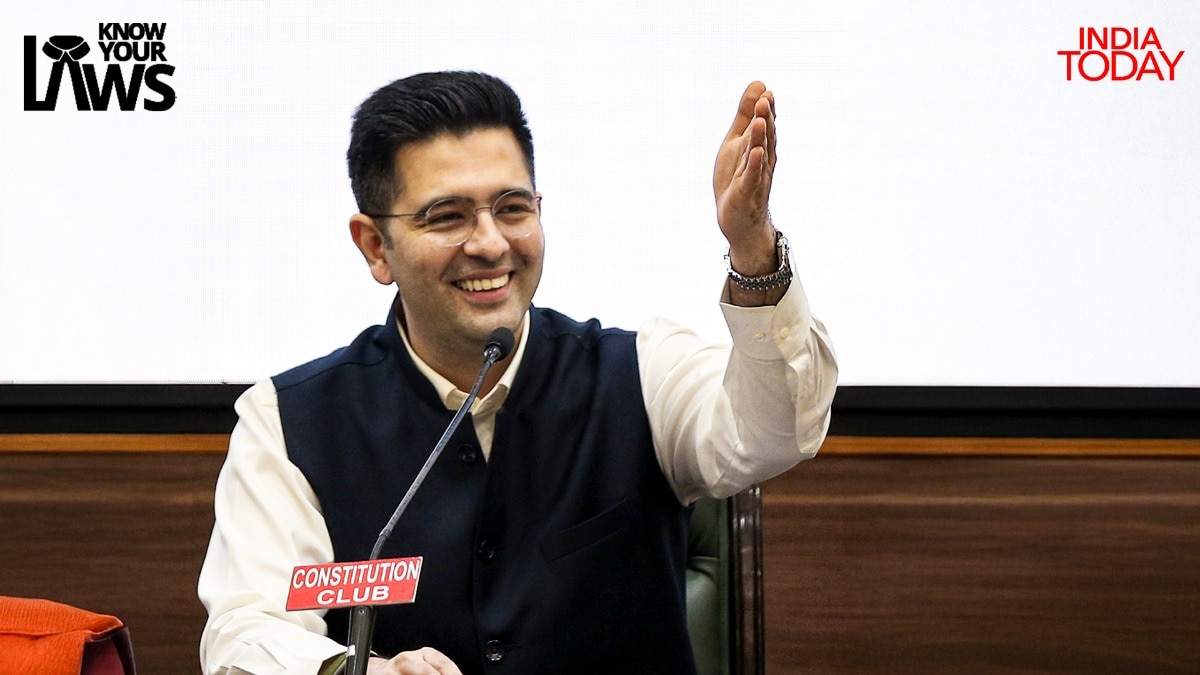
Raghav Chadha addresses a press conference with Sandeep Pathak and Ashok Mittal.
That number matters. Under anti-defection framework, anything less would have cost them their seats. This was not an emotional decision taken in isolation. It was a move executed with legal precision. And crucially, it was not just loyalists standing beside him. The presence of figures like Ashok Mittal, who had replaced Chadha as deputy leader, made the moment even more striking. It suggested this was not just rebellion. It was realignment.
WHAT UNFOLDED IN LAST 19 DAYS
April 2: AAP writes to the Rajya Sabha Secretariat seeking Raghav Chadha’s removal as deputy leader in the Upper House and proposes Ashok Mittal as his replacement. What looked like an internal reshuffle now reads like the first clear signal of a breakdown in trust.
April 15: ED raids are conducted at Punjab University, linked to the AAP MP who had just replaced Chadha in the Rajya Sabha leadership role. The timing raised eyebrows.
April 17: The Centre orders Z-category security for Raghav Chadha in Delhi and Punjab, a day after AAP reportedly withdrew his Z+ cover. This move did not just raise security levels, it raised political speculation. The buzz around Chadha’s possible shift to the BJP went from chatter to something more concrete.
April 24, around 12 PM: AAP gets wind of Chadha’s planned move to merge with the BJP. The response is reactive. A post is pushed out claiming he has been offered a ministerial berth and is trying to poach Punjab MPs. It felt more like damage control than a counterstrike, and by then, the numbers game was already slipping.
Around 1 PM: Arvind Kejriwal tweets that he is vacating the house at Delhi’s 5 Feroz Shah Road, linked to Ashok Mittal. In Punjab, CM Bhagwant Mann is said to have tried reaching Harbhajan Singh multiple times, with no response.
3:30 PM: Raghav Chadha, along with Sandeep Pathak and Ashok Mittal, addresses a press conference to announce their exit and merger with the BJP. The headline was not just the move, but the scale. Seven out of ten AAP MPs in the Rajya Sabha. The optics mattered too. Ashok Mittal standing beside Chadha, the very leader who had replaced him, underlined how quickly loyalties had flipped.
By 5 PM, all three formally joined the BJP in the presence of Nitin Nabin. In those two crucial hours before that, AAP holds two press conferences, one by Sanjay Singh and another by Bhagwant Mann. But by then, the story had already been written. What remained was not control, but reaction.
WHY ASHOK MITTAL’S PRESENCE MATTERS
Ashok Mittal made headlines when he replaced Raghav Chadha as AAP’s Rajya Sabha Deputy Leader. The move was sudden. Few saw it coming. Until the day before, Chadha was actively raising public issues in the Rajya Sabha, with his clips going viral and his wife Parineeti praising him on social media. By all accounts, things seemed to be going well for him. Many even saw him as one of the few AAP leaders who remained politically relevant at a time when the party itself appeared weighed down by legal battles involving its top leadership.
Then suddenly, AAP did what few had expected. It wrote to the Rajya Sabha Chair, seeking to deny Chadha speaking time. In his response, Chadha called it an attempt to silence him. He put out another video, addressing the allegations levelled by AAP leaders, but stopped short of making any counter-accusations. His central claim remained unchanged: that he was being silenced.
A key allegation by AAP leaders was that Chadha was “afraid to speak against PM Modi”, which was the first hint to everyone that the MP might consider joining the saffron camp if the friction did not ease.
The second hint came via BJP leaders’ reactions, who praised Chadha’s speeches and accused Arvind Kejriwal of using and throwing people. Then Delhi BJP chief Virendra Sachdeva said if Chadha does decide to join the BJP, it will be “up to him.”
The third hint was on April 15 when the Central government on Wednesday provided Z category security cover to Chadha, just hours after the AAP-led Punjab government withdrew his Z+ security. Hours later, an AAP spokesperson claimed that Chadha was in top with top BJP leaders.
“We have information from verified sources that there was a meeting of top-level BJP leaders with Raghav Chadha wherein it was decided that Raghav will be provided Z+ security and raids will be conducted at Ashok Mittal who had replaced him as deputy leader of the Upper House,” AAP spokesperson Priyanka Kakkar claimed.
WHY RAGHAV CHADHA NEEDED 7 MPs TO QUIT AAP
Raghav Chadha played safe and Raghav Chadha played smart. He had to give AAP an answer stronger than a statement, and it had to be an action. But, had Raghav Chadha acted alone, he would have risked losing his Rajya Sabha seat under the anti-defection law. However, the law does not apply when at least two-thirds of the members of a legislative party merge with another party.
Currently, there are 10 MPs in the Rajya Sabha from AAP. After this move, two-thirds, that is, 7 are set to merge with BJP. If this number was any less, those wanting to merge would have to give up their Upper House membership.
WHERE AAP MISCALCULATED
AAP’s handling of Chadha appears, in hindsight, reactive. Removing him from a leadership role, restricting his visibility in the House, and allowing internal criticism to spill into the public domain may have been intended to discipline a rising figure. Instead, it strengthened his narrative.
By the time the party sensed the scale of the shift, just hours before the announcement, it was already too late. Leaders issued warnings, held press conferences, and framed the move as part of a larger political operation. But the sequence of events suggested something simpler. They had lost control of the situation.
WHAT THIS MEANS FOR AAP
For AAP, the story is blunt. It has been stripped of seven MPs and is left with just three in the Rajya Sabha. The party has pinned the blame squarely on Prime Minister Narendra Modi and Amit Shah, calling it the BJP’s “Operation Lotus,” a term often used to describe alleged efforts to trigger defections and weaken opposition ranks.
The timing makes it more significant. This comes less than a year before the Punjab Assembly elections. On paper, AAP is still secure. It holds a comfortable majority in the state with 92 MLAs, and there are no credible signs yet of a similar, coordinated shift among legislators.
But political messaging tells its own story. The leadership, including Arvind Kejriwal, is framing this as external sabotage rather than an internal rupture. That line helps contain immediate damage, but it also avoids a harder question about how things escalated to this point. In the short term, AAP’s government in Punjab is not under threat. In the longer run, though, losing this many MPs in one stroke dents its national presence and raises questions about internal cohesion at a crucial moment.
But Chadha and 6 other MPs’ exit will certainly weaken AAP’s presence in Parliament. Raghav Chadha didn’t just respond to his demotion. He outmaneuvered it.
– Ends
Published By:
Priya Pareek
Published On:
Apr 24, 2026 20:49 IST
Tune In