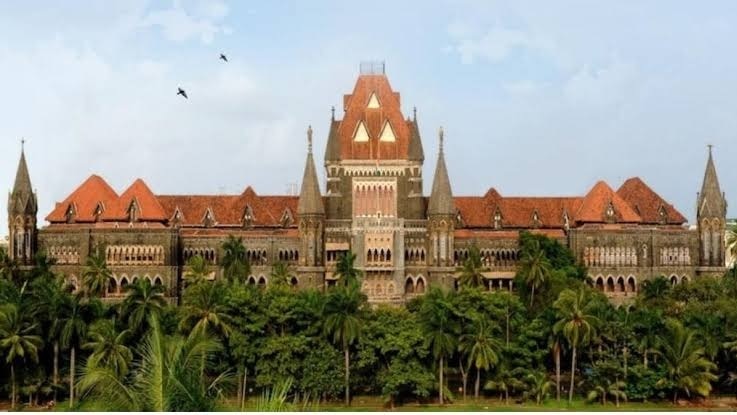
A fresh legal challenge has been mounted before the Bombay High Court against the newly enacted Maharashtra Freedom of Religion Act, 2026, with a petitioner alleging that several provisions of the law are vague, overly broad and arbitrary and interfere with the fundamental right to marry a person of one’s choice.
Maulana Halimullah Farooque Ahmed Khan, a 70-year-old Islamic scholar from the Bhiwandi area of Maharashtra’s Thane district, has filed a writ petition challenging the constitutional validity of the Act. The plea, filed through advocate Mateen Shaikh, alleges that the legislation infringes fundamental rights guaranteed under the Constitution.
The petition specifically challenges Section 2(a), which defines “allurement”. Khan argues that the provision uses excessively broad terms, with phrases such as “better lifestyle” and “divine healing” potentially bringing routine religious instruction and social work within the ambit of criminal law.
The plea also challenges Section 6, which requires individuals seeking to convert to give 60 days’ prior notice. According to the petitioner, the requirement exposes deeply personal decisions about faith to public scrutiny and executive control.
Khan further challenges Section 13, alleging that it shifts the burden of proof onto the accused. The petition argues that this undermines procedural fairness and the constitutional presumption of innocence.
Section 9(2), which provides for stiffer penalties where women are converted, has also been challenged as gender-discriminatory.
The petition further points to instances of what it describes as premature police action. It argues that while the state can prohibit or penalise marriages or relationships brought about through force, fraud, coercion or deception, that power cannot extend to placing consensual inter-faith relationships, marriages or voluntary changes of faith under state surveillance or heightened scrutiny merely because the individuals profess different religions.
The petitioner contends that choosing a life partner and deciding one’s faith are matters of personal autonomy, dignity, privacy and decisional freedom protected by the Constitution.
Khan has urged the High Court to declare the Act unconstitutional, arguing that its provisions could have a “chilling effect” on citizens’ fundamental rights and fail to adequately distinguish between consent and conversion.
Alternatively, he has asked the court to read down the provisions so that they apply strictly to cases involving actual force, fraud or coercion.
– Ends
Published By:
Nitish Singh
Published On:
Sep 11, 2026 02:32 IST