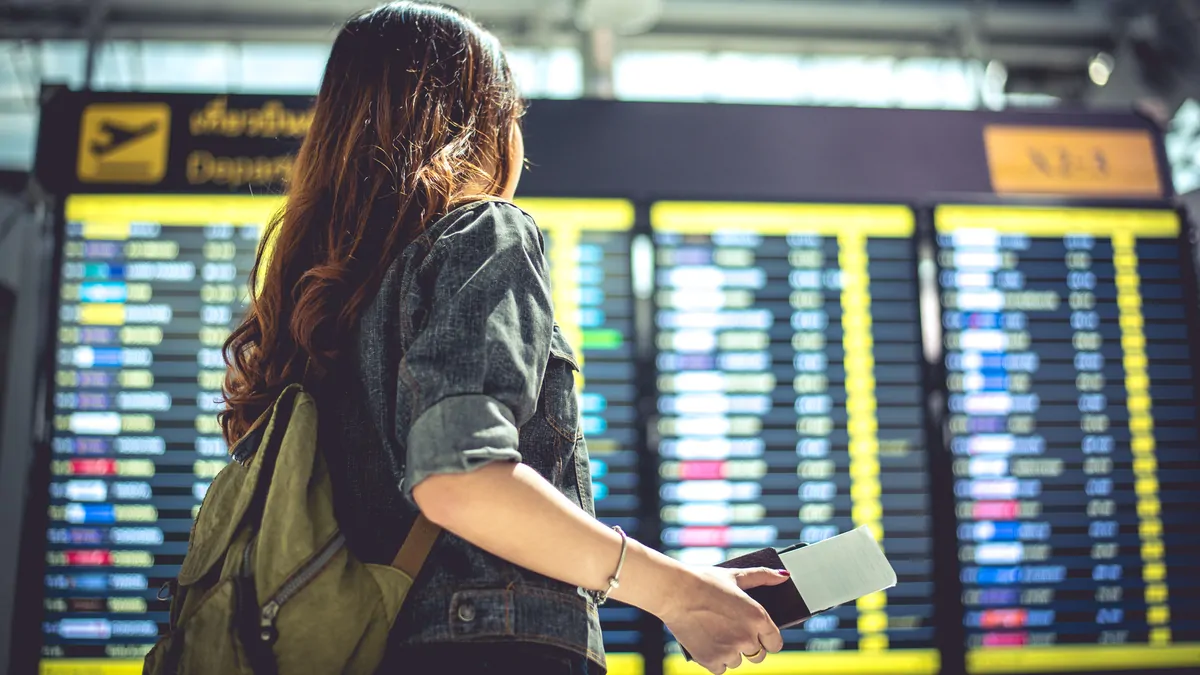
Travellers heading overseas can expect to cough up a hefty exit fee after the Federal government hiked the cost of leaving Australia a move that has left the travel industry fuming.
Anyone departing by air or sea to another country, regardless of whether they plan to come back or whether they are an Australian citizen, has to pay a Passenger Movement Charge.
Under a change announced in Tuesday’s Federal budget, from January 1 next year the charge will rise by $10 — from $70 to $80.
Sign up to The Nightly’s newsletters.
Get the first look at the digital newspaper, curated daily stories and breaking headlines delivered to your inbox.
By continuing you agree to our Terms and Privacy Policy.
The rise is expected to net the Government an extra $755m over five years from 2025-26. However, the Department of Home Affairs will get $700m to administer the change.
Passengers who have already bought tickets will benefit from a six month transition period as the changes align to the departure date of the passenger rather than date of the ticket sale.
The price surge has been condemned by the travel industry, with leaders saying they were blindsided by the move.
Tourism and Transport forum chief executive Margy Osmond slammed the increase, calling the decision an “absolute shocker” and a “revenue grab”.
“We’re outraged that the Government has decided to make travel even more expensive, when operators are already under enormous pressure from the ongoing fuel crisis and surging operating costs,” Ms Osmond said.
“The Government talks constantly about supporting tourism and growing visitation, yet tonight’s Budget makes Australia more expensive to visit and more expensive for Australians to travel.”
“For a family of four, that’s $320 they’ll soon have to pay in tax as part of their airfare. Given how much uncertainty the industry is already facing, this could really be the straw that breaks the camel’s back.”
Ms Osmond called for the new rate to be frozen for at least four years in order to give the travel industry some certainty.
The Australian Airports Association has also criticised the increased charge saying it is meant to cover Government costs of managing the border.
However, only about half of its annual $1.4 billion revenue is actually used for border management.
Chief Executive Simon Westaway said increasing the charge during a challenging economic time driven by global uncertainty and the Middle East conflict risked placing further pressure on price-sensitive travellers and Australia’s tourism competitiveness.
“At a time when household budgets are already stretched, any increase to this passenger tax needs to be carefully considered because it risks making overseas travel more expensive for regular families wanting to take a holiday,” Mr Westaway said.
He said if passengers were expected to pay more then that additional money should be reinvested in tangible border upgrades such as switching-up Incoming Passenger Cards from paper to digital.
“This is a simple fix to a frustrating administrative process for anyone flying into Australia and would be a modest productivity investment towards a future seamless border.
“The paper card is an outdated method to gather information and gives the impression that Australia is falling behind on new technology.
“This upgrade should sit alongside broader investment in border technology, more SmartGates and better resourcing for the Australian Border Force.
“Our competing neighbours, including New Zealand, Indonesia and Singapore, are already delivering a far better border experience than us.
“Ultimately, we need to be proactive on border modernisation ahead of the 2032 Brisbane Olympic and Paralympic Games, with greater use of biometrics, digital declarations and seamless travel technology.”
Airport and tourism industry leaders are demanding urgent federal funding to modernise Australia’s border processing systems, citing lengthy queues at passport control in Sydney, Melbourne and Brisbane airports.
What is the Passenger Movement Charge?
All travellers leaving Australia, whether by air or sea to another country, regardless of whether they plan to come back or whether they are an Australian citizen, has to pay a Passenger Movement Charge.
The charge is collected when a ticket is sold to a passenger and then forwarded by the airline, shipping company or relevant transport body to the Department of Home Affairs.
Certain passengers are exempt, including anyone aged under 11 at the date of departure, military personnel aircraft crew and diplomats.
The Passenger Movement Charge was introduced in July 1995 replacing the Departure Tax, and is administered by the Department of Home Affairs.