

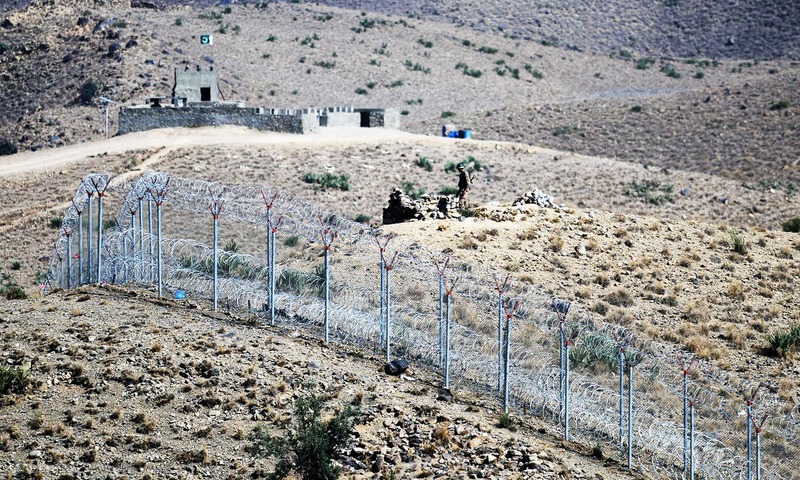
Pakistani security forces have responded to unprovoked firing from the Afghan border posts, the deputy commissioner of Lower South Waziristan district said on Sunday.
In a post on X, the DC’s official account said, “Unprovoked firing from Afghan border posts onto Pakistani border checkpoints continues.”
It added that Pakistani security forces responded immediately and effectively, targeting “multiple Afghan border posts, mortar positions, and defensive checkpoints”.
“The Afghan Taliban were forced to abandon their posts and flee in response to the Pakistani forces’ strong response,” the post read.
It further said no reports of any casualties have emerged from the border areas on the Pakistani side.
“Pakistani forces remain prepared to deliver a full response to any kind of aggression,” the deputy commissioner affirmed.
The military’s media affairs wing, Inter-Services Public Relations (ISPR), is yet to comment on the development.
The fresh exchange of fire follows Friday’s skirmishes, when Pakistan’s armed forces responded to unprovoked firing from the other side, state media reported, citing security sources. As a result, several Afghan Taliban posts in areas adjacent to South Waziristan and Parachinar were destroyed.
The Afghan forces had also opened fire along the Angoor Adda border area on Tuesday, which claimed the life of one local and injured a family of five.
Khyber Pakhtunkhwa Governor Faisal Karim Kundi had condemned the firing, asserting that Pakistan would “never tolerate” attacks on its people or violations of its sovereignty.
Pakistan had also dismissed a statement by Afghanistan’s defence ministry regarding the incident that claimed that Pakistan was the aggressor, terming it a “fabrication of lies”.
The border at Angoor Adda is one of the most important and sensitive crossings along the Pak-Afghan border, serving as a key trade route and one of the main points of public movement between the two countries.
Amid the heightened tensions, United States Secretary of State Marco Rubio on Saturday said that Washington has “heard” Pakistan’s concerns about terrorism emanating from Afghanistan and if “there’s a productive role for us to play, we would play it”.
Asked about the conflict between the neighbouring countries, Rubio said, “We’ve heard the concerns that Pakistan has raised and we’ve seen some of those attacks that they point to. We’re against terrorism no matter where it emanates from and who it targets.”
Pak-Afghan tensions
Ties between Pakistan and Afghanistan have been strained in the past few years as Islamabad continues to voice its concern over cross-border terrorism.
Islamabad has repeatedly urged the Taliban administration in Kabul to dismantle terrorist sanctuaries on Afghan soil, particularly those linked to the banned Tehreek-i-Taliban Pakistan (TTP), that are used for attacks in Pakistan. Officials say those appeals have gone unheeded.
For their part, the Afghan Taliban have avoided taking a categorical position on the TTP and other groups, while dismissing Islamabad’s stance that Afghanistan is being used as a base for attacks against Pakistan.
A day earlier, the information ministry stressed that the “Taliban regime’s persistent refusal to address terrorism remains the principal obstacle to normal relations”, objecting to Kabul’s portrayal of the issue.
The recent wave of military conflict began in September, when Pakistan carried out calibrated airstrikes in the border region in response to terrorist attacks in KP. This was followed by drone incursions from across the Afghan border, which Islamabad said were shot down.
In retaliation to the drone incursion, Pakistan conducted “precision aerial and drone strikes” in 10 locations across Afghanistan, followed by another round of “calibrated” air strikes against terrorist hideouts in Afghanistan on Oct 1.
On Oct 17, state media reported that Pakistani security forces responded to unprovoked fire from the Afghan side along the border in Kurram.
