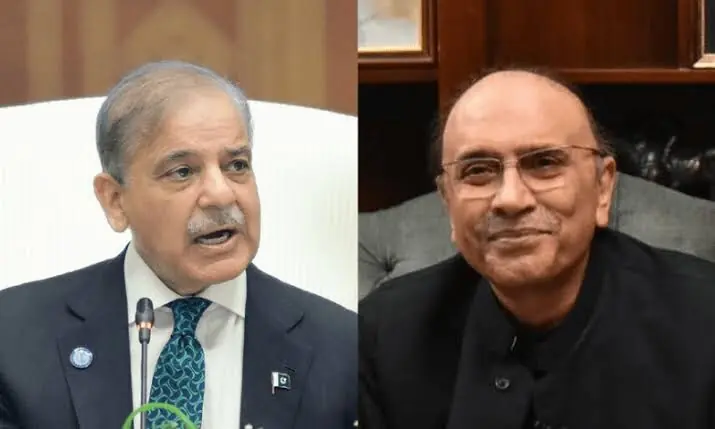
Prime Minister Shehbaz Sharif on Saturday called for recognising Pakistan’s rapidly expanding populace and reaffirmed the government’s commitment to “responsible” population planning for an equitable and prosperous future.
The premier’s message on World Population Day focused on Pakistan’s annual population growth rate of 2.55 per cent. He urged all stakeholders to recognise the urgency of the population rise as a national issue.
The figure has sparked a national conversation about the demographic growth placing pressure on the country’s economy, health and other vital systems. The government recently formed a high-level committee, including the army chief as a member, to tackle the issue.
In his message on World Population Day on Saturday, PM Shehbaz urged all stakeholders — including the federal and provincial governments, parliamentarians, development partners, civil society, academia, the private sector, religious scholars, the media and local communities — to fulfil their shared responsibility by promoting informed decision-making, responsible parenthood, gender equality, and sustainable development.
“Today, Pakistan joins the international community in observing World Population Day and reaffirms its commitment to responsible population planning as a cornerstone of sustainable development and national prosperity,” the prime minister said.
Noting that Pakistan was the world’s fifth most populous country and 65pc of its population was under the age of 30, the premier termed the youth “a tremendous national asset and a powerful driver of economic and social progress”.
However, at the same time, Pakistan’s population growing by 2.55pc each year represented “significant challenges for a country with regards to economic planning, employment generation, education, healthcare, housing, food security, infrastructure development, and environmental sustainability”, he highlighted.
PM Shehbaz said this year’s theme for World Population Day, “Realising the Hopes and Aspirations of Young People, Today and for the Future”, underscored the pivotal role of young people in shaping a prosperous future.
“Creating an enabling environment for the younger generation is our collective responsibility,” he said, stressing that sustained investment in national resources and a comprehensive strategy were indispensable to realise the benefits of this demographic dividend.
Responsible and prudent population planning and management form the foundation of a welfare-oriented society, the premier said, adding that a population that remains commensurate with available resources ensures equitable access to public services and contributes to the well-being and prosperity of all citizens.
The prime minister emphasised that every citizen — irrespective of race, ethnicity, or background — particularly the most vulnerable segments of society, deserved equal access to essential services and due consideration in future planning.
“Education, healthcare, economic inclusion, and equal opportunities for women and girls remain among the government’s foremost priorities,” he said.
PM Shehbaz noted that the government has recently established the National Population Council (NPC) to formulate a “comprehensive and effective national strategy on population and development”.
The forum would ensure policy coordination between the federal and provincial governments, strengthen institutional collaboration, and provide strategic policy guidance for the implementation of the National Population Programme and will also facilitate timely and effective decision-making in line with national priorities, he said.
“Furthermore, the council will duly accord priority to integrating population-related issues into the national development agenda, promoting women’s empowerment, advancing human resource development, and formulating evidence-based policies that support long-term social and economic prosperity,” he added.
PM Shehbaz said the government was also implementing the Prime Minister’s Youth Programme and several other important national initiatives to achieve the overarching objective of developing empowered citizens.
“God-willing, through collective resolve and coordinated action, we can create an environment in which every citizen enjoys equal opportunities to lead a healthy, dignified, and productive life,” the premier said.
“Together, we can transform Pakistan’s demographic potential into enduring national strength and secure a stable, prosperous, developed, and resilient future for both our present and future generations,” he concluded.
‘Women, children and young people at the centre of development efforts’
Meanwhile, in his message, President Asif Ali Zardari also urged all stakeholders to work together in promoting the health, well-being and empowerment of the masses.
Joining the international community in reflecting on evolving population trends, he reaffirmed the nation’s collective commitment to building a society where every citizen can live with dignity, health and opportunity.
The president emphasised that by placing women, children and young people at the centre of the national development efforts, the country could create a future that is equitable, inclusive and sustainable.
He described Pakistan’s large youth population as a “unique opportunity for national progress”.
He said: “If provided with quality education, healthcare, skills and employment opportunities, our youth can become a powerful demographic dividend, driving economic growth, innovation and social development.
“Investing in young people today is an investment in Pakistan’s future.”
The president observed that population and development were deeply interconnected as progress in education, healthcare, gender equality, poverty reduction and economic opportunity strengthened families and communities.
President Zardari’s message particularly focused on the importance of women’s and children’s healthcare for a prosperous nation.
“Maternal health, child survival, nutrition, education and access to essential healthcare services remain fundamental pillars of sustainable development,” he said.
He cautioned that a society could not prosper when mothers faced preventable risks during pregnancy and childbirth, when children suffered from malnutrition or when girls were denied opportunities to learn and thrive.
The president also recalled the vision of ex-PM Benazir Bhutto, who he said emphasised the vital role of women’s empowerment, education and reproductive health in national development.
“Ensuring that every woman has access to quality healthcare and that every child receives the care, nutrition and education necessary to reach their full potential is both a moral responsibility and a national imperative,” he said.
“Let us renew our commitment to building a Pakistan where every person can realise their hopes and aspirations. Together, we can transform our demographic strengths into lasting national prosperity and human development,” the president concluded.