Image: Save West Beach Sand
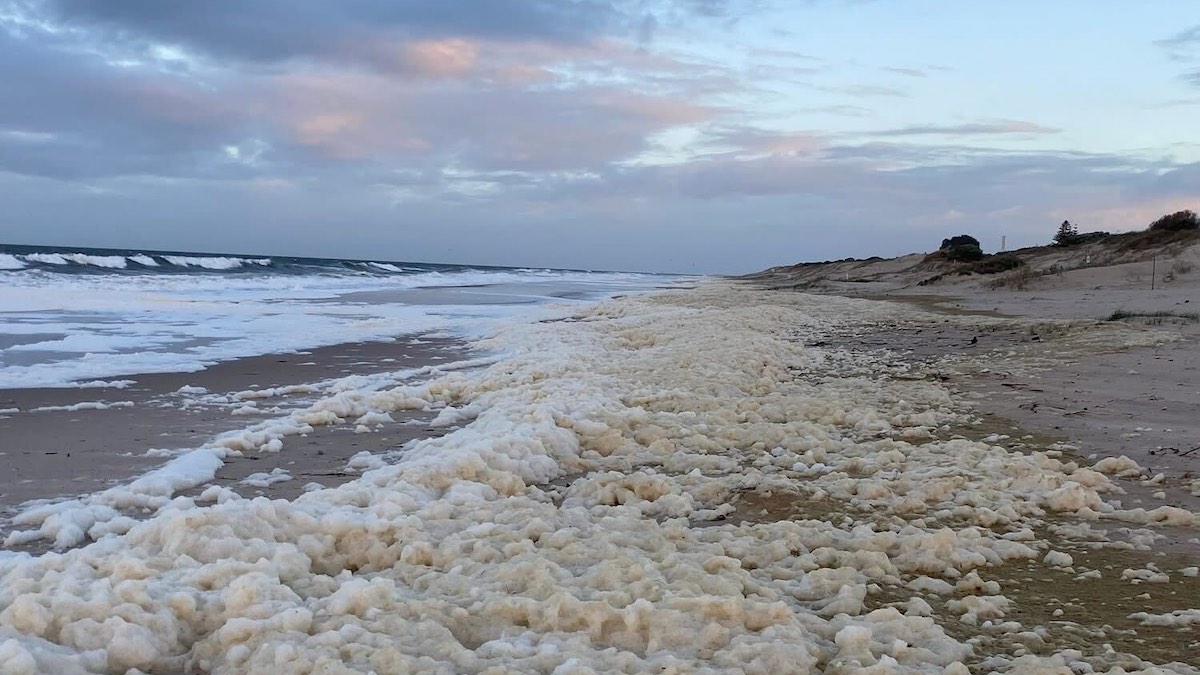
After more than a year of uncertainty surrounding one of South Australia’s most significant marine events, new research has shed light on the environmental conditions that may have fuelled the state’s devastating harmful algal bloom.
A comprehensive investigation led by the South Australian Research and Development Institute (SARDI) has found the bloom was most likely the result of several factors occurring together, rather than a single cause.
The independently peer-reviewed report examined the Karenia algal bloom, which first appeared in South Australian waters in March 2025 before spreading across extensive areas of the coastline, affecting marine life, fisheries, tourism and coastal communities.
Researchers identified three major contributing factors that likely created the ideal conditions for the bloom to develop, nutrient-rich floodwaters from the 2023 River Murray Flood, record coastal upwelling during 2023–24, and a marine heatwave.
Together, these environmental changes are believed to have created a nutrient-rich and stable marine environment where Karenia could grow and multiply.
The investigation found elevated nutrient levels were particularly significant in waters near Waitpinga, where the bloom was first detected in early 2025. Scientists suggest these conditions, combined with calm seas and layers of unmixed water, provided an environment where the algae could rapidly intensify and spread.
Importantly, the report found no evidence that a new algal species was introduced to South Australian waters. Instead, research confirmed that multiple Karenia species, including Karenia cristata, had already been present at low levels for at least a decade before the 2025 event.
The findings provide the most detailed understanding to date of the drivers behind the harmful algal bloom, while also highlighting the need for stronger monitoring, improved data collection and further research to better predict and respond to future events.
The investigation was reviewed by leading scientific experts from Tasmania and the United States, with the newly established $3.2 million Office for Algal Bloom Research set to continue exploring the causes and impacts of harmful algal blooms.
The office forms part of the $162.5 million Federal and State Government response package and aims to strengthen Australia’s understanding of these complex marine events.
Minister for Primary Industries and Regional Development Clare Scriven said, “This investigation, which has been both externally peer reviewed and subject to rigorous internal SARDI reviews, confirms what scientists have been saying for some time: that this harmful algal bloom was not caused by a single event, but most likely a convergence of environmental factors that developed over time.
“While our understanding on the makeup and triggers behind such events has strengthened over the past year, this work also helps to determine the next steps in harmful algal bloom research.”
SARDI Executive Director Professor Mike Steer added, “While our understanding of some of the triggers and drivers behind these events is now much stronger thanks to this investigation, we are also aware that more research is required particularly into the importance that these drivers play either individually or collectively into creating the conditions for such significant harmful algal blooms to emerge.
“The knowledge gaps identified in this report give us a clear research base to work from.”
The findings will provide a foundation for ongoing research aimed at improving early warning systems and protecting South Australia’s marine environment into the future.