Every athlete understands that sport comes with risk. Less clear is where personal responsibility ends and an organisation’s duty of care begins.
Will Pucovski’s decision to sue Brighton Grammar brings that question into focus, but it reaches far beyond one former cricketer and one school.
According to Pucovski’s statement of claim, he was knocked unconscious during an aggressively physical football training session in 2014, when he was 16. It is alleged that he did not receive a proper medical assessment and was later allowed to resume training.
Sign up to The Nightly’s newsletters.
Get the first look at the digital newspaper, curated daily stories and breaking headlines delivered to your inbox.
By continuing you agree to our Terms and Privacy Policy.
These allegations have not been tested in court. If they are proven, the school failed in its duty of care. A teenager who has just been knocked unconscious should not decide whether he is fit to continue.
Pucovski has acknowledged that when he was asked if he wanted to keep training, he said yes. I understand that response. Young athletes nearly always want to continue. That is why the adults responsible must sometimes decide for them.
Parents can also become part of that pressure. Most want what is best for their child, but ambition can sometimes cloud judgement, particularly when they believe their son or daughter has a future in professional sport.
Research has found that parents who place greater importance on sporting achievement can be less likely to encourage their children to report concussion symptoms.
There is no suggestion that Pucovski’s parents placed that pressure on him. This is a broader issue across youth sport. Responsibility can involve the player, parents, coaches, school and medical staff.
But Pucovski’s case also raises a much bigger question for sport. Where does this lead if athletes begin holding schools, clubs or governing bodies responsible for injuries suffered while taking part in sports where injury is a known risk?
As a fast bowler, I knew stress fractures were a risk. I had my first at 18 and went on to suffer four in my back during my career. I willingly bowled through pain until I struggled to walk without feeling a sharp pain in my back.
Bowlers openly discussed what we were doing to our bodies and what it might mean during our careers and afterwards.
Sometimes we joked about it, but underneath the humour was an understanding that our decisions might follow us into later life.
I watched Ryan Harris push his body beyond what most people could tolerate. His knee was constantly near breaking point, but he did everything possible to remain available because playing cricket, and particularly playing for Australia, meant so much to him.
That mentality is difficult to explain to people outside elite sport. Athletes accept risks because the opportunity to compete can mean more in that moment than how the body might feel years later.
Ryan Harris celebrates as he takes the last wicket of Morne Morkel. Credit: Morne de Klerk/Getty Images
That does not allow sporting organisations to escape responsibility. They clearly recognise that, with so many rules and protocols introduced to protect both players and the organisations themselves.
Schools, clubs, coaches, doctors and administrators cannot eliminate every risk from sport, but they must provide honest medical advice, proper treatment and responsible injury management.
There is a difference between an injury occurring within the normal risks of a sport and an organisation making that injury worse through negligence. That distinction is important.
Concussion is different from a stress fracture or damaged knee and understandably dominates many sporting headlines. The brain is more complicated, symptoms can affect judgement and the long-term consequences can be difficult to predict. It must be treated seriously.
But should concussion be placed in a separate category where an athlete’s later choices no longer count?
Pucovski’s sporting career was affected by at least 13 known concussions. After becoming a professional cricketer, he returned following several head knocks and continued chasing his ambition to play for Australia.
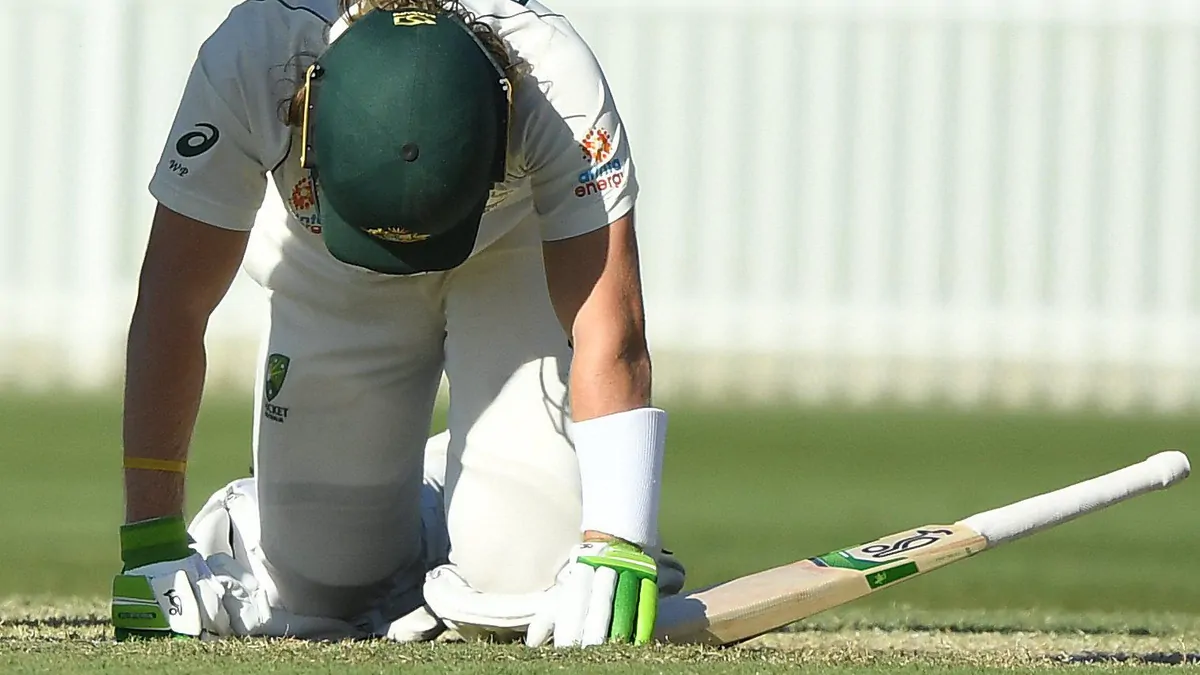
Will Pucovski. Credit: Morgan Hancock/Getty Images
He may have done so with medical clearance and professional advice. That matters. But his own determination to continue must also be part of the discussion.
Pucovski was a highly talented batter who scored 62 in his only Test. But he also injured his right shoulder while fielding in that match, required reconstructive surgery and was sidelined for about six months.
He may have gone on to have an outstanding international career, but nobody can know that. Form, technique, selection and unrelated injuries end promising careers all the time.
The full details of the damages he is seeking have not been made public. If lost cricket earnings and opportunities form part of his claim, nobody can say with certainty that he would have played 20, 50 or 100 Tests.
Brighton Grammar may have failed Pucovski on that first day. A court will decide that after hearing both sides.
But accepting the normal risks of sport cannot become meaningless. If every injury with long-term consequences leads back to a parent, coach, club or governing body, where does personal responsibility begin?
Duty of care matters. So does the athlete’s understanding of the risks being taken.
Sporting organisations must be accountable for negligence. Athletes must also accept that some injuries are an unavoidable part of choosing to compete.
A fair sporting system must be able to recognise both.