World Cup
Ahead of the 2026 World Cup, take a look at Massachusetts’ rich soccer history, from the Fall River Marksmen to today’s U.S. national team stars.
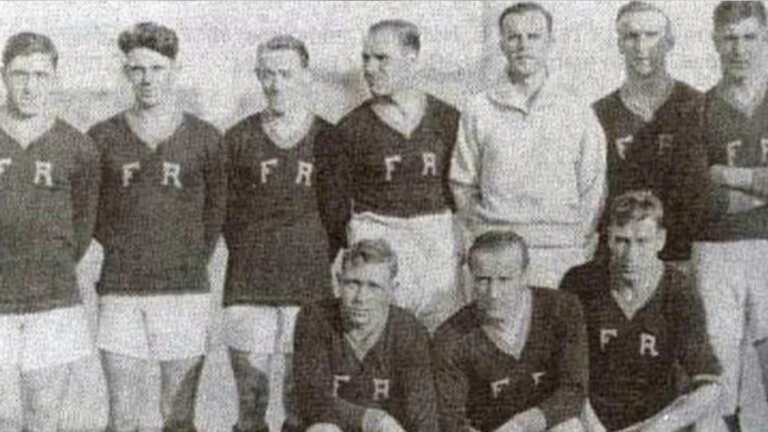
By the 1920s, a professional team called the Fall River Marksmen had become one of the strongest soccer teams in the country.
June 2, 2026 | 12:37 PM
3 minutes to read
You’re reading Boston.com’s World Cup 2026 newsletter. Sign up for everything you need to know about the tournament, including watch parties and things to do around Massachusetts, tickets and transportation options, and more.
Massachusetts has deep roots in soccer history, from the Oneida Football Club and Fall River Marksmen to World Cup stars Bert Patenaude, Sam Mewis, and Matt Turner. Here’s how the Bay State became one of America’s original soccer hotbeds.
New England has produced and facilitated generations of soccer talent, including World Cup winners and record-setters.
It famously (if confusingly) began with the Oneida Football Club in the 1860s. They were students who created a new sport — fittingly called “The Boston Game” — that blended elements of soccer and rugby. It’s also cited as an early, unofficial version of what would become American football.
By the 20th century, soccer was infused into the local culture by waves of immigrants who brought it with them. Scottish and Portuguese immigrants flocked to places like Fall River, and soccer dominance followed. By the 1920s, a professional team called the Fall River Marksmen had become one of the strongest teams in the country, and proved themselves capable of beating international foes as well.
Dubbed the “American Menace” by European commentators due to the competitive salaries that U.S. teams offered to lure players from overseas, Fall River (the dominant team of its time) helped develop the first golden age of American talent.
By the inaugural World Cup in 1930, four members of the U.S. team either hailed from or played in New England, including leading scorer Bert Patenaude and superstar Billy Gonsalves (also known as “the Babe Ruth of soccer”).
The American men’s team finished third in 1930, which remains their best-ever finish. Timing was not on soccer’s side in that era, however, and the onset of the Great Depression crushed the local leagues and the sport’s popularity receded for the next 30 years.
By the 1960s, Pelé and a plethora of international stars injected new life into the local soccer scene. When the Brazilian legend visited Boston playing for the New York Cosmos in 1975, fans literally mobbed him at Nickerson Field.
The boom ultimately faded, but it helped lay the groundwork for the sport’s resurgence two decades later when soccer reasserted itself strongly in the Boston area. One of the great upsets in U.S. men’s soccer history happened at the old Foxboro Stadium in the buildup to the 1994 World Cup when a precocious U.S. team defeated England 2-0 before a stunned crowd on June 3, 1993.
The ‘94 tournament itself helped re-plant the flag of soccer locally, paving the way for MLS.
Along with the growth of the men’s game, the women have largely led the way since the 1990s. Mass. born Sam and Kristie Mewis (and more recently Ally Sentnor and Lilly Reale) have represented the national team, with Sam starting on the World Cup-winning side in 2019.
In 2026, the area has a fully formed (and still growing) ecosystem of teams and players that show no signs of slowing.
So just remember, when people try to tell you no one cares about soccer or the World Cup around here, it’s not because the sport lacks local history. It’s probably more to do with the ticket prices.
Topic:
Morning Sports Update
Here are the local Mass. ties on the U.S. World Cup roster
Trivia
What country was the last host to win the men’s edition of the World Cup?
Hint: They defeated Brazil 3-0 in the final.
Keep reading for the answer.
One more thing…
Did you know that the very first hat-trick scored in a World Cup was by a Massachusetts-born player? His name was Bert Patenaude, and he was born in Fall River. Then just 20, Patenaude took to the World Cup stage at the inaugural tournament in 1930 and scored three times in the 3-0 win over Paraguay. But because of poor record keeping, the feat wasn’t officially recognized by FIFA until 2006.
-
Registration to open for World Cup Fan Fest after city unveils 6 watch parties
-
Patriots fans: Share your Gillette Stadium tips ahead of the World Cup
Trivia answer: France
Hayden Bird is a sports staff writer for Boston.com, where he has worked since 2016. He covers all things sports in New England.
⚽ Get the latest World Cup news
Receive updates on the 2026 FIFA World Cup