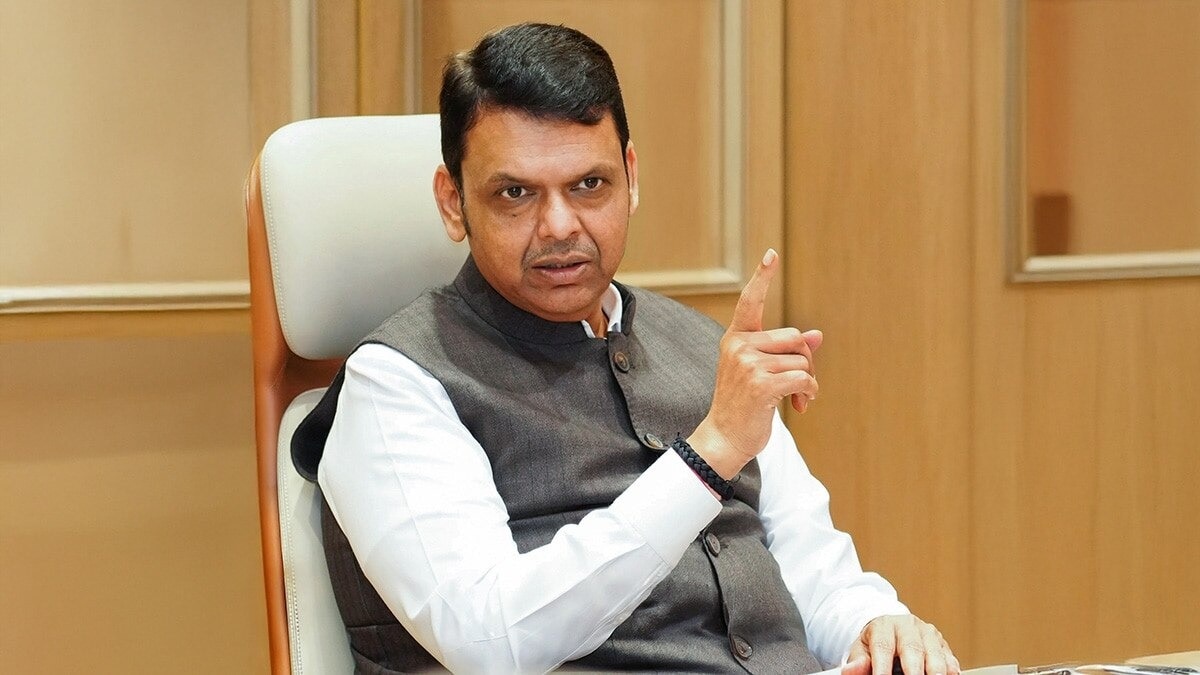
The Maharashtra government has introduced updated governance guidelines, officially titled the ‘Maharashtra Government Rules of Business, 2026’, granting Chief Minister Devendra Fadnavis overarching powers to override decisions taken by other state ministries and departments.
Under this newly notified framework, Chief Minister Devendra Fadnavis holds explicit legal authority to modify or reverse any cabinet minister’s decision if it is deemed necessary for the larger public interest.
To ensure transparency and prevent arbitrary overrides, the rules mandate that the Chief Minister must record the specific reasons for any such changes in writing.
While individual ministers will continue to manage the daily operations and responsibilities of their respective departments, the Chief Minister now possesses the formal power to request any official document, paper, or file directly from any department.
Departmental ministers and their respective secretaries are legally required to present these requested documents to the Chief Minister without delay.
Additionally, the new regulations clearly map out the defined roles, boundaries and administrative duties for the Chief Minister, individual cabinet ministers, the Chief Secretary, and departmental secretaries.
HOW THIS DIFFERS FROM EARLIER RULES?
Previously, the Chief Minister lacked explicit, independent authority under the executive rules of business to unilaterally modify, review or overturn decisions made by an in-charge department minister, a limitation previously highlighted by the Bombay High Court judgement in 2022.
Under the old system, portfolio ministers held final departmental autonomy over their decisions unless voluntarily brought to the cabinet.
The 2026 amendment establishes a clear legal line of command, granting the Chief Minister overriding authority to directly intervene, review and change ministerial decisions across all government departments for public welfare.
Politically, this centralised command structure gives the Chief Minister unprecedented leverage over the multi-party Mahayuti coalition.
While it allows Devendra Fadnavis to streamline decision-making, prevent policy deadlocks and present a unified, assertive government front ahead of key local elections, it also risks stoking friction among alliance partners.
Portfolio ministers from coalition parties may perceive the CM’s new veto power as an erosion of their departmental autonomy and administrative weight, potentially creating internal tug-of-war dynamics over major policy and public spending approvals.
– Ends
Published By:
Sayan Ganguly
Published On:
Aug 19, 2026 23:50 IST