Sports News
Where things stand entering the Walter Cup Playoffs.
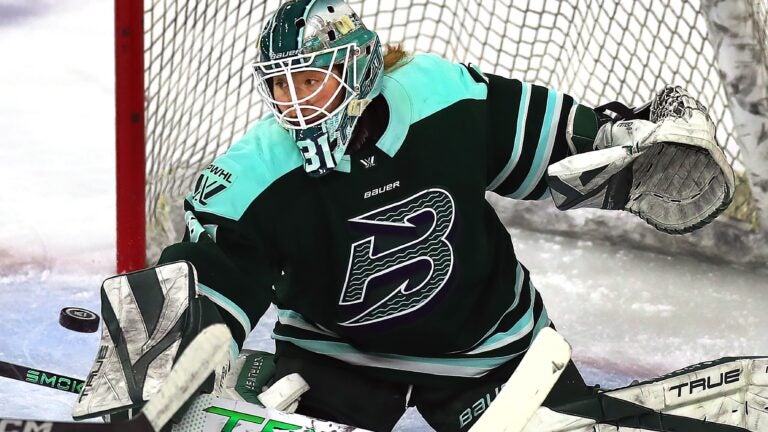
The Boston Fleet are in the PWHL playoffs, which open on Thursday at the Tsongas Center in Lowell. Danielle Parhizkaran/Globe Staff
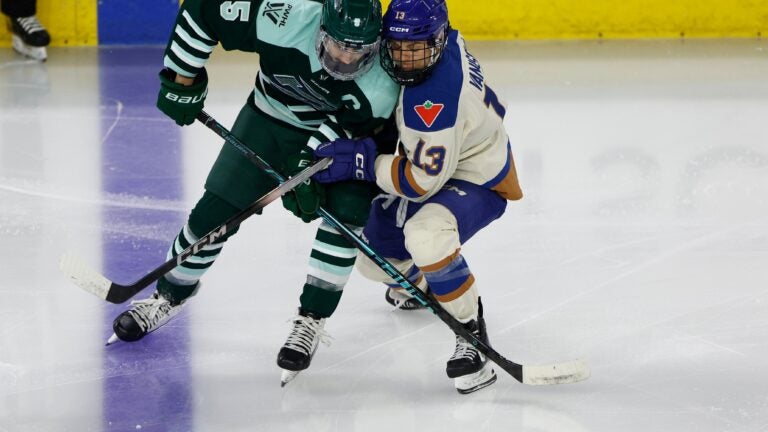
NEW YORK — The Professional Women’s Hockey League is on the cusp of its third postseason, with the Boston Fleet dropping the puck on Thursday in Lowell against the Ottawa Charge.
Boston is one of the original six franchises in the PWHL, which began play in January 2024. The league added two teams in April 2025: Seattle and Vancouver. It is poised to add 2-4 teams for the 2026-27 season, with announcements expected soon.
What is the state of the league? A handful of executives sat down with the Associated Press Sports Editors to discuss just that. Here’s where things stand entering the Walter Cup Playoffs.
The Vancouver Goldeneyes were one of two expansion franchises that made their PWHL debut this season. – ETHAN CAIRNS
Expansion on the horizon
Where will the PWHL go next? League officials have said that the cities that showed up the best for Takeover Tour games — the neutral-site matchups the league has featured since its inception — are a strong indicator of good candidates to host teams.
Detroit is one of the favorites for expansion, with Little Caesars Arena hosting four games over three seasons, the most recent on March 28 in front of almost 16,000 that aired on national television.
Canada is likely to land a team or two, with an emphasis on western markets. PWHL executive vice president of business operations Amy Scheer said Tuesday that capacity and availability of venues are two of the biggest factors contributing to the expansion decision.
Other factors include geography — the PWHL flies commercial, so they need to be cities that have direct flights. And youth hockey and sponsorship opportunities are important. Are there pipelines within a city to support future players? Are there enough large companies willing to spend money to back the team?
The big question is: How much expansion is too much? Vancouver and Seattle struggled in their first seasons. Are there enough resources to support up to four more teams?
“Will we be perfect when the puck drops on opening day? No, but I think in our three seasons we’ve had a little bit more appreciation for progress over perfection, and that’ll be the same tact that we take going into season four,” Scheer said. “Will it be perfect? No. Will the team stand up? Will the players have a professional environment to play in? Will the fans have a great environment? Yes.”
Scheer said the league is looking at cities with venues that can seat a minimum of 10,000 fans. For context: Boston’s home venue, the Tsongas Center in Lowell, seats about 6,500.
Caroline Harvey (right) is the favorite to be taken first overall in the upcoming PWHL Draft. – Gregory Shamus
Can the women’s hockey pipeline support expansion?
The talent expected to enter the PWHL in the 2026 entry draft is remarkable: Olympic stars Caroline Harvey, Laila Edwards, Abbey Murphy, and Tessa Janecke will be eligible. Vancouver holds the No. 1 pick in the yet-to-be-scheduled draft.
But each team carries 23 players. That means a max of 92 roster spots could be added in expansion. Is there enough talent to fill out teams?
Jayna Hefford, the PWHL executive vice president of hockey operations, believes the pipeline is not an issue, especially because the league is expected to draw a lot more European talent. According to The Canadian Press, only 25 Europeans are on rosters this season.
“When you looked at the Olympic Games, you could see the gap is closing,” Hefford said. “We weren’t seeing blowout scores like we have seen previously. So the talent outside of North America is big, and I think untapped from our perspective.”
Ilana Kloss, a PWHL advisory board member, philanthropist, and partner of Billie Jean King, thinks the PWHL serves as inspiration for the pipeline of players.
“Young girls see that there’s a professional league and a pathway to earning a living playing professional hockey,” Kloss said. “I think the pipeline will get bigger and bigger … we feel comfortable that they’re going to be many young girls who want to play professional hockey.”
Why the league structure is working for now
The PWHL is unique in that it is wholly owned by one person, Dodgers owner Mark Walter (who is not heavily involved in the operations). While the league intends to eventually sell franchises to local owners, this single-entity structure is making for a more even playing field without the concerns that an individual owner won’t spend enough on a team.
“Every team gets the same resources,” Scheer said, with the ability to quickly go to the four-person advisory board to adjust based on market needs.
“I’ve been in other leagues where you have super wealthy owners and many teams that don’t have the resources,” Kloss said. “I think the one thing that’s incredible about this league that we have investment across all the teams, but more importantly, we have a business plan that can sustain growth across the league.”
The focus in the PWHL right now, according to its executives, is investment — not profitability.
Last Saturday’s PWHL matchup between the New York Sirens and Seattle Torrent at Madison Square Garden in New York set an attendance record for a women’s professional hockey game in the United States. – Stephen Whyno
Will the PWHL partner with the NHL?
You’d be surprised at how little overlap there is between an NHL and PWHL audience. Scheer said for the league’s Takeover Tour games that 40-80 percent of attendees in some markets had never attended an NHL game before going to watch women’s hockey.
The PWHL does not have a formal partnership with the NHL, but Scheer said teams — especially those that may lend their venues for games, such as the Bruins, Rangers, and Senators (Ottawa moved its playoff games to the larger Canadian Tire Centre) have been supportive. Some teams have even lobbied the league to bring a Takeover Tour game to their city, Scheer said.
Because of the lack of crossover audience, among other factors, the PWHL does not see direct relationships with teams — sharing staff, resources, and other things you may see in leagues like the WNBA — as a necessity.
“Do we need them? I don’t know. Today, do we need them? Sure, why not?” Scheer pondered. “I think there’s room for everybody in the market to grow the game of hockey.
“… We’re not competitive to [NHL teams],” Scheer said. “We’re additive to them.”
Get the latest Boston sports news
Receive updates on your favorite Boston teams, straight from our newsroom to your inbox.