

New England Travel
Salem residents describe the city as a living museum during high tourism season — and they are sometimes the exhibit.
Ryan Strack’s wife was sitting on the couch in their Salem home pumping milk for their newborn daughter when someone pushed open the mail slot on the front door and peered through.
“My wife’s like, ‘What are you doing?’” Strack recalled. “They’re just tourists who have no common sense.”
For most Massachusetts homeowners, that would be an experience out of the norm. But for people who live in downtown Salem during the high tourism season — Halloween — bizarre run-ins with tourists have become par for the course.
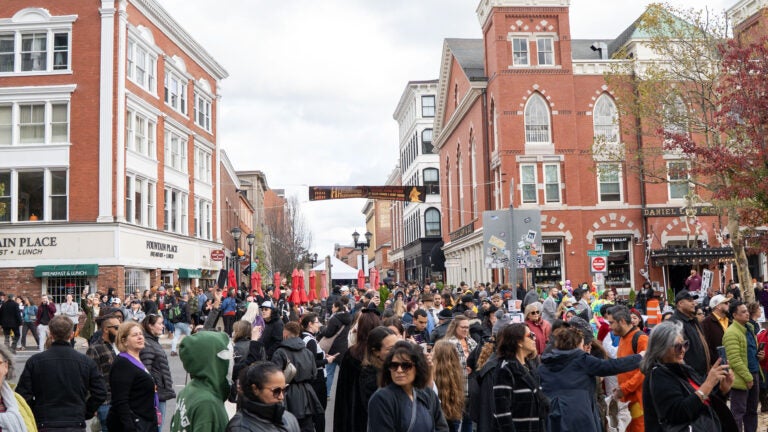
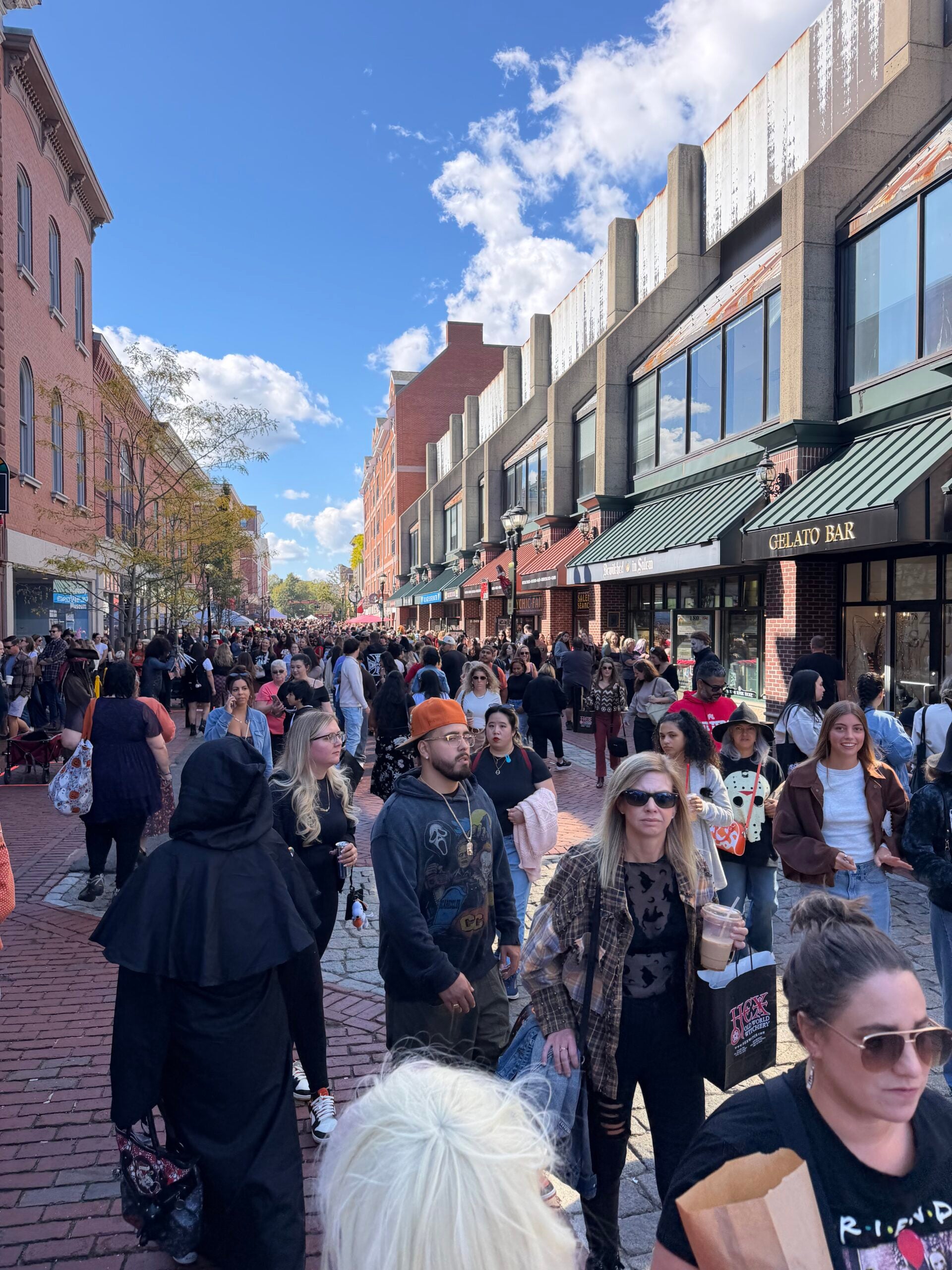
It’s not unusual for Salem to welcome one million visitors over October. While the Witch City’s general population is around 45,000, that number balloons during the Halloween season. As the years go on, tourism has only increased. CBS News recently reported that Salem saw 136,500 visitors on an early October Saturday, a 12 percent jump from the same Saturday last year. And for the residents of the downtown area, the growth brings joy, frustration, and a whole lot of traffic, even before the end of summer hits.
“It’s literally like the Disney movie ‘Halloweentown,’” said Gia Buxton, who owns the downtown Salem shops Zitelle, a hat bar, and Lil’ Zitelle, a gelato bar, with her family, who all moved up to Salem from Long Island, including her parents. “The second the end of July hits, you see all the little witch hats on the streets and groups of bachelorette parties, and you’re like, ‘Fall is here.”
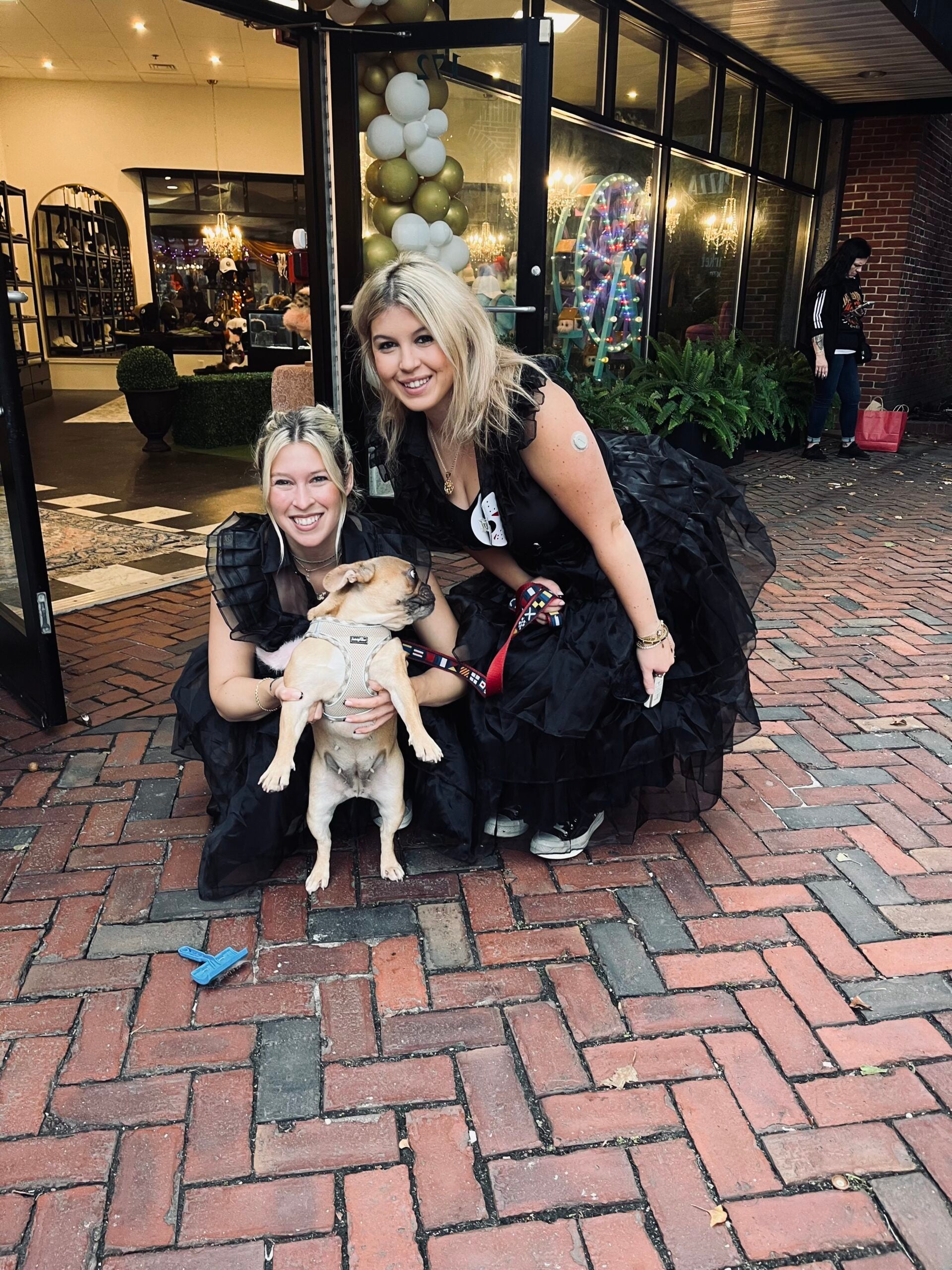
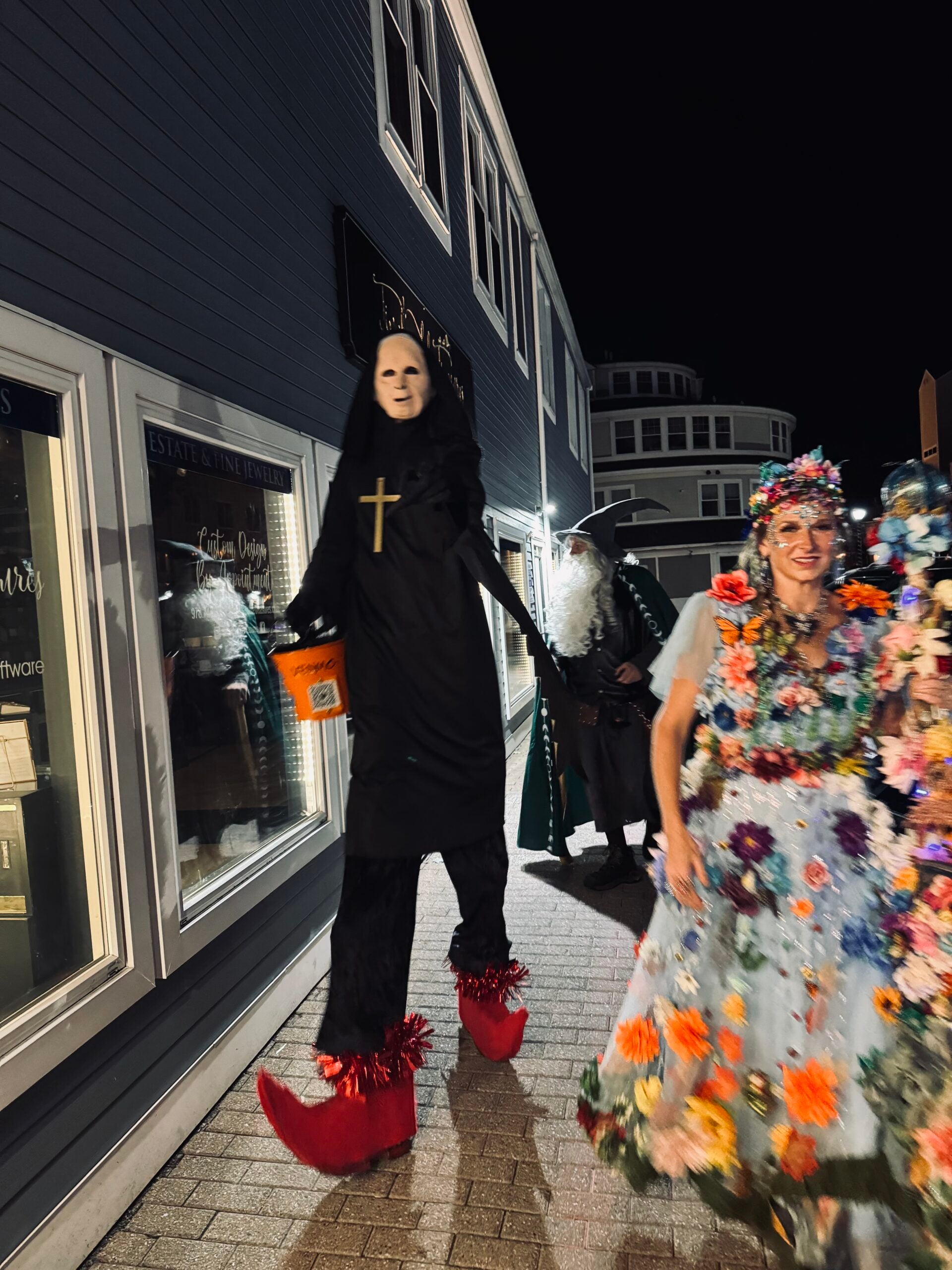
For residents who live in Salem’s downtown area, unusual characters are everywhere. Buxton is used to everyone from costumed buskers to a nun on stilts popping by for gelato.
“He eats his gelato on the top of our freezers because he’s that tall,” laughed Buxton.
Caitlin Bayer, a fundraising manager at a Salem nonprofit, frequently walks her terrier mix, Captain, on bustling streets like Essex and Washington. The pup is entirely desensitized to spooky sights — like a clown on stilts named Big Top Tiny. But the people in costume trying to make a living in Salem pale in comparison to the hordes of tourists who seem mystified by Salem residents carrying on their day-to-day lives.
“I’ve heard of people literally trying to open people’s doors before. People confuse people’s homes for a museum or a public place. I’ve heard of tourists not knowing that people actually live in Salem,” said Bayer.
In the historic McIntire District, which is known for its 18th and 19th-century architecture, residents are used to endless walking tours wandering the streets. Strack said 40-person tours come down his street three times per hour in October. While he has a fence, city regulations don’t permit him to have one that’s higher than four feet, which means people are constantly walking by staring at him as he sits on his patio.
“You’re a little zoo animal in there,” said Strack, who added that he doesn’t blame the tour attendees.
Ty Hapworth, a Salem City Councilor and a Microsoft commercial executive, has had similar uncomfortable moments, like tourists who beat up his kids’ jack-o’-lanterns and leave bottles on his steps. Last week, a person rang his doorbell and asked if the home he shares with his wife and two children was the Salem Witch Museum.
“We’re a city of [about] 40,000 people,” said Hapworth. “With 120,000 people on a Saturday in like a two-block radius of the downtown, it’s a lot.”
Traffic and parking
Caitlin Grasso moved to Salem during the pandemic when she was trying to find a place she could afford to buy. The attorney eagerly ditched her 500-square-foot rental in Southie that cost $2,700 in rent to buy a carriage house attached to a condo in Salem, where she now pays a mortgage of $1,500. After moving to Salem, she decided to buy a car; she has two parking spots and a private driveway. That’s a big bonus in a city where the biggest frustrations tend to be the excessive traffic and lack of parking. Residents say navigating the city when you need to get your kids to soccer or gymnastics can be a bit of a mess.
Bayer said she doesn’t even bother to drive into downtown at all on the weekends, and relies on walking instead.
“I get a lot of steps in in October,” she noted.
If Strack wants to go grocery shopping, he gets up extremely early in the morning during the high season.
“We have bad traffic across the board, and so when it’s already bad, it’s exacerbated a hundredfold by the influx of an additional million people in their cars,” he said.

Hapworth notes that one of the city council’s biggest challenges is finding enough residential parking in the fall when so many tourists come in.
“If you get 120,000 people coming in on a Saturday, there’s no possible way to park that many people in any city,” he said.
But it’s also getting out of town in October that gives residents stress. When Bayer and her husband were looking at Salem real estate, one of the issues they considered most was how they could manage to exit town in October.
“That definitely was a decision when trying to find a place. We looked at some places where you kind of could not escape the town center. I was like, ‘Absolutely not. This will just be a nightmare,’” she recalled.
Streets are frequently shut down to welcome foot traffic, and the city has an app to notify residents of the changes. That’s why it’s not unusual for residents to have their phones constantly going off all weekend due to the alerts. The city does its best to discourage tourists from driving in during the high season, and the MBTA adds additional commuter rail trains during October. The Salem ferry is a particularly helpful lifeline for both tourists coming in and residents who commute into Boston for work. Hapworth noted they even encourage tourists to take an Uber to drop them off on the edge of town to minimize the traffic.
When it comes to reasons for the growing numbers of Salem tourists, residents think social media plays an influential role. Everyone floods the streets of Salem during the Halloween season hoping to get plenty of good content for TikTok and Instagram.
“It’s the start of the season you can tell when all the Instagram influencers start descending and posing on people’s doorsteps,” said Grasso.
When Hapworth first moved to Salem about 12 years ago, it was already “very busy.” About a decade later, the tourism continued to jump.
“They see an idealized version of Salem — and it’s a beautiful city — but they see that on TikTok and Instagram, and they want to come and get either their own content, or they want to come and experience something they saw on their phones,” said Hapworth, who noted six people with witch hats were currently walking by his window, while about another 40 hung out in the street outside.

While tourism benefits the city, the money that comes in isn’t quite as significant as it seems, when you consider the city has to pay out for additional police, security, overtime, porta potties, trash cleanup, and the Department of Public Works, said Hapworth.
“I think that the misconception out there is that this is a major cash cow for Salem. It’s good for the small business owners around here, and a lot of our neighbors that rely on this month,” said Hapworth. “That’s incredible. But as a city, we don’t charge admission to come in. It’s a situation where we just barely break even every year, and I think that’s the frustration residents feel sometimes.”
Despite the frustrations, residents largely say there’s still plenty of fun that comes from living in Salem.
“It’s honestly the people that we’ve met. We feel like we’ve known them for one hundred years, and they kind of take you in. We’ve just met the nicest community,” said Buxton. “It’s a great place to live.”

Address Newsletter
Our weekly digest on buying, selling, and design, with expert advice and insider neighborhood knowledge.
