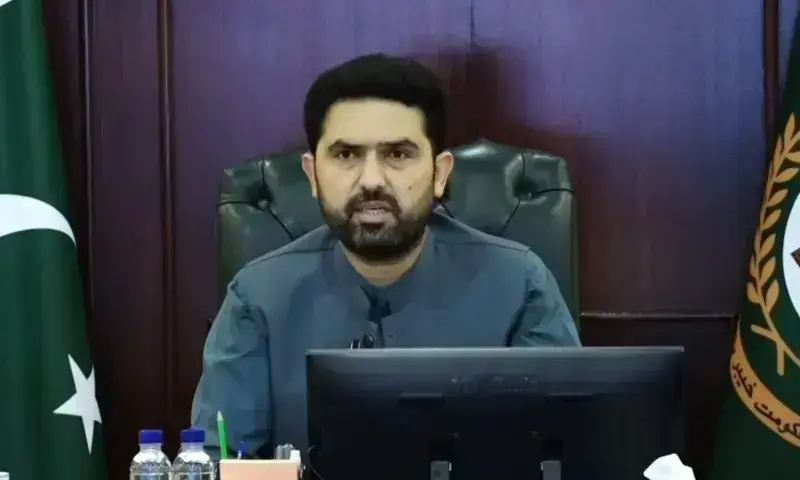
PESHAWAR: As lawmakers from across the aisle in the KP Assembly joined hands to defend the controversial law granting extended powers and privileges to members, Chief Minister Sohail Afridi on Wednesday ordered a review of its provisions following media outcry.
It was reported yesterday that the KP government had recently approved the enactment of the KP Provincial Assembly (Powers, Immunities and Privileges) Act, 2026, which was passed on April 30 and signed by the governor on May 6.
The law expands provincial assembly members’ powers and immunities, including the issuance of lifetime official passports to them and their spouses, blanket immunity from preventive detention, and entitlement to licences for up to eight non-prohibited-bore weapons.
The law has faced severe criticism from media persons across Pakistan and the public in the province.
“I hope that the amendments made to the Act will be reviewed. Any future steps will be taken in the public interest,” the chief minister said in a statement issued by his office.
While chairing a cabinet meeting, CM Afridi said that as the amendments made to the law were being criticised, provisions concerning media persons should be reconsidered.
He said that PTI founder Imran Khan had always promoted freedom of expression and wanted journalists to openly criticise wherever they deemed necessary. However, he added that he and his government had also faced criticism and that some “black channels” were running misleading propaganda against the government.
“In other provinces, journalists criticising the government are subjected to disappearances, violence and harassment,” he said, adding that the KP government had not taken any illegal action against anyone and that legal action was taken only if someone spread false propaganda.
“The speaker has been asked to meet parliamentary leaders and review the concerns of the general public and media persons,” he said.
The chief minister also claimed that the KP Assembly was the only one established through a public mandate.
Meanwhile, during a joint press conference, lawmakers from both the treasury and opposition benches said confusion had arisen despite the fact that clauses in the KP Provincial Assembly (Powers, Immunities and Privileges) Act, 2026, were similar to those in an earlier law passed in 1988, including provisions regarding the issuance of blue passports to members of provincial assemblies.
The new act repealed the 1988 law on the same subject.
Information Minister Shafi Jan claimed the draft approved by the cabinet did not include provisions for issuing blue passports to lawmakers and that the amendment was introduced by the opposition.
He also said that the privileges approved by the KP Assembly for lawmakers were fewer compared to those approved by the Sindh and Punjab assemblies.
“Around 57,000 blue passports have been issued by the federal government,” he claimed, adding that the federal government should disclose the identities of the blue passport holders.
He further stated that lawmakers were entitled to four arms licences and that the additional four were approved in view of the law and order situation in the province.
“The provincial government will hold a sitting with journalist bodies,” he said. However, the minister claimed that press laws in Sindh and Punjab were “harsher” than those in KP.
He said the KP government took criticism positively and urged journalists to discuss the Prevention of Electronic Crimes Act as well.
PPP lawmaker Ahmad Karim Kundi said that penalties for media persons for spreading misinformation were part of the law enacted in 1988. He, however, added that no one had been penalised since 1988 and that the penalties could be reduced.
Awami National Party’s Arbab Usman said that a province which had offered greater sacrifices should be given more perks.
“Unfortunately, some journalists misused their rights. A blue passport is not a big deal, and if others have it, why not us? What does it have to do with the people?” he questioned.
PTI-Parliamentarians’ Arbab Waseem said that lawmakers were public representatives and were answerable to the people. However, he emphasised that lawmakers from other provincial assemblies should also be considered, as they also enjoyed the same facilities.
PML-N’s Sobia Shahid said that she was a member of the committee and a signatory to the act, adding that laws of all other provinces were discussed during the meeting and some clauses were incorporated into the KP Act.