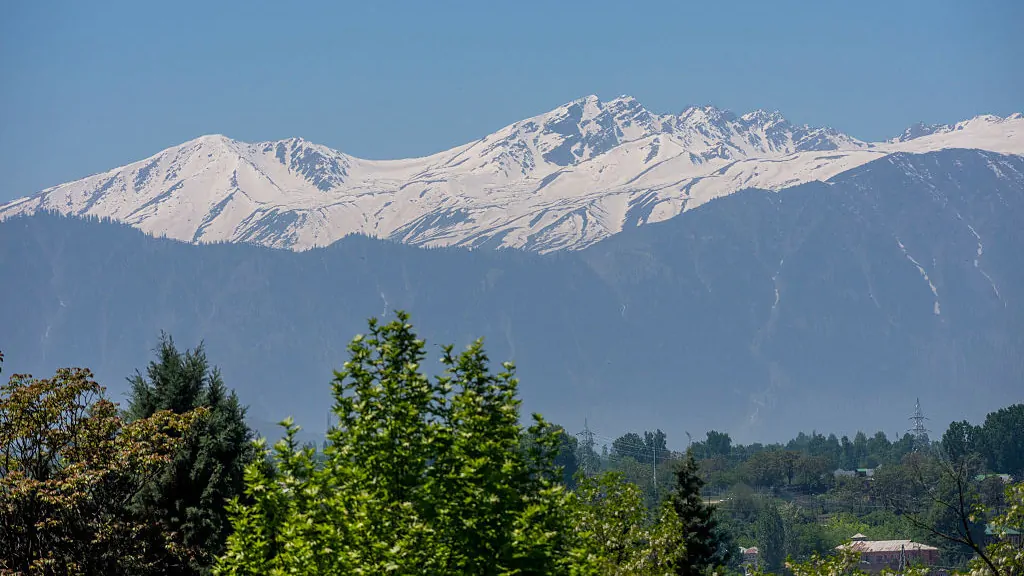
A year ago, when 26 civilians were brutally killed in Pahalgam’s Baisaran Valley, the Pakistani terrorists who carried out the massacre emerged from the tree line of the meadow. Baisaran, located above Pahalgam town, is surrounded by forested slopes. Imagine it as a hidden bowl in the mountains, among the most treacherous in India. This mountain range, called the Pir Panjal range, shapes the mountain zone close to Baisaran Valley. Pir Panjal has a history, quite a long one, when it comes to terrorism. Back in the 2000s, when it was not fenced, it allowed cross-border terrorism.
Military officers recount that till the mid-2000s, terrorists from Pakistan would cross into India in hordes, as the range extends into Pakistan as well, with a substantial stretch lying in Pakistan-Occupied Kashmir (POK). Today, it is heavily fenced, and experts say infiltration from this route has reduced to a great extent.
Experts say that most of the infiltration now happens from semi-flat border terrains, such as the Ramgarh–Chambliyal belt and the Khora Post area in Samba sector.
But there are instances when terrorists, trained by the Pakistani military, take Pir Panjal’s treacherous route to enter India. Despite being well guarded, it remains one of the most difficult terrains to secure. The terrorists behind the Pahalgam carnage used the Pir Panjal forest cover to their advantage.
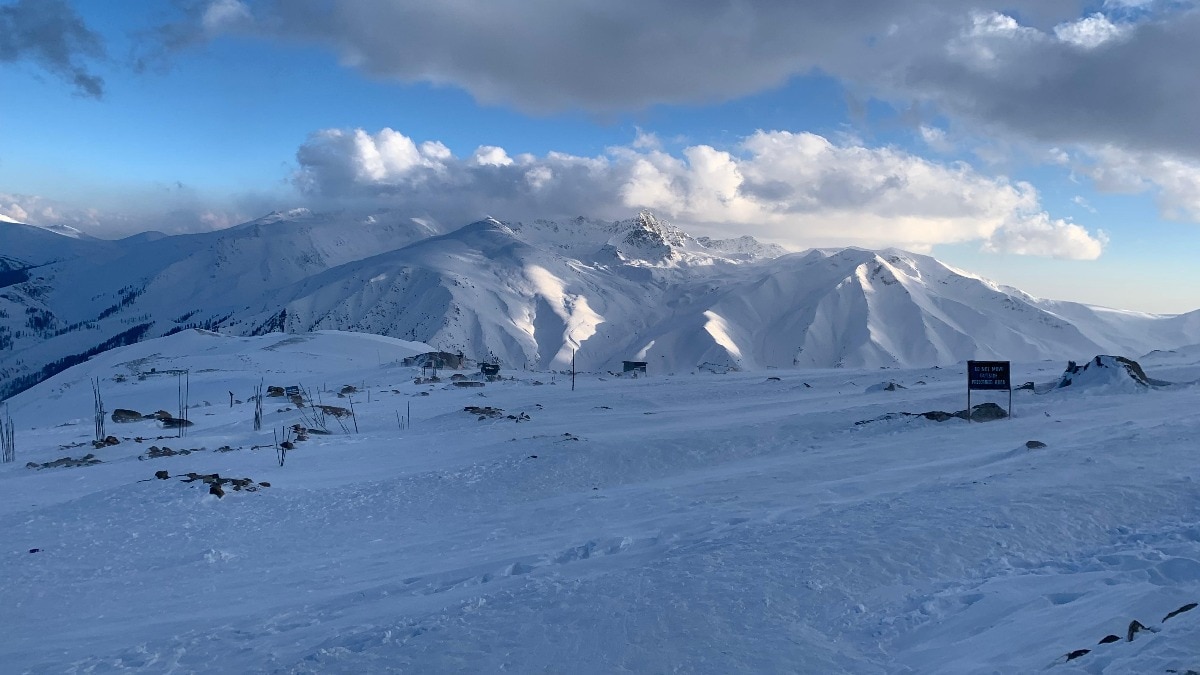
The jungles of the Pir Panjal range, full of coniferous trees like pine, fir and deodar, form a canopy stretching for kilometres across the Line of Control (LoC), making it difficult for surveillance drones to do their job efficiently. However, there are also stretches of open, rocky ground, along with terrain that remains snow-covered for much of the year.
This is terrain where there is heavy deployment of the Indian Army, and where special forces units operate in full force. A serving Lt Colonel says ambushes are set up in these forests depending on intelligence that comes from the ground.
But despite such heavy deployment of forces and a fence in place, how do terrorists, though far fewer today, still cross into India?
It must be noted that it was this very range into which the terrorists behind the Pahalgam attack disappeared, until the Indian Army, in Operation Mahadev, hunted them down and killed them.
Let us look at the terrain, and understand what it is really like.
Coniferous forests and snow-covered stretches of the Pir Panjal range, terrain the Indian Army knows intimately and guards it round the clock. (Image: Anand Singh)
THE FENCING IN PIR PANJAL RANGE
It is important to understand that the fencing in the Pir Panjal range was not built across the range itself as one continuous wall.
It was built along the LoC through sectors that pass north and south of the Pir Panjal region, using what India calls the Anti-Infiltration Obstacle System (AIOS), according to the Ministry of Defence. This includes stretches through the mountainous Pir Panjal terrain.
Today, apart from advanced surveillance assets, the Indian Army has incorporated drones, night-vision equipment, radars, underground sensors, among other high-tech systems, to strengthen the surveillance architecture in the Pir Panjal, according to the Ministry of Defence.
But infiltration still happens because of how rugged and unpredictable the terrain is. It can snow at any time of the year, temperatures can drop below zero quickly, and ravines, gorges and caves are natural shelters that terrorists use as hideouts.
Fencing of this region began in the early 2000s. Until then, the Indian Army had to guard an open border here.
Reports suggest that large-scale LoC fencing was approved and operationally initiated in 2003 after persistent infiltration during the late 1990s and early 2000s. By June 30, 2004, India reported completion of about 580 km of fencing out of roughly 740–778 km of the J&K LoC, which included the Pir Panjal’s mountains.
But the rough terrain makes it difficult even for the fence to remain in place, which has been repeatedly rebuilt, upgraded, realigned, and repaired due to snowfall, avalanches, landslides, and shelling damage that happens along the LoC.
A serving Lt Colonel India Today Digital spoke to said, “It is not a single wall, but a layered barrier of wire fencing, sensors, patrol tracks and watch posts. It is built along rugged terrain, and is designed to slow infiltrators, detect movement early, and give troops time to respond quickly. It is a wire trap meant to buy time for the soldiers guarding it.”
A map roughly showing the Pir Panjal range cutting across the LoC. (Note: Map not to scale)
HOW DO TERRORISTS STILL INFILTRATE THROUGH PIR PANJAL REGION?
Lt Colonel Sundeep Sen (Retd), a Special Forces officer with extensive counter-insurgency experience and a decade of combat operations along the LoC and in the northeast, says, “Till the time the fence had not come, terrorists were crossing into India at will.”
According to Sen, the Pir Panjal route is now used mostly during the harsh winter window, when heavy snowfall changes the ground situation. “Infiltration takes place from Pir Panjal mostly during the snow period,” he explains, adding, “There can be 10 to 25 feet of snow, and the fence gets buried under it.”
That creates temporary vulnerabilities in some stretches. But even then, he says, the numbers remain low. “At the most, there may be three or four infiltration attempts in a year, and that too, in small groups of less than four militants. But yes, infiltration does happen, and it is difficult to guard it in the winters.”
The terrain itself explains why only “specially trained terrorists” attempt it. Pir Panjal is a zone of steep ridge lines, cliffs, forests and extreme cold. “The ridge line emanates from the Pakistan side,” Sen says, making movement possible only for men trained in high-altitude warfare. In some cases, he notes, operatives are trained to negotiate snowbound mountain routes and evade surveillance.
It must be noted that that was the case in the 2025 Pahalgam terror attack, in which one of the terrorists, identified as Hashim Musa, was reportedly a former para-commando of the Pakistan Army’s Special Service Group (SSG). Military sources India Today Digital spoke to said it was most likely that Pakistani special forces sent Musa to lead the LeT terrorists.
Sen says, “It is impossible for untrained terrorists to climb treacherous terrain like the Pir Panjal, survive in the jungle for months, and remain concealed from the population.” The terrorists were neutralised by the Indian Army around three months after the attack inside the Pir Pajal forests. They must have crossed over in the winter months, when the fence is snow-covered, and carried out the attack on April 22.
It is also important to note that no fence can be perfectly uniform in such geography. “It is as per the terrain and as per domination of who controls which ground,” Sen says, explaining that some stretches sit forward, while others are adjusted because of enemy fire positions, ridges or ravines.
So how do infiltrations still happen? Sen says it usually requires planning, reconnaissance and exploiting weather or damaged patches. “They [Pakistani terrorists supported by their military] recce for 10 to 15 days before even attempting a crossing, because they know they will be engaged heavily by the Indian Army.”
His larger point is that infiltration from Pir Panjal has not disappeared, but it has become difficult, very dangerous, and rare.
But for Pakistan, hell-bent on sending terrorists into India to destabilise J&K, where normalcy has been returning to a great extent, it takes just one deadly attack to puncture peace. With such heavy guard, it is nearly impossible for untrained terrorists to cross through the Pir Panjal, especially when there is no snow, because “intelligence works in ways unseen”, says the serving Lt Col, and the Army remains constantly deployed.
Yet even a single infiltrator slipping through a hole can cause immense damage, and Pakistan deploys its soldiers and special forces operatives to export terror into India.
– Ends
Published By:
Anand Singh
Published On:
Apr 23, 2026 12:15 IST