Politics
The Atlantic said it stood by its reporting and would vigorously defend against the “meritless lawsuit.”
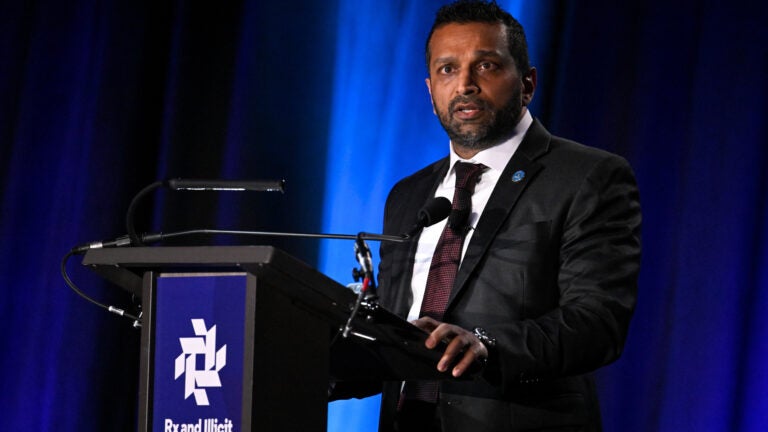
FBI Director Kash Patel speaks at the Rx and Illicit drug Summit, Wednesday, April 8, 2026, in Nashville, Tenn. (AP Photo/John Amis) AP
April 20, 2026 | 4:16 PM
2 minutes to read
FBI Director Kash Patel hit The Atlantic magazine with a $250 million defamation lawsuit on Monday, claiming an article that talked about mismanagement at the agency and his alleged excessive drinking was false and a “malicious hit piece.” The Atlantic said it stood by its reporting and would vigorously defend against the “meritless lawsuit.”
In the article, posted on the magazine’s website Friday, author Sarah Fitzpatrick said Patel is deeply concerned about losing his job and that “he has good reasons to think so — including some having to do with what witnesses described to me as bouts of excessive drinking.” Fitzpatrick was also named as a defendant.
His behavior, including “both conspicuous inebriation and unexplained absences,” has alarmed officials at the FBI and Department of Justice, leading one official speaking anonymously to say that worry about what would happen in the case of a terrorist attack in the U.S. “keeps me up at night,” the magazine said.
Patel still described as pivotal for Trump White House
The White House told The Atlantic that Patel remains a critical player on President Donald Trump‘s law and order team and credited him for decreases in the crime rate. Trump’s team is also said to be pleased by Patel’s willingness to go after the president’s rivals.
Patel, in the lawsuit filed in district court in Washington, denied the allegations of his behavior and criticized the magazine for relying on anonymous sources. Fitzpatrick wrote that she interviewed more than two dozen people and granted them anonymity to “discuss sensitive information and private conversations.”
“Defendants cannot evade responsibility for their malicious lies by hiding behind sham sources,” the lawsuit said.
The lawsuit said Patel’s lawyers asked The Atlantic for more time to respond to accusations but the magazine did not reply. “It is among the strongest possible evidence of actual malice,” it said.
Atlantic outlines behavior it says witnesses saw
The Atlantic said Patel had been spotted drinking heavily at the private club Ned’s in Washington and at the Poodle Room in Las Vegas, where he often spends time on the weekends. Six people told the magazine that briefings and meetings involving Patel had to be rescheduled for later in the day because of drinking the night before.
It said that on “multiple occasions” Patel’s security team had difficulty waking him and at one point requested equipment designed to forcibly open a building when Patel was unreachable behind closed doors.
With his lawsuit, Patel is following a playbook used by his boss to fight back against damaging stories. Last week, a judge in Florida dismissed Trump’s $10 billion defamation lawsuit against the Wall Street Journal over its report about a risqué birthday greeting he had sent to convicted sex offender Jeffrey Epstein. The judge said Trump had not plausibly alleged the story was published with actual malice, the standard for a libel finding.
Last September, another judge dismissed Trump’s $15 billion lawsuit against The New York Times and some reporters for a story critical of the president’s business acumen. Trump was allowed to file an amended lawsuit, which he did.
Trump also sued CBS News and ABC News for stories he didn’t like before taking office again for his second term. Both of those news organizations paid a settlement out of court to Trump before the cases could go to trial.
Sign up for the Today newsletter
Get everything you need to know to start your day, delivered right to your inbox every morning.