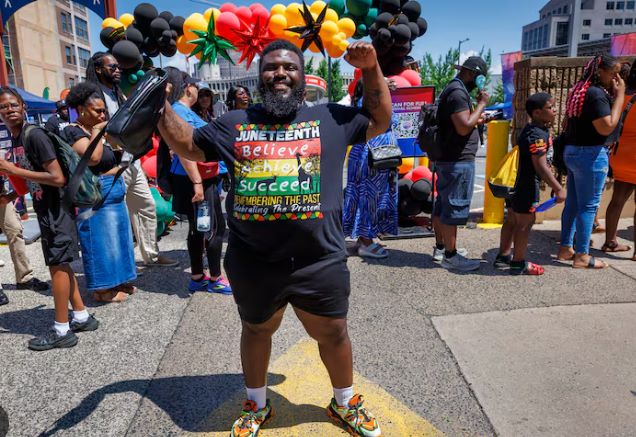
Source: The Philadelphia Inquirer, Photo by Alejandro A. Alvarez
Philadelphia, fondly referred to as the City of Brotherly Love, has long occupied a front-row seat in conversations about America’s rich and complex history. From the signing of the Declaration of Independence to the pursuit of civil rights and social justice, few cities have been better positioned to tell the American story than Philadelphia.
As the birthplace of American democracy, Philadelphia occupies a unique place in the nation’s historical narrative. It was here that the Declaration of Independence was adopted in 1776, proclaiming that “all men are created equal” and endowed with the unalienable rights of life, liberty, and the pursuit of happiness. It was here that the U.S. Constitution was drafted, laying the foundation for the American republic and establishing a framework for governance that would influence democratic societies around the world.
Yet while many embraced these lofty ideals of equality and freedom, the nation’s history continued to bear the painful scars of slavery. The same country that championed liberty also denied it to millions of African Americans who remained enslaved for generations. Philadelphia, despite its central role in the birth of democratic ideals, was not immune to this contradiction. The city helped give rise to the principles of freedom and self-governance, but those principles were not immediately extended to everyone.
This tension between America’s ideals and its realities makes Philadelphia an especially powerful setting for Juneteenth celebrations. The holiday serves not only as a remembrance of emancipation but also as a reminder that freedom in America has often been fought for, delayed, and won one struggle at a time. It provides an opportunity to reflect on both the promise of liberty and the long journey required to make that promise meaningful for all.
Juneteenth and Its Place in America’s History
Every year on June 19, communities across the United States gather to commemorate Juneteenth, a day that marks the effective end of slavery in America. It is a celebration of freedom, resilience, culture, and the enduring pursuit of equality. Beyond the festivities, however, Juneteenth also invites reflection on the hardships African Americans endured in their march toward freedom and the sacrifices made by countless individuals who fought to secure it.
To understand why Juneteenth resonates so deeply across generations, it is important to revisit its origins.
As the American Civil War raged, President Abraham Lincoln issued the Emancipation Proclamation on September 22, 1862, declaring that enslaved people in Confederate territories would be free beginning January 1, 1863. The proclamation represented a landmark moment in American history and signaled a decisive shift in the purpose of the war. The conflict was no longer solely about preserving the Union; it had become a fight against slavery itself.
However, the practical impact of the proclamation depended largely on the presence and success of Union forces throughout the Confederacy. In many parts of the South, especially in remote regions far removed from active military campaigns, slavery continued despite the proclamation.
Texas, in particular, remained largely untouched by Union military control during much of the war. As a result, many slaveholders relocated there, believing it would be one of the safest places to preserve the institution of slavery. Consequently, thousands of enslaved African Americans remained in bondage long after the Emancipation Proclamation had taken effect.
It was not until June 19, 1865, more than two years later, that Union General Gordon Granger arrived in Galveston, Texas, with federal troops and announced that enslaved people were finally free.
Source: The Philadelphia Tribune, Photo by Bastiaan Slabbers for WHYY
Reading General Orders No. 3, Granger proclaimed:
“The people of Texas are informed that, in accordance with a proclamation from the Executive of the United States, all slaves are free.”
For the approximately 250,000 enslaved African Americans living in Texas, the announcement represented a life-changing moment. Families who had endured generations of bondage suddenly found themselves stepping into an uncertain but hopeful future. Men, women, and children who had been denied ownership of their labor, their families, and their futures were finally informed that they were free.
One year later, on June 19, 1866, freed African Americans organized commemorative gatherings to celebrate the anniversary of their emancipation. The date became known as “Juneteenth,” a blending of the words June and nineteenth. What began as a local observance in Texas gradually evolved into a tradition passed down through generations and across states.
Initially, Juneteenth celebrations were largely confined to Texas. However, during the Great Migration of the 20th century, millions of African Americans relocated from the South to cities across the United States in search of economic opportunities and greater freedoms. As they moved, they carried with them their traditions, stories, and commemorations, including Juneteenth.
Over time, celebrations spread to communities throughout the nation. Churches, civic organizations, families, and community leaders played an important role in preserving the holiday and ensuring that its historical significance was not forgotten.
In 1980, Texas became the first state to officially recognize Juneteenth as a state holiday. Other states gradually followed suit, acknowledging the importance of commemorating the end of slavery and honoring African American contributions to the nation.
The movement gained significant momentum in the 21st century. In 2021, Juneteenth was officially recognized as a federal holiday, cementing its place in the national calendar and affirming its importance to the American story.
Philadelphia and Its Place in America’s Freedom Story
Long before Juneteenth became a national holiday, Philadelphia had already established itself as one of the most important cities in America’s freedom story.
The city stood at the center of the revolutionary debates that shaped the nation’s identity. It was in Philadelphia that delegates gathered to challenge British rule and articulate a vision of liberty that would inspire democratic movements around the world. The Declaration of Independence remains one of the most influential political documents ever written, and its assertion that all people possess inherent rights has inspired reformers, activists, and freedom movements for centuries.
However, Philadelphia’s significance extends beyond its role in the founding of the nation. It also became one of the most important centers of abolitionist activity in America.
The city was home to thriving free Black communities and served as a gathering place for reformers, activists, and religious leaders who challenged slavery long before the Civil War. It became a place where African Americans organized, advocated, and built institutions designed to uplift their communities despite persistent discrimination.
Source: WHYY, AP Photo: Nati Harnik
Prominent Black leaders emerged from the city and played crucial roles in advancing the cause of freedom and equality. Figures such as Octavius Valentine Catto, Richard Allen, Frances Ellen Watkins Harper, James Forten, and Robert Purvis dedicated their lives to expanding civil rights and challenging racial injustice.
Richard Allen, for example, founded the African Methodist Episcopal (AME) Church, creating a powerful institution that would become central to Black religious and community life. James Forten, a successful businessman and abolitionist, used his influence and resources to advocate for the end of slavery. Robert Purvis became one of the most prominent conductors of the Underground Railroad, helping countless enslaved people escape to freedom.
These individuals fought for desegregation, voting rights, educational opportunities, and equal treatment under the law. Their efforts demonstrated that the struggle for freedom did not end with emancipation; rather, it evolved into a broader campaign for full citizenship and equal rights.
Philadelphia also played a significant role in the Underground Railroad. The city served as a critical destination and transit point for individuals escaping slavery. Safe houses, churches, and dedicated activists worked tirelessly to provide shelter, resources, and protection to those seeking liberation from bondage.
These efforts helped strengthen the national abolitionist movement and contributed to changing public attitudes toward slavery. They also reinforced Philadelphia’s reputation as a city where the fight for freedom was actively pursued rather than merely discussed.
As a result, Philadelphia occupies a dual role in American history. It is both a symbol of the nation’s founding ideals and a proof of the struggles required to transform those ideals into reality.
Philadelphia and the Celebration of Juneteenth
Against this historical backdrop, Juneteenth celebrations in Philadelphia carry particular significance.
The city’s connection to both America’s founding principles and its long struggle for racial justice makes it an ideal place to commemorate emancipation. Every year, Philadelphia hosts some of the nation’s largest Juneteenth celebrations, attracting residents and visitors eager to honor African American history, culture, and achievement.
The festivities often include parades, concerts, cultural exhibitions, educational programs, art displays, and community gatherings. These events create opportunities for people of all backgrounds to learn about the history of slavery, emancipation, and civil rights while celebrating the contributions African Americans have made to every aspect of American society.
Beyond the vibrant displays of culture and community, Juneteenth serves as a platform for meaningful conversations about race, equality, citizenship, and civic engagement. It encourages individuals to explore how historical events continue to shape contemporary society and challenges communities to work toward a more inclusive future.
Perhaps the greatest lesson of Juneteenth is that freedom should never be taken for granted.
As former President Barack Obama noted in a White House statement on June 16, 2016:
“Today we commemorate the anniversary of that delayed but welcome news. Decades of collective action would follow as equality and justice for African Americans advanced slowly, frustratingly, gradually, on our nation’s journey toward a more perfect union.”
For Philadelphia, a city so deeply intertwined with America’s democratic foundations, Juneteenth represents an opportunity to reflect on both the nation’s achievements and unfinished work. It invites residents and visitors alike to honor those who fought for freedom while recommitting themselves to the principles of justice, equality, and human dignity.
Okechukwu Nzeribe works with the Onitsha Chamber of Commerce, in Anambra State, Nigeria, and loves unveiling the richness of African cultures. okechukwu.onicima@gmail.com