At 12.01am, on August 1, 1981, MTV launched with Video Killed The Radio Star by the Buggles, not-so-subtly ushering in the era of the music video and reshaping contemporary music and pop culture forever.
Nearly 45 years later, that Buggles one-hit wonder appeared on MTV again, only this time the symbolism was less clear, because it marked the final broadcast of the network’s 24-hour, music-only channels.
Parent company Paramount made the decision to shutter the music channels, which included MTV 80s, MTV 90s and Club MTV, from January 1 this year in a cost-cutting move that reflected an inexorable audience migration to YouTube and social media.
Sign up to The Nightly’s newsletters.
Get the first look at the digital newspaper, curated daily stories and breaking headlines delivered to your inbox.
By continuing you agree to our Terms and Privacy Policy.
Instead, MTV now focuses on scripted and reality content, such as Awkward, Catfish, The Jersey Shore and The Challenge.
It’s tempting to see the demise of the once all-powerful MTV, a critical tastemaker in the music industry, as evidence we are witnessing the death throes of the music video as a cultural artefact.
It was a cultural phenomenon that peaked in the 1980s and 90s and gave us so many unforgettable moments.
Cher, in a leather thong, somewhat bizarrely straddling a gun turret on the USS Missouri, belting out If I Could Turn Back Time.
Cher in ‘If I Could Turn Back Time’ music video. Credit: Unknown/YouTube
A-ha’s clip for Take On Me and its groundbreaking combination of animation and live-action.
Michael Jackson and Madonna pushing the form higher with each music video, delivering numerous iconic moments, such as Billie Jean, Thriller and Beat It in the case of MJ, and Material Girl, Like A Prayer and Vogue for Madge.
Britney Spears and countless boy bands kept the music video momentum going in the 90s, while record labels threw buckets of money at acts such as Nirvana and Pearl Jam to turn grunge into a commodity to be consumed by a TV audience.
It wasn’t just the mega-artists getting in on the action — lesser known acts attained ubiquity through music videos, from Blind Melon’s No Rain to Deee-Lite’s Groove Is In The Heart, which became staples of the format.
Michael Jackson in ‘Thriller’ music video. Credit: Unknown/YouTube
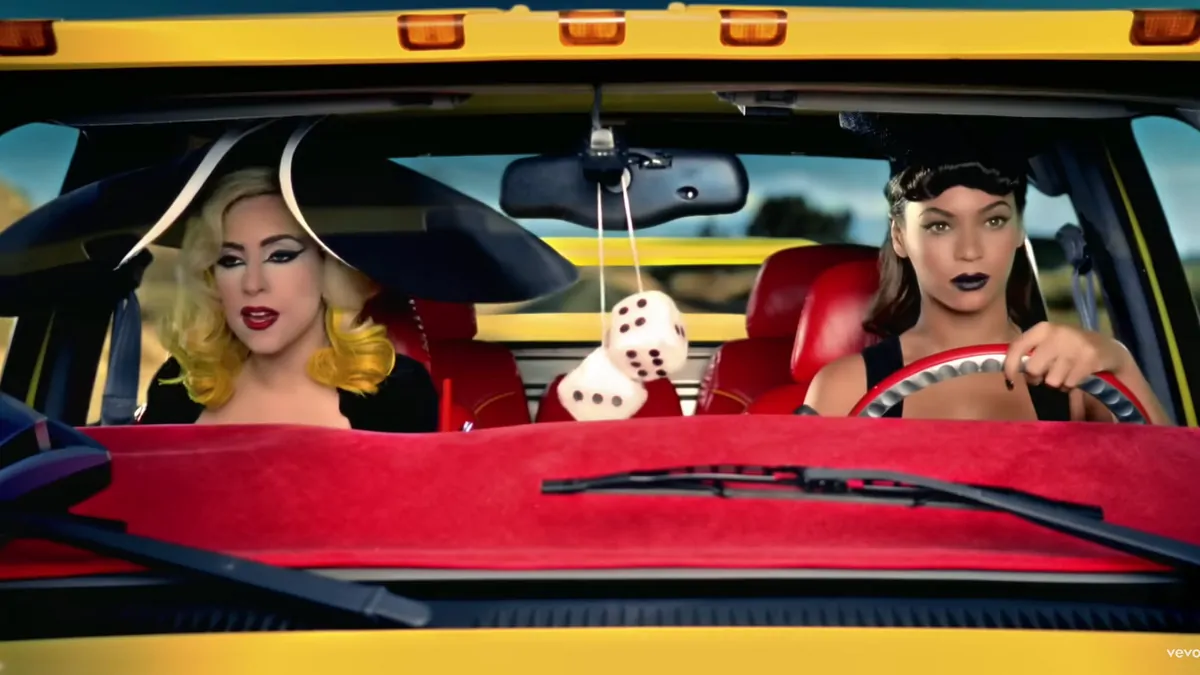
More recently, Lady Gaga and Miley Cyrus have captured the zeitgeist with music videos, the latter riding on a wrecking ball to do it, while OK-GO caught our attention with the highly choreographed use of treadmills.
University of Technology Sydney Associate Professor Liz Giuffre says rumours of the music video’s demise are greatly exaggerated.
“Rage is still going strong and will turn 40 soon,” Dr Giuffre points out.
The evergreen ABC music video show is now the longest-running program of its kind in the world, having made its debut in 1987.
Dr Giuffre believes this, if nothing else, proves the continued health of the music video as an artform.
“It’s very healthy, absolutely,” she says.
“Long may Rage reign, but I do genuinely believe that Rage’s presence in Australia has really made us unique, internationally, we really are.
Britney Spears in ‘Baby One More Time’ music video. Credit: Unknown/YouTubeBeyoncé in ‘Single Ladies (Put a Ring on It)‘ music video. Credit: Unknown/YouTube
“Rage is a place where you absolutely can have a band who’ve been together for five minutes played next to a band that’s been together for 50 years, and where else in the world can you do that; now, it might be at two o’clock on a Saturday morning, but who cares.”
To properly identify where music videos are right now in pop culture you really need to understand where the concept came from, and for that you have to go much further back than the Buggles.
Before video killed the radio star it had a fair crack at knocking off the phonograph and silent movie star.
The oldest known example of video combining with music is the Dickson Experimental Sound Film — not the most catchy title — which was created in 1895 in Thomas Edison’s lab.
It depicts two men dancing alongside a violinist, as the latter plays an excerpt from a popular operetta, with the audio recorded separately on a wax cylinder.
It’s fair to say the dance moves didn’t quite go as viral as the music video for Beyonce’s Single Ladies (Put A Ring On It), but that may have something to do with the fact the aforementioned wax cylinder went missing and wasn’t reunited with the footage until 1998.
Musical short films in the 1920s were some of the earliest efforts by Hollywood to move beyond the silent era, until, in 1959, Jiles Perry Richardson, better known by his stage name, the Big Bopper, coined the term “music video.”
Nostalgia would have us believe the glory days of the music video are behind us, but the reality is the form has simply evolved to feed the endless hunger of the internet and streaming platforms.
The Big Bopper had released some of the earliest rock ‘n’ roll videos a year earlier, but the world was robbed of his talent when he died in a plane crash in 1959, along with Buddy Holly and Richie Valens.
As an aside, the clip for Weezer’s 1994 hit, Buddy Holly, a Happy Days-inspired work, is considered one of the greatest music videos of the past 40 years.
It should come as no surprise the Beatles changed the game when it came to combining audio and visual, with the Fab Four reaching fans via feature films and dozens of promotional clips, thus establishing a formula many bands of the late 1960s and 70s emulated.
If the Beatles established the formula, Queen made it a mandatory component of marketing a band’s music, with the release of the music video for Bohemian Rhapsody in 1975.
With Top of the Pops in the UK and Countdown in Australia creating a huge market for this kind of content, BoRhap did more than just promote the song – it created a template for how fans interacted with the music.
The arrival of MTV merely supercharged a trend that had already taken hold.
As music videos became the dominant cultural component of the recording industry, there was increasing attention paid to who was actually making them.
Consider some of the directors who got their start making music videos.
Legendary blockbuster director Michael Bay made a name for himself making Meat Loaf’s I’d Do Anything For Love (But I Won’t Do That), and helming clips for Lionel Richie, Aerosmith, Vanilla Ice and Tina Turner.
The Daniels, who won the best picture Oscar for Everything Everywhere All At Once, got on Hollywood’s radar for making DJ Snake and Lil Jon’s hit, Turn Down For What.
The Social Network’s director, David Fincher, is behind the music videos for the Madonna hits, Express Yourself and Vogue, while also making Aerosmith’s cinematic Janie’s Got A Gun.
Before making the hit Michael Jackson biopic, Antoine Fuqua, gave us the clip for Coolio’s Gangsta’s Paradise.
And has any filmmaker enjoyed more acclaim for shooting music videos than Spike Jonze?
The director of hit movies such as Her and Being John Malkovich gave us the Fatboy Slim clip for Weapon Of Choice, featuring an unforgettable dance sequence by Christopher Walken; Björk’s It’s Oh So Quiet, Sabotage by the Beastie Boys’ Sabotage and Weezer’s Buddy Holly.
Dr Giuffre says making music videos can be pivotal to a career in the screen industry.
“It’s very important,” she confirms. “In a lot of ways, it’s sometimes the first steps for people, it’s the first go at doing something, and the beauty of a music video is there’s a lot of freedom.”
Australian bands have certainly been no slouches when it comes to producing music videos, such as AC/DC on the back of a flatbed truck, driving around Melbourne, for It’s a Long Way To The Top (If You Want To Rock And Roll).
If countless Kylie clips represent the glossy end of the spectrum, You Am I’s Berlin Chair prove that a good idea can produce a memorable music vid on the cheap.
Nostalgia would have us believe the glory days of the music video are behind us, but the reality is the form has simply evolved to feed the endless hunger of the internet and streaming platforms.
Spotify’s push into video content means artists are encouraged to deliver visuals as well as music, and acts are under more pressure than ever to produce content that will engage audiences on TikTok, Instagram and YouTube.
Now, instead of making one music video, artists must create a vast quantity of associated content that can be rolled out on social media.
Addison Rae in ‘Headphones On’ music video. Credit: Unknown/YouTube
Which is not to say the traditional music video has gone away. If anything, it has become even more important.
“There’s more opportunity now than ever to be audio-visual,” Dr Giuffre agrees.
“The big artists are still putting a lot of work into that stuff, and the big record companies still have money to do that.
“You could argue that they’re doing more of it, with artists like Billie Eilish, those huge international artists, not just making videos, they’re making concert films that go straight to Netflix or Amazon.”
For those looking for evidence of the continued health of the music video, google the clip for Storm by GENR8ION feat, Yung Lean.
Then check out Doechii’s Denial Is A River, Headphones On by Addison Rae, Sabrina Carpenter’s Taste, and Drop Dead by Olivia Rodrigo.
Will any of those become as iconic as Michael Jackson’s Thriller or inspire endless dancefloor moments like Beyonce’s Single Ladies? Probably not.
Because, the fact is, the music video is dead. Long live the music video.