Powerful armed gangs control large parts of the capital, Port-au-Prince, and continue expanding into other parts of the country. Families are fleeing their homes in record numbers, schools and health centres have closed, and humanitarian agencies are struggling to meet soaring needs as funding runs dangerously low.
Yet amid the crisis there are also signs of progress. Haitian authorities are pressing ahead with long-delayed plans to restore democratic government through elections, security forces have begun pushing gangs out of some strategic areas, and new international support is arriving to help tackle the violence.
Here’s where Haiti stands today.
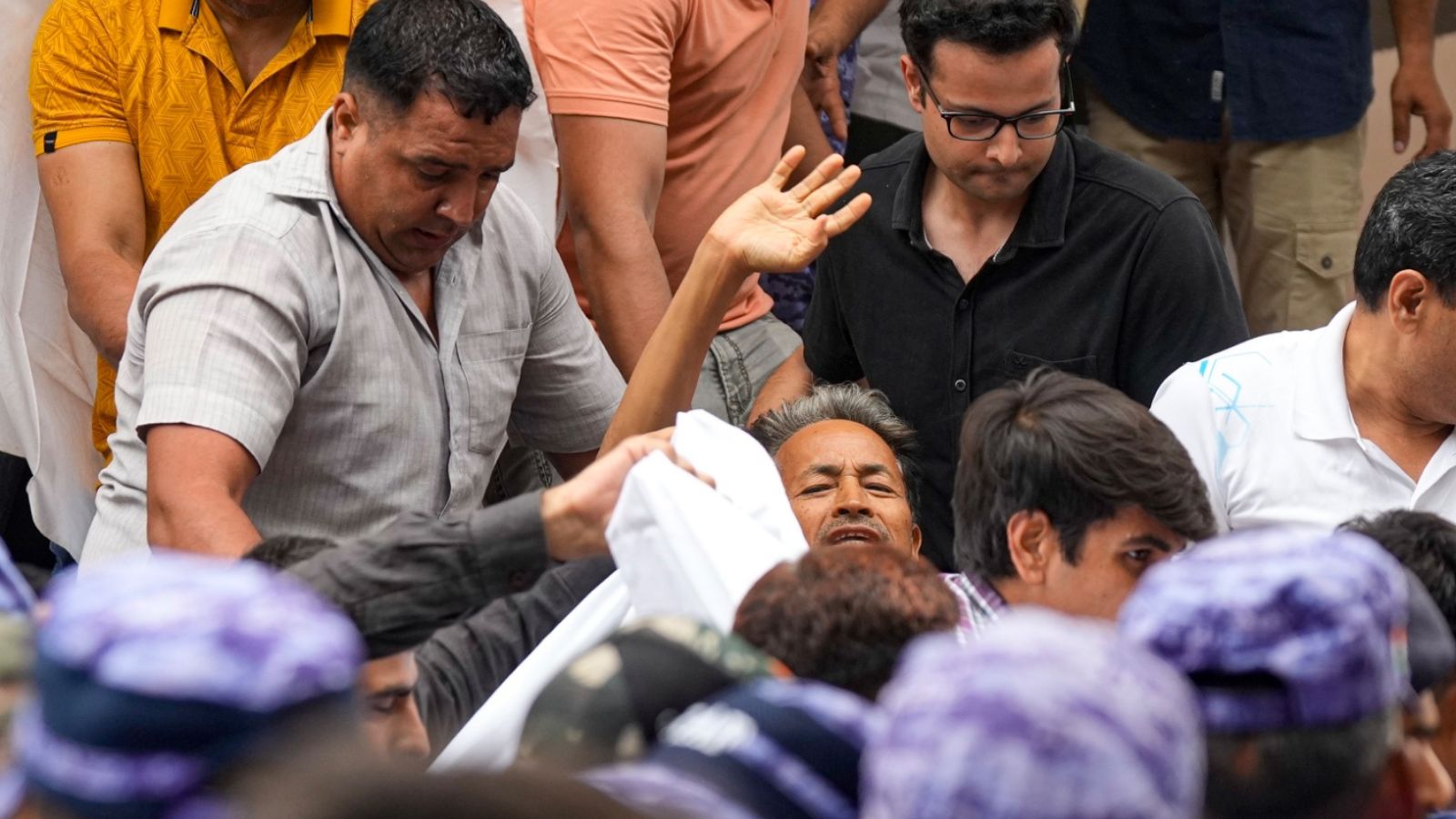
A UN worker counsels a displaced woman in a temporary shelter in Haiti.
Humanitarian situation: Millions need help, but aid is running short
The humanitarian crisis continues to deepen as violence, displacement and economic hardship reinforce one another. More than half the country’s population of around 11 million now needs relief aid.
Key facts
- Around 6.4 million people need humanitarian assistance with 3.3 million prioritized for support.
- 1.47 million people have fled their homes largely due to violence.
- More than 5.8 million people are expected to go hungry this year.
- Violence continues to disrupt healthcare, clean water supplies and education, while aid organizations are trying to keep hospitals, nutrition programmes and emergency shelters operating despite shrinking resources.
- The 2026 humanitarian appeal is critically underfunded. By mid-June, only 25 per cent of the required $880 million had been received, limiting life-saving operations.
Can Haiti finally hold elections?
Haiti has not had an elected president since the murder of President Jovenel Moïse in July 2021, due to long-term instability and insecurity.
Restoring democratic government remains one of the country’s biggest challenges, but credible voting cannot take place unless security improves significantly.
Armed gangs continue to control many neighbourhoods and major roads, making it difficult to register voters, move election materials and guarantee public safety.
Even so, preparations have accelerated in recent months and with a $120 million election budget agreed it is hoped that the first round of voting can be held before the end of 2026, allowing an elected president to take office in February 2027.
Gang violence dominates everyday life
Violence by heavily armed gangs concentrated largely in Port-au-Prince remains the single biggest obstacle to Haiti’s recovery.
Competition between rival criminal groups over territory and extortion has fuelled increasingly brutal fighting.
The consequences for ordinary Haitians are devastating.
In one major outbreak of violence around the Cité Soleil neighbourhood of Port-au-Prince, earlier this year, at least 542 people were killed and 355 injured.
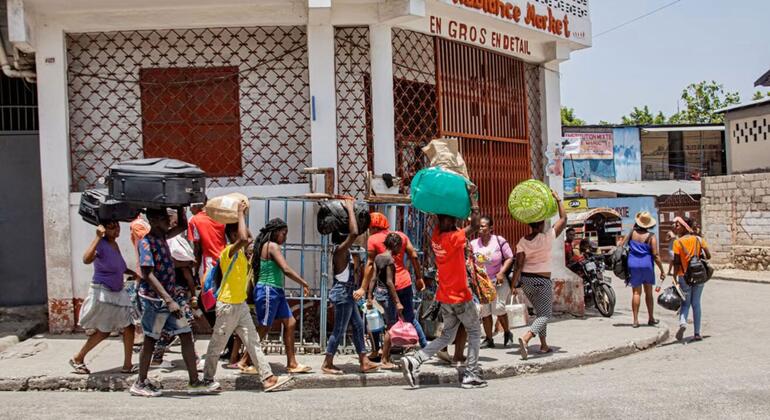
Residents flee Cité Soleil as thick smoke rises from clashes between armed groups.
During those clashes at least 176 women and girls were raped.
Children are also increasingly caught up in the crisis. Many have been forced to flee their homes, while others are being recruited by gangs or exposed to extreme violence.
Are anti-gang operations making a difference?
For the first time in many months, Haitian security forces have begun to record some tangible, if limited, successes against armed gangs.
Specialised police units have pushed criminal groups out of several strategic locations in Port-au-Prince, reopening some major roads and allowing government institutions to return to parts of the city centre.
A major new development has been the launch of the Gang Suppression Force, a UN-backed international security operation established to help Haiti regain control of areas dominated by criminal groups.
It started patrolling Port-au-Prince in June. In one operation, officers arrested 14 suspects and seized hundreds of Molotov cocktails.
Meanwhile, two specialised judicial units have begun operating to investigate mass crimes, sexual violence and major financial crimes.
Despite these recent operations, gangs remain capable of launching deadly attacks, extorting communities and disrupting everyday life.
Widespread human rights abuses
Egregious human rights violations continue across Haiti.
- Armed gangs are responsible for killings, kidnappings, rape and the forced displacement of entire communities.
- Sexual violence is increasingly being used to terrorize neighbourhoods under gang control.
- Vigilante groups and angry mobs have killed dozens of people suspected of collaborating with gangs with at least 87 people deaths reported; Some of them were beaten to death before their bodies were burned.
- Concerns have also been raised about alleged abuses by members of Haiti’s own security forces, including 40 cases involving summary executions by police officers.
The way forward for Haiti
Haiti’s political, security and humanitarian crises are all connected. It will be hard to hold elections without better security. Security gains will be difficult to sustain without stronger governance.
And none of it will work if millions of people are still struggling with hunger, displacement and violence.
These are the key priorities:
- Reduce the gangs’ ability to operate and exert control
- Make Haiti safe enough for elections.
- Better protect women and girls.
- Fund the humanitarian response.
- Strengthen justice and end impunity.