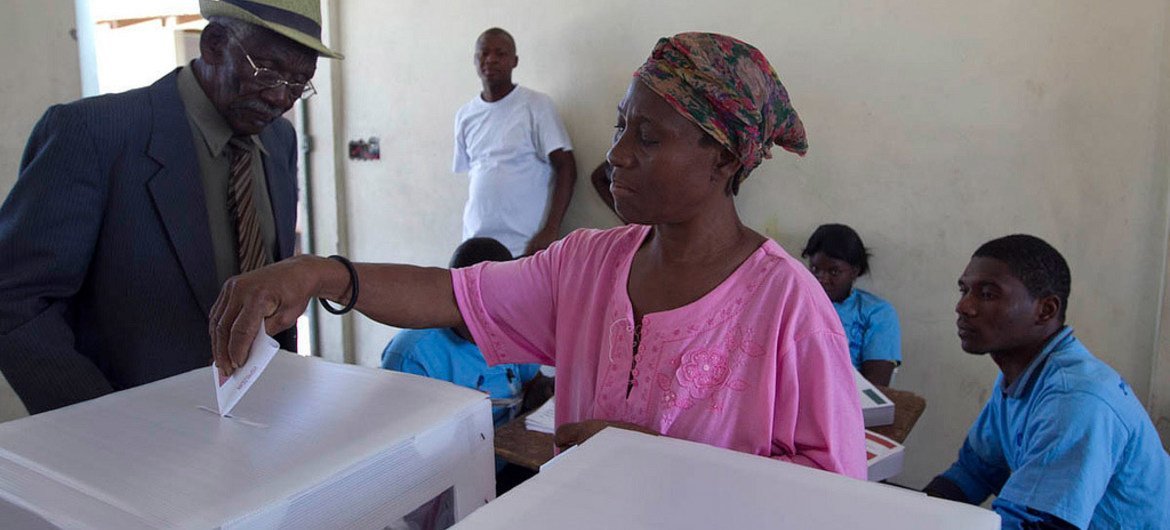
Haiti has officially announced a new electoral calendar, setting December 13, 2026, as the date for the first round of its long-awaited presidential and legislative elections.
The country’s Provisional Electoral Council (CEP) also confirmed that a constitutional referendum will be held on the same day. If no candidate wins an outright majority, a second round of presidential and legislative voting is scheduled for February 21, 2027, alongside elections for local and territorial authorities. Final election results are expected to be published on March 7, 2027.
The announcement represents a major step toward restoring Haiti’s democratic institutions after years of political instability. The country has not held national elections since 2016, leaving Haiti without elected members of Parliament and other key government officials for several years.
The newly released electoral calendar replaces an earlier schedule that had planned the first round of voting for August 30, 2026, and the second round for December 6, 2026. Election officials said the revised timeline is intended to give authorities more time to prepare for the vote.
The calendar outlines each phase of the election process, including candidate registration, voter education campaigns, accreditation for election observers and political party representatives, training for polling station workers, and official campaign periods.
Despite announcing the dates, the CEP acknowledged that the elections are still dependent on two major factors: improved security and sufficient financial resources.
Much of the country, particularly Port-au-Prince, remains affected by armed gang violence. Criminal groups continue to control large sections of the capital and surrounding communities, forcing thousands of residents from their homes and raising serious concerns about whether voters will be able to safely reach polling stations.
The announcement comes as Haiti continues to face one of the most difficult periods in its modern history following the 2021 assassination of President Jovenel Moïse, the collapse of much of the country’s public security, and a prolonged political transition.
If the elections move forward as planned, they would mark Haiti’s first opportunity in nearly a decade to elect a president, members of Parliament, and other national leaders through a democratic vote.
While publishing an electoral calendar is an important milestone, election officials emphasized that successfully holding free, fair, and secure elections will ultimately depend on improving conditions on the ground in the months ahead.