Overview:
Haitian Prime Minister Alix Didier Fils-Aimé appointed some of his former ministers and new officials to ambassadorial and agency roles after a March 20 Cabinet meeting. Critics say the reshuffle reflects political elites’ power-sharing rather than prioritizing security and credible elections amid Haiti’s deepening crisis.
PORT-AU-PRINCE — Haiti Prime Minister Alix Didier Fils-Aimé has appointed several former ministers and new officials as ambassadors and heads of government agencies— a reshuffle critics say reflects a focus on political power-sharing and a desire to maintain a grip on the country’s meager resources rather than addressing the country’s deepening security crisis.
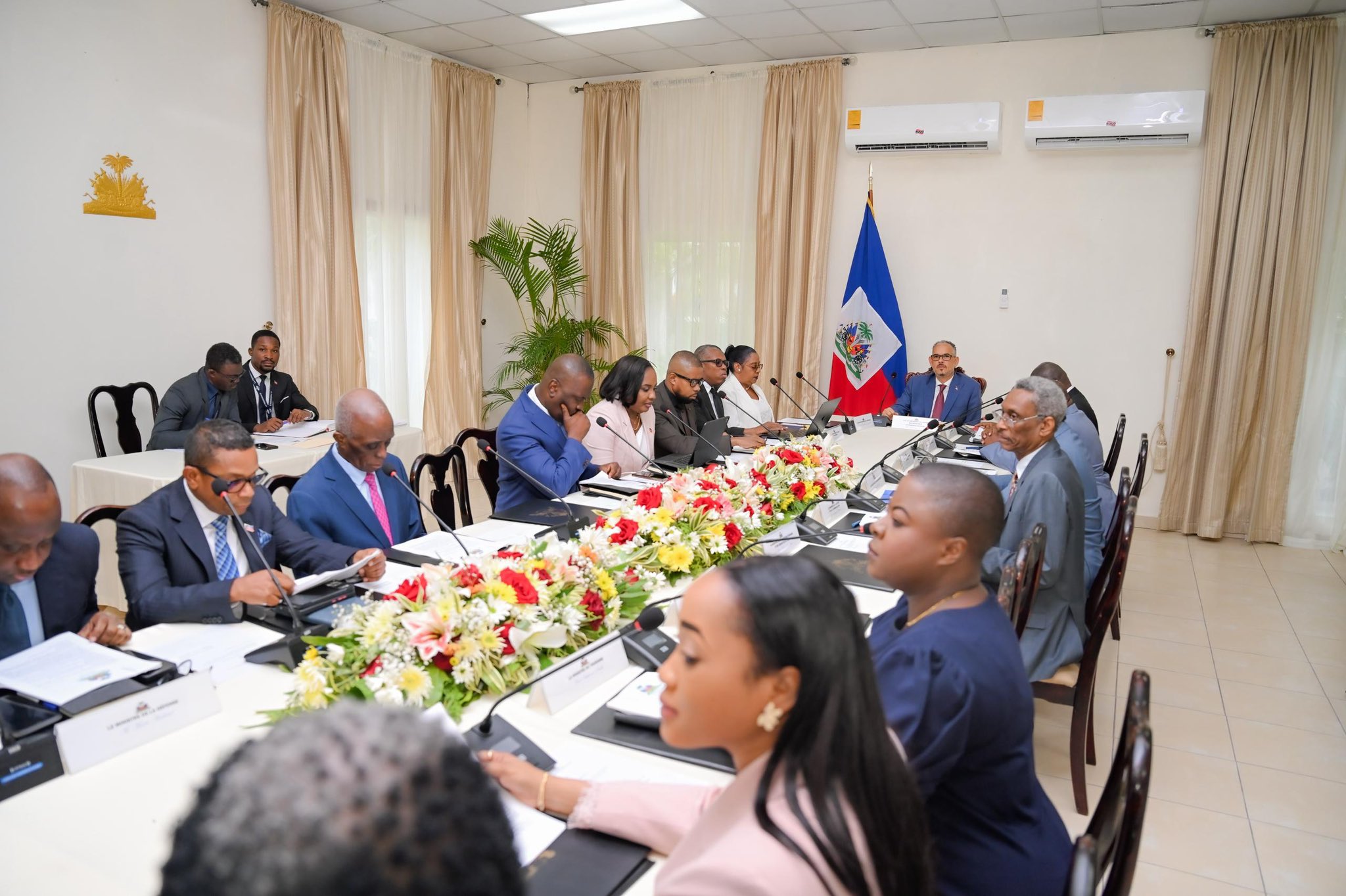
The appointments, announced after a March 20 cabinet meeting, include officials dismissed weeks earlier and come as the government works under a political ‘pact for peace’ with political actors to restore stability and organize long-delayed elections.
The government says the appointments are part of its mandate under the National Pact for Stability and the Organization of Elections, which includes restoring order nationwide and assisting displaced populations.
Among the appointments, former Foreign Affairs Minister Jean Victor Harvel Jean-Baptiste was named ambassador to Brazil, while former Tourism Minister Patrick Delatour was appointed director general of the National Heritage Preservation Institute (ISPAN).
Other appointments include new leadership at key state institutions, from education and workforce training to public health, pensions and development programs. Several new directors general were also named:
- Osny Jean Mary, director general of the Ministry of National Education.
- Franck Lauture, head of the National Institute for Professional Training (INFP).
- Pierre André Gédéon, director general of the National Agency for Protected Areas (ANAP).
- Lovelie François, director of the National Office of Pensions and Old-Age Insurance (ONA).
- Jacques Stevens Thimoléon, director general of Bureau for the Monetization of Development Aid Programs (BMPAD).
- Ricardo Jean-Baptiste, director of the National Ambulance Center (CAN)
- Génard Joseph, reconfirmed as secretary of state for persons with disabilities
This is the second major government reshuffling done by Fils-Aimé since the departure of the Transitional Presidential Council (CPT) on Feb. 7, leaving him as Haiti’s sole executive authority.
Alix Didier Fils-Aimé welcomes 12 new ministers after political groups recognize him as the country’s sole leader, with no fixed end to his mandate under the agreement
Critics question priorities amid crisis
The reassignments and new appointments have drawn sharp criticism from observers, who say the moves reflect a pattern of political recycling rather than a break from past governance practices.
“Imagine yourself becoming a Director General under the minister who replaced you in the same ministry. Haiti is really something else,” Peterson Benjamin, a former ambassador to CARICOM, wrote on X.
Geographer Worlf Saint-Hilaire echoed the sentiment, arguing that political actors in Haiti rarely relinquish power once they obtain it.
The backlash comes as Haiti faces a multidimensional crisis marked by escalating gang violence, mass displacement and a near-collapse of public institutions. Armed groups control large parts of Port-au-Prince, and millions of Haitians face food insecurity, while basic services remain severely disrupted.
In this context, critics say the transition government is expected to prioritize restoring security and creating conditions for credible elections—not expanding political appointments that signal a longer-term hold on power.
Concerns over governance, accountability and transition mandate
The appointments have also renewed concerns about governance standards within the transition government.
Pierre Espérance, executive director of the National Human Rights Defense Network (RNDDH), said in a radio interview that several ministers hold dual nationality, which may conflict with Haitian law. Esperance also alleged that some officials have been cited in past reports by the Anti-Corruption Unit (ULCC), though those claims could not be independently verified.
Espérance further criticized what he described as a lack of due diligence in vetting appointees.
“The prime minister and his team, out of respect for the country, should have conducted a thorough background check,” he said. “This was not done, which is why we are seeing these irregularities.”
The latest reshuffle comes after years of failed attempts by successive transitional authorities to stabilize the country following the 2021 assassination of President Jovenel Moïse.
Despite repeated promises, previous administrations—including the CPT during its two-year tenure—struggled to restore security or organize elections.
As the new government expands its ranks, many Haitians remain skeptical, questioning whether the current leadership will break from past patterns or continue a cycle of political accommodation while the crisis deepens.
Like this:
Loading…