Gina Rinehart’s Hancock Iron Ore generated a $1.8 billion net profit for the 2026 financial year as Australia’s richest person warned policymakers that “mines don’t last forever”.
The bottom line result for the year ended June 30 “reflects disciplined operating performance against weakening iron ore prices”, HIO stated, against the prior period’s net profit of about $2b.
Margins were lower while revenue came in at $8.76b, up by about $373 million from the 2025 financial year.
Sign up to The Nightly’s newsletters.
Get the first look at the digital newspaper, curated daily stories and breaking headlines delivered to your inbox.
By continuing you agree to our Terms and Privacy Policy.
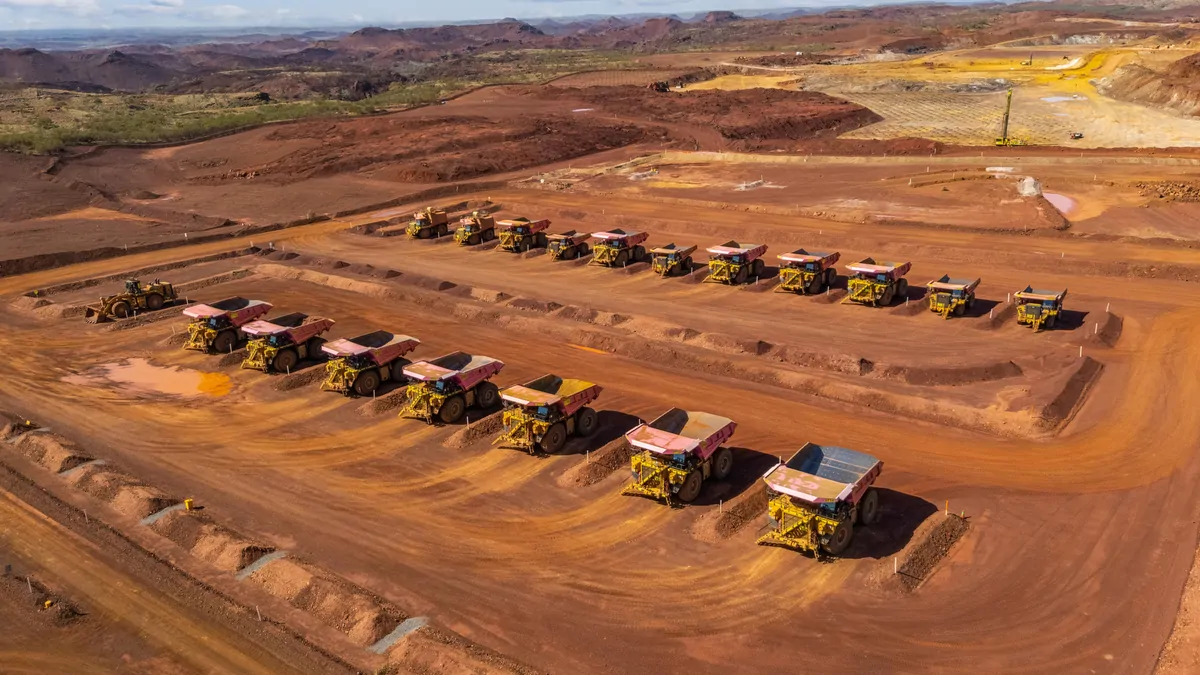
HIO shipped 71.5 million tonnes of Pilbara iron ore last financial year, with 63.2Mt coming from the massive Roy Hill operation and the remainder from its Atlas Iron division.
During the year, operational improvements extended Roy Hill’s life by more than a decade and first ore from its McPhee Creek mine was delivered in June.
It also completed autonomous haulage at Roy Hill, refurbished mine-village facilities and opened its new West Perth headquarters.
“Yet again some fantastic achievements as a result of the dedication and loyalty of our people and I sincerely thank everyone for their terrific efforts throughout the year,” Mrs Rinehart said.
“It was especially pleasing to see our newest mine, McPhee, brought into production and it was a proud moment for me to officially name the mine village Gintasan to mark this historic opening occasion.
“The development of McPhee means we can extend the life of our mega Roy, so we continue to remain a trusted and reliable, long-term supplier of iron ore, while continuing to deliver high-paying mining jobs and benefits for our many valued staff, as well as benefits to businesses and contractors who we help to support — all contributing to Australia’s standard of living.”
HIO paid $1.59b in corporate tax, royalties, state taxes and Native Title contributions during FY2026. It spent $3.1b with WA suppliers, $649m with other Australian suppliers and $918m on staff payments, including private health care and bonuses.
Mrs Rinehart reiterated previous warnings that bad government policy could jeopardise HIO’s major economic contribution.
“We must not forget that mines don’t last forever. Ongoing investment is needed to extend mines and create new ones or the much-needed revenue which helps fund hospitals, defence, more police and nurses, aged and disabled care, and emergency services will diminish, as will other benefits,” she said.
“We must be wide awake to the fact bad government policies, increasing bureaucracy, government tape, plus higher taxes and charges do nothing to enable higher productivity or encourage much needed investment in our essential mining industry and instead do exactly the opposite, sending much needed investment and consequently future high-paying jobs and revenue, away from our country.”
HIO chief executive Gerhard Veldsman echoed the mining billionaire’s comments.
“Quoting our executive Chairman, Mrs Rinehart, ‘When mining does well, so does Australia. But when mining doesn’t do well, nor do Australians’,” he said.
“In the interests of not only our industry and its many related businesses, but Australians across our country, our governments need to remember this.”