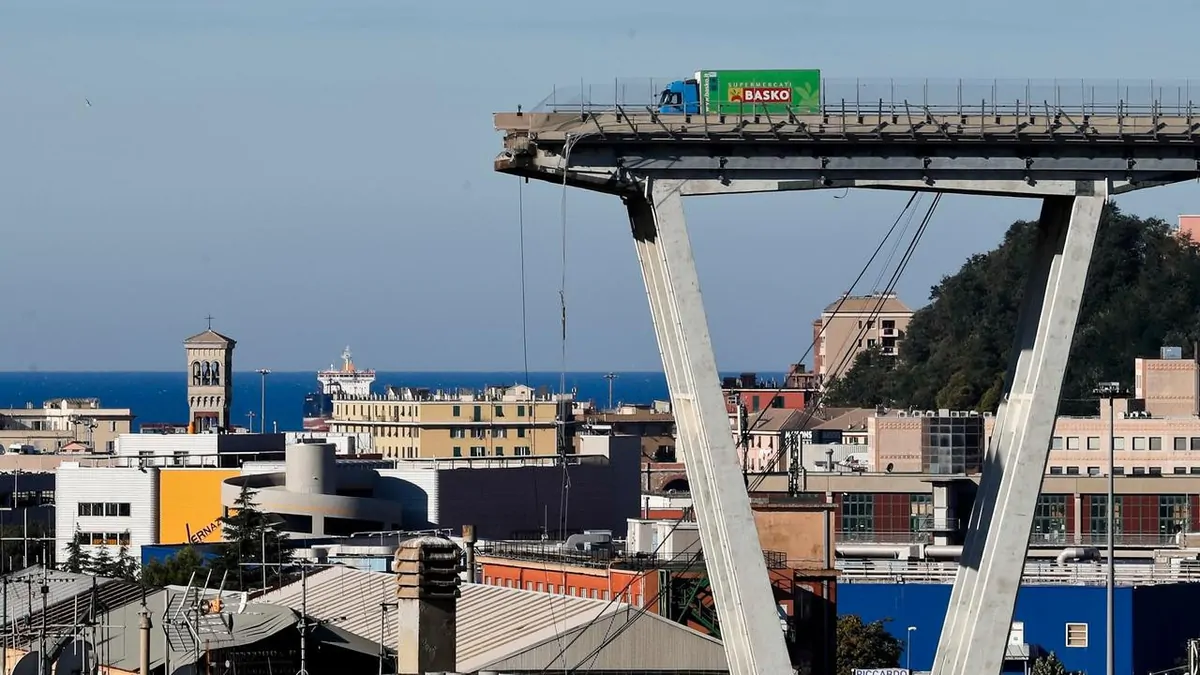
An Italian court has sentenced former Atlantia CEO Giovanni Castellucci to 12 years in prison over the deadly 2018 collapse of a motorway bridge in the port city of Genoa.
Atlantia was the controlling shareholder in motorway operator Autostrade per l’Italia at the time of the disaster, which killed 43 people when their vehicles plunged from the flyover.
Relatives of the victims packed the court to hear the outcome of a case that has become a search for accountability for the disaster and a symbol of the slow pace of justice in complex Italian criminal proceedings.
Sign up to The Nightly’s newsletters.
Get the first look at the digital newspaper, curated daily stories and breaking headlines delivered to your inbox.
By continuing you agree to our Terms and Privacy Policy.
Under the Italian legal system, the first instance ruling can be appealed at least twice.
Castellucci is already in prison, serving a six-year sentence over another fatal incident in 2013 on a viaduct in southern Italy, and was not in court to hear the verdict.
Fifty-seven individuals were on trial, including company executives, engineers and transport ministry officials.
The most serious charges include multiple manslaughter and criminal negligence.
The collapse of the then 51-year-old Morandi bridge during a summer storm on the eve of a national holiday shocked Italy and triggered years of investigations into the management and maintenance of its ageing infrastructure.
A 50-metre high section of the bridge collapsed with as many as 35 vehicles driving on it, sending them plunging onto warehouses and a riverbed beneath.
The disaster caused a dispute between holding company Atlantia, controlled by the Benetton family, and the then government that ended with the sale of Atlantia’s controlling stake in Autostrade.
The current head of Autostrade issued an open letter on Wednesday, restating the company’s commitment to ensure that such a tragedy is not repeated.
“I wish to apologise to the victims’ families, to the people of Genoa, and to all Italians for the suffering caused by the tragic Morandi disaster, fully aware that our gesture can never erase their pain,” Autostrade CEO Arrigo Giana wrote.
Prosecutors argue that years of inadequate maintenance, ignored warning signs and delayed safety work contributed to the collapse, alleging that vital work was postponed while profits continued to be generated and distributed.
Defence lawyers reject that theory.
They argue the disaster was caused by an original design defect in the bridge’s stay cable number nine, the one that failed, and that no maintenance program could have prevented the tragedy.