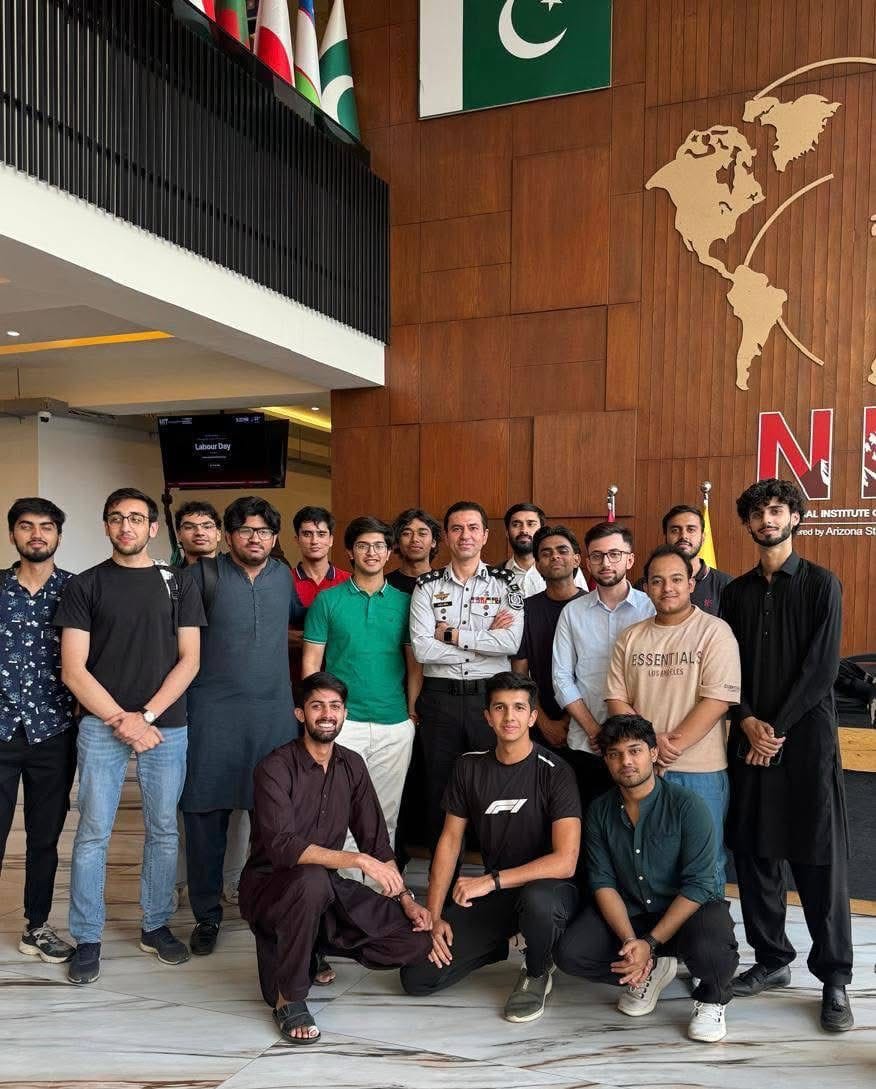
LAHORE – Lack of awareness remains the leading cause of white-collar crime, Director FIA Lahore Capt (R) Muhammad Ali Zia said during an awareness session at the National Institute of Technology (NIT) Lahore on Friday.
Addressing students and faculty, he said even minor carelessness in sharing personal or financial information could result in serious losses. “Criminals often use simple tactics to gain trust, so people must remain alert at all times,” he added.
The session aimed to highlight the growing threats of cybercrime, financial fraud, and other non-violent offences, which officials said were rising due to greater reliance on digital platforms and limited public awareness.
Participants were briefed on common methods used by fraudsters, including phishing emails, fake investment schemes, online scams and identity theft. Capt Zia said criminals frequently impersonate trusted organisations or individuals to obtain sensitive information.
He advised students not to share passwords, banking details, or personal data with unverified sources, and to verify the authenticity of any suspicious communication before responding.
Highlighting the role of the Federal Investigation Agency (FIA) of Pakistan, the director said the agency was adopting modern tools and improved systems to address increasingly complex crimes. He stressed that public cooperation and timely reporting were essential to prevent further damage.
An interactive question-and-answer session followed, during which students sought guidance on safety measures, complaint procedures and reporting mechanisms. Officials encouraged the use of official FIA channels for lodging complaints.
Authorities said similar awareness sessions were being held at educational institutions across the country, particularly targeting young people who are more exposed to online risks.
The National Institute of Technology (NIT) Lahore, established under Act No VI of 2025, aims to promote practical learning and industry-focused education. It has also partnered with Arizona State University to align its programmes with international academic standards.
The session concluded with a call for greater awareness and cooperation between institutions and law enforcement agencies to curb cybercrime.