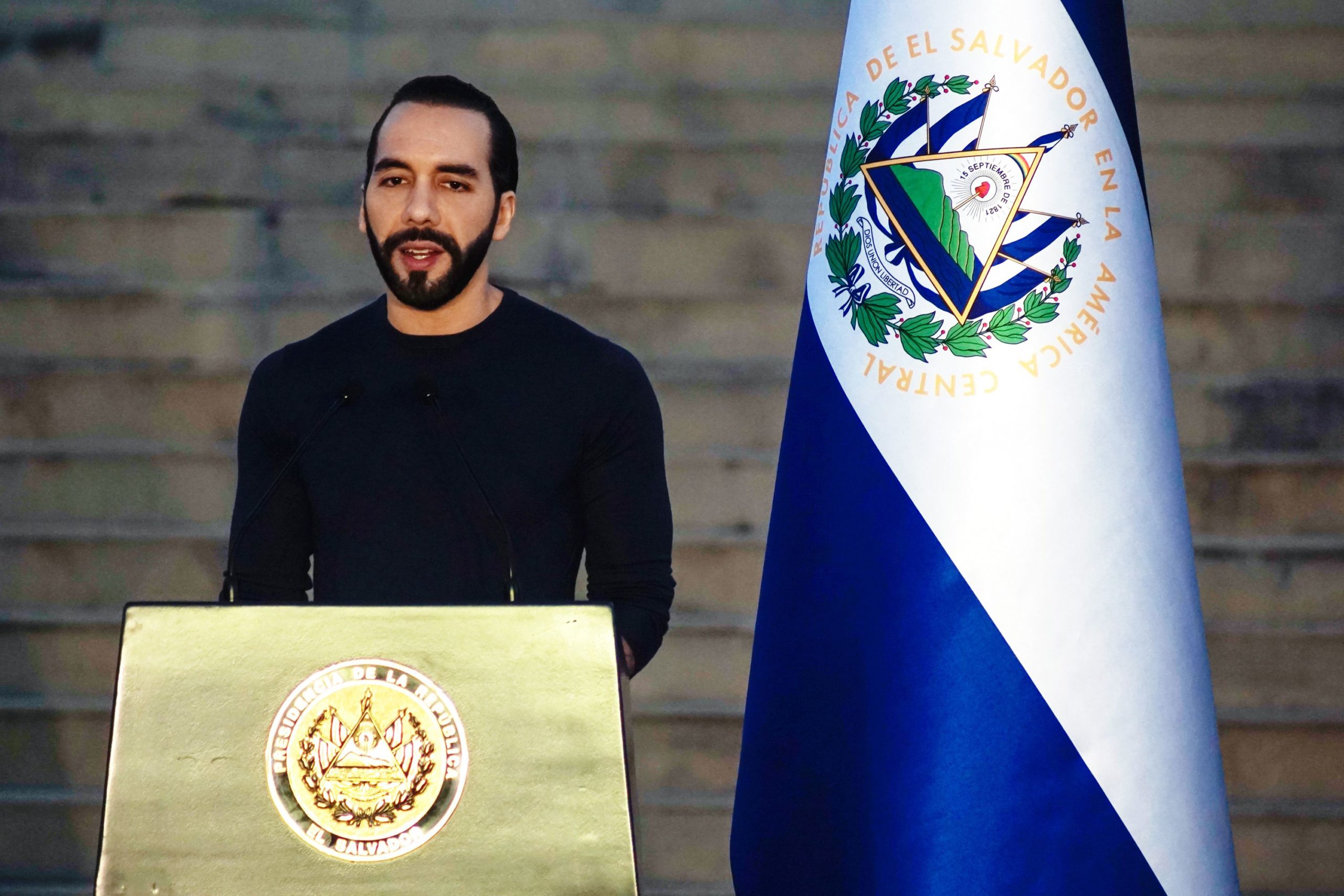
Salvadoran President Nayib Bukele says his country is nearly finished deploying more than 2,000 soldiers and military equipment to Haiti as part of a major operation to rescue four missing Salvadoran military personnel and confront armed gangs.
On Thursday, October 29, 2026, Bukele shared a video on X showing Salvadoran soldiers in combat gear preparing to board military aircraft, along with armored vehicles, helicopters and heavy equipment being transported for the operation.
Alongside the video, the president delivered a message directly to the Haitian people in Haitian Creole, addressing concerns about the growing foreign military presence in the country.
Bukele insisted that El Salvador has no intention of invading Haiti, taking control of its territory or benefiting from its resources. He described his country as a developing nation that understands what it means to live with gang violence.
He explained that the main purpose of the operation is to bring home four Salvadoran aviation technicians who disappeared on October 18 following an armed attack in Croix-des-Bouquets, northeast of Port-au-Prince.
The four men were serving with the international Gang Suppression Force (GSF), which supports Haitian authorities in their efforts to fight armed gangs. Their responsibilities included aviation support and medical evacuation operations rather than direct combat.
According to earlier reports, armed attackers ambushed the technicians’ armored vehicle in the Santo area. The vehicle was struck by explosives and caught fire. The men reportedly managed to escape, but communication with them was lost afterward.
Their disappearance prompted Bukele to announce a rescue operation and send additional military personnel to Haiti.
The Salvadoran government confirmed on October 28 that more than 2,000 soldiers were being deployed to support the search. Reuters subsequently reported that approximately 2,000 Salvadoran troops were already in Haiti by Wednesday night, citing a security official.
In his latest message, Bukele said the deployment was nearly complete and made clear that his government also intended to confront the gangs responsible for violence against Haitian communities.
He spoke about families who have lost loved ones, people living in fear and residents who have been unable to enjoy a normal life because of gang activity.
Bukele also compared Haiti’s security challenges to El Salvador’s own history of gang violence. Under his administration, El Salvador has experienced a sharp decline in reported homicides, although his government’s security crackdown has faced criticism over mass arrests and alleged human rights abuses.
The president said El Salvador is paying approximately 90% of the costs associated with the Haiti operation using its own resources, with limited logistical assistance from other countries.
He emphasized that his government is not receiving payment for the mission and does not intend to profit from Haiti’s security crisis.
However, Bukele did not provide a detailed breakdown of the operation’s expenses, and the 90% figure has not been independently verified.
The military buildup follows a phone conversation between Bukele and Haitian Prime Minister Alix Didier Fils-Aimé on October 28.
According to statements from both governments, the leaders discussed the search for the missing Salvadoran personnel and agreed to strengthen cooperation on security operations.
Haiti’s government has described the deployment as part of its ongoing security partnership with El Salvador.
Still, the arrival of such a large number of foreign soldiers has raised questions about how the operation will be managed.
Reuters reported that authorities had not clearly explained the command structure or rules governing the use of force by the additional Salvadoran troops. It also remains unclear whether all the personnel will operate directly under the GSF or through a separate arrangement.
These questions are particularly important in Haiti, where international security operations have a complicated history and civilian protection remains a major concern.
The latest deployment comes as armed gangs continue to control or influence several communities, particularly in the Port-au-Prince metropolitan area. Violence has forced families from their homes, disrupted businesses and made it difficult for residents to access basic services.
For many Haitians, the biggest concern is whether the additional military presence will bring meaningful improvements to their daily lives.
Bukele has said Salvadoran troops will return home once their mission is completed, but no official timeline has been announced.
Meanwhile, the whereabouts of the four missing aviation technicians remain unknown.
As El Salvador moves forward with one of its largest overseas military operations, attention remains on the search for the missing personnel, the safety of Haitian civilians and whether the growing international presence can help restore security.
The deployment is underway, but its long-term impact on Haiti remains uncertain.