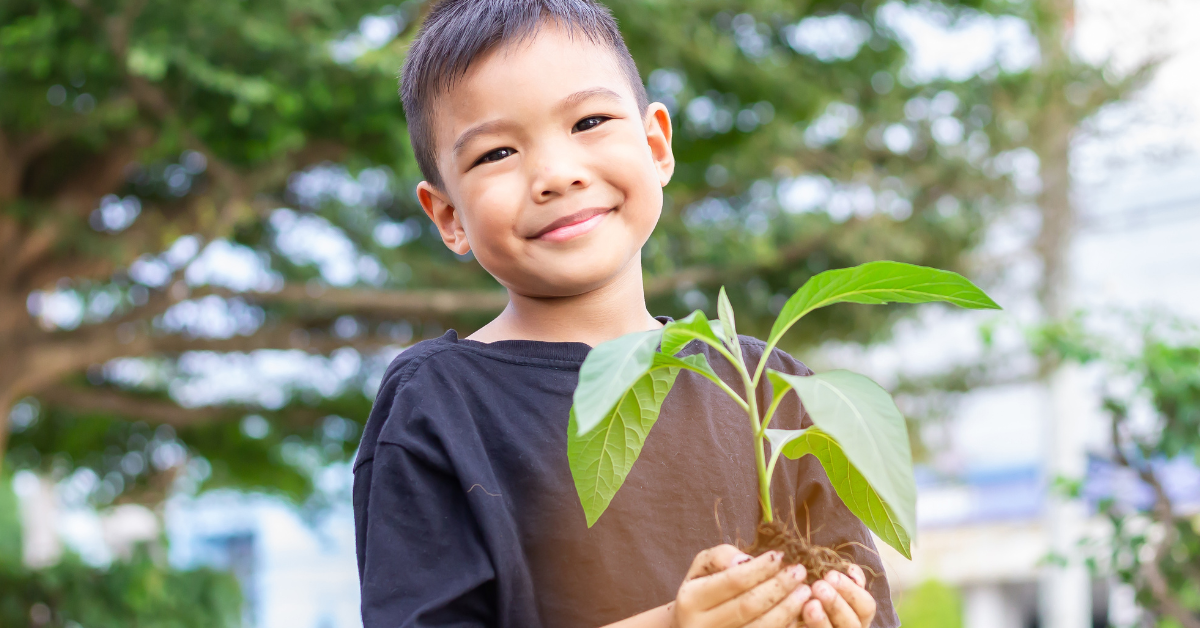
Watching a seed come alive feels almost magical, especially for a child seeing it for the first time. Picture their face as a dry little bean they placed in soil begins to crack, send out a pale root, and slowly push up a green shoot. This tiny moment often sparks big curiosity. It gives children a sense of responsibility and a close view of how patiently and steadily nature grows.
The guide below helps children follow each stage, from planting a seed to journalling its progress, building both observation skills and reflective thinking.
1. Preparing for the experiment
Gather a few simple materials:
- Seeds such as beans, mustard, fenugreek, coriander, or green gram
- Containers like small pots, recycled cups, or transparent jars
- Soil or cotton wool
- Water
- A sunny windowsill or balcony
- A notebook for journal entries
- Colour pencils or markers for illustrations
Watching a seed come alive feels almost magical. Photograph: (The Pot Shack)
2. Step-by-step guide to cultivating seeds
Step 1: Prepare the container
Fill a pot with slightly moist soil or arrange cotton wool in a clear jar. Transparent jars are especially captivating as they allow children to observe root development.
Step 2: Sow the seed
Place the seed carefully into the soil or cotton and cover it lightly. Larger seeds, such as beans, are easier for small hands to handle.
Step 3: Water with care
Teach children to water sparingly, enough to keep the medium moist but never waterlogged. This nurtures gentleness and attentiveness.
Step 4: Offer sunlight
Set the container in a bright spot. This is an ideal moment to explain how sunlight fuels the plant’s growth.
Step 5: Observe each day
Encourage children to inspect their seed daily. Subtle changes soon appear, including a tiny crack, a pale root, or a curled stem preparing to emerge.
Step 6: Celebrate the first shoot
The appearance of the first green tip is a moment of triumph. Children can measure the height, sketch it, or even give the plant a name.
Encourage children to inspect their seed daily. Photograph: (The Spruce)
3. Crafting a seed-growth journal
A journal turns the activity into a thoughtful exploration.
- Daily or weekly notes
- Children can record:
- The date
- What they observe
- Watering details
- Growth measurements
- Predictions about the plant’s next stage
- Illustrations
- Drawings, diagrams, or colour sketches improve observation and make the journal visually appealing.
- Photographs
- Weekly photos help document progress and create a timeline of growth.
4. What children learn from growing seeds
- They see plant life cycles unfold before their eyes, making abstract concepts tangible.
- Daily monitoring trains children to notice minute differences.
- Plants grow at their own pace, teaching the virtue of waiting and the value of consistent care.
- Even in busy surroundings, this tiny project offers a moment of tranquillity and appreciation for living things.
- Understanding how a seed becomes a plant naturally encourages respect for greenery and ecosystems.
- Journalling promotes artistic expression and helps children articulate their thoughts.
Transplant the seedling into a larger pot once it matures. Photograph: (Pots Planters & More)
5. Enriching the experience
- Grow several types of seeds and compare their rates of growth.
- Create a small ‘plant corner’ to showcase different stages of germination.
- Use a wall chart to track height over days or weeks.
- Allow children to present their journals in a class or family gathering.
- Transplant the seedling into a larger pot once it matures.
Watching a seed turn into a healthy shoot gives children a close, gentle glimpse into how life begins and grows. Each stage invites wonder and strengthens their connection with the natural world.