Home Improvement
“Broken floor plans” are the new open concept, some say, but Boston-area homes are ahead of the trend
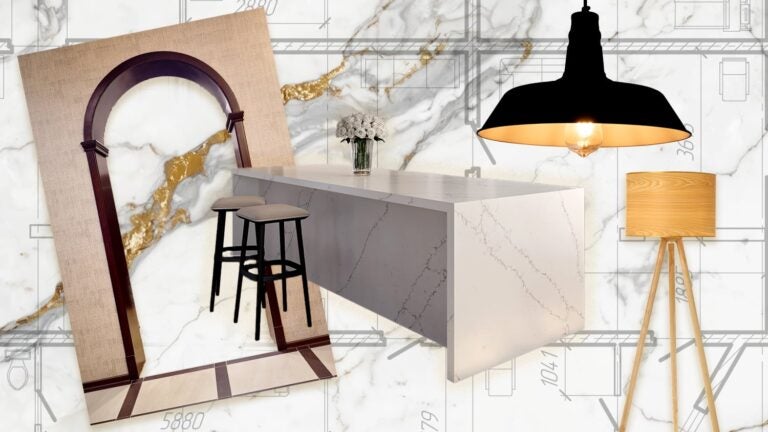
A “broken floor plan” has an open feel without losing designated spaces. Adobe, Ally Rzesa/Globe Staff
Something our company has dealt with for years working in older New England homes is how to make the house flow in a way that works for a modern family, while also staying true to the architectural style of the home’s period. It’s not always an easy thing to do, given how these homes were built back in the day.
Smaller individual rooms with French doors separating them were easier to heat in the winter. We simply didn’t have as much stuff back then, so there was little need for large expanses filled with furniture, entertainment centers, and the like. What our clients have asked us to do when remodeling is to open the floor plans and bring more light into the space — but still keep spaces defined.
A recent article in House Beautiful gave this concept a name: “Broken Floor Plans.” The name is a little tongue-in-cheek; there is nothing broken about this. As a matter of fact, it is a style of remodeling that has been going on in the Boston area for some time.
The article in House Beautiful points out many ways to create a “Broken Floor Plan,” from archways and tunnels between rooms to glass walls and sunken living rooms. The following are a few areas of the house that can be opened but cry out to have their own identity within the home’s floor plan.
Kitchen
Many kitchens we see in older homes are tucked away in the rear of the house, deliberately cut off from the main living area. The only connection is a café-style door and a small pass-through for serving from a butler’s pantry or the kitchen itself. People today don’t want that type of setup; the kitchen has morphed into the social center of the house for family and friends. The most common solution for this is to completely take out the wall separating the kitchen from the living space. We can easily remove a wall and install a beam either flush to the ceiling, if possible, or one that protrudes from the ceiling to help define the space a little better. The space is then defined with a peninsula or island. Visually interesting pendant lights over these areas also give definition to the space while also providing task lighting when needed.
Dining room
The dining room traditionally stood apart from the kitchen and living areas. Today, the dining room is often less formal, and clients want this space to be open into the rest of the house. This would also have us removing some of the walls and perhaps adding columns or a half-wall to define the space. The flooring could also have a unique pattern added into it to help define the space; this was a common practice in older homes.
We would also encourage clients to add recessed lights to the outer perimeter of the dining area, separate from the chandelier that would be over the dining table. This allows for a softer light when the dining table is not being used, but the room wants to stay connected to the rest of the house given the new open floor plan.
Before: In this Cambridge home, the kitchen was closed off from the dining area. – Charlie Allen Renovations
After: In this Cambridge home, the formerly closed-off kitchen was opened to the adjacent dining and living areas. Replacing the wall with countertop and hanging cabinets allowed for definition of the two spaces while providing a more bright and open feeling. – Shelly Harrison Photography
Living area
The main living area is where half-walls really come into their own. It is common nowadays to have furniture define a space; a sectional sofa can be put into the middle of the room with no wall behind it and work just fine. A similar feel can be achieved with the use of area rugs and layered lighting. There is also a somewhat contemporary look that doesn’t always work in older homes: for instance, a half-wall between the dining area or the main hall of the house. It allows for furniture to be put up against it in a way that looks purposeful and designed. They can also allow for items to be displayed on top or even open shelves on the other side.
Front entry
It is interesting that quite a few homes that we work on in Greater Boston really don’t use their formal front entries anymore. Often, we create side entries off the driveway that access the kitchen area, which is where most of the foot traffic goes. The idea of a formal front entry sealed off from the main house (originally intended to contain the cold air from spilling into the rest of the home) is something most people do not find appealing. With the advent of insulated entry door systems and heating/cooling systems, these spaces can now be opened to the main house. One of the tricks we do to help define this space in an open floor plan is to install a tile floor — it has a practical side, too, as a space for wet shoes. We have painted the walls and ceilings in this area a different color as well to help define the space. Leaving a few shorter sections of wall in place on either side gives us a way to install cubbies, a bench, and some coat hooks. This keeps what can be an area that is a little messy out of sight from the main house.
Mark Philben is the project development manager at Charlie Allen Renovations in Cambridge. Send your questions to [email protected]. Questions are subject to editing. Subscribe to the Globe’s free real estate newsletter — our weekly digest on buying, selling, and design — at Boston.com/address-newsletter.
Address Newsletter
Our weekly digest on buying, selling, and design, with expert advice and insider neighborhood knowledge.